
AC Compressor Not Working? Causes, Costs, and Fixes
CONTACT US
Contact Us

Our
SERVICEs
AC Compressor Not Working? Causes, Costs, and Fixes
Above All Heating And Air Conditioning / July 31, 2026 / AC Repair, Air Conditioner Repair, Air Conditioning, HVAC Accessories, HVAC Services
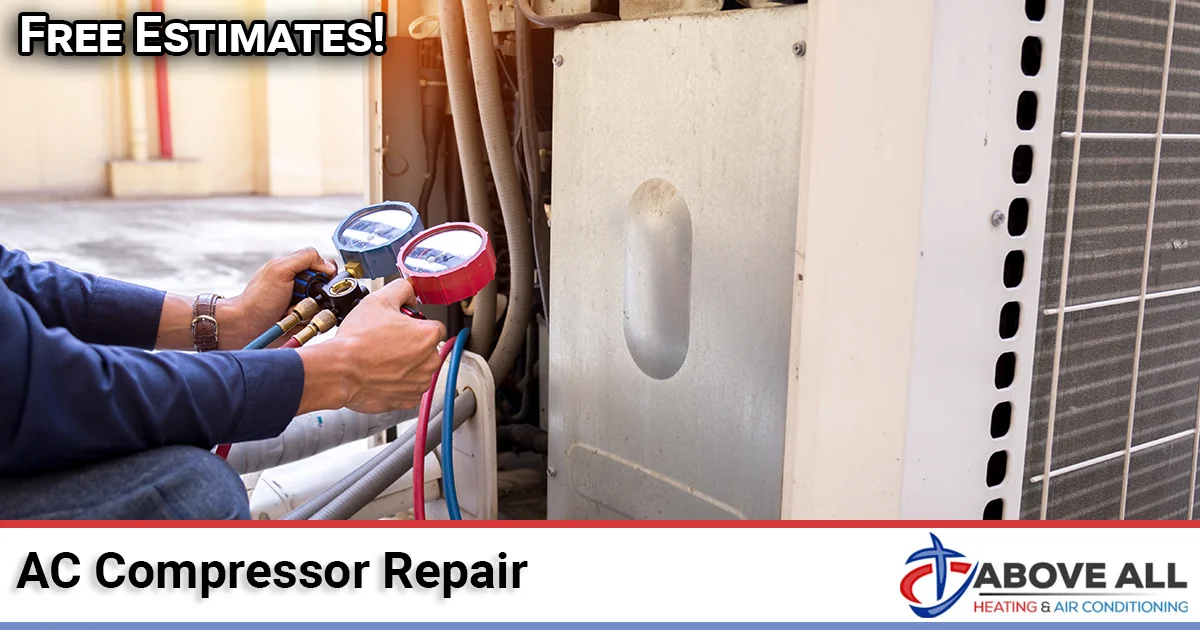
When your air conditioner’s compressor fails, the effect is immediate and impossible to ignore: warm air, a silent outdoor unit, and a home that starts heating up fast. In the middle of a Southern California summer, that’s not just an inconvenience — it’s a real problem. At Above All Heating and Air, we diagnose and repair compressor issues for homeowners throughout the Temecula Valley and Inland Empire every summer, and we’ve put together this guide to help you understand what’s happening, what it might cost to fix, and when it’s time to call a professional.
What Does the Compressor Actually Do?
The compressor is often called the “heart” of your air conditioning system, and for good reason. It’s located in the outdoor unit, and its job is to pressurize refrigerant and push it through the system’s coils, where heat is absorbed from inside your home and released outside. Without a functioning compressor, refrigerant can’t circulate, heat can’t be removed from your indoor air, and your system simply can’t cool your home — no matter how long it runs or how low you set the thermostat.
Because the compressor does so much mechanical and electrical work, it’s also one of the most expensive components in your system to repair or replace. Understanding what can go wrong — and why — helps you make an informed decision when yours starts acting up.
Signs Your AC Compressor Isn’t Working
Compressor problems don’t always announce themselves clearly. Here are the most common signs homeowners notice when the compressor is the culprit:
- Warm air from the vents: Your system runs, but the air coming out isn’t cold, or only cools briefly before turning warm again.
- Outdoor unit humming but not starting: You hear a humming or clicking sound from the condenser, but the fan and compressor never fully engage.
- Unusual noises: Loud clanking, grinding, or rattling coming from the outdoor unit can indicate mechanical wear inside the compressor.
- Circuit breaker trips repeatedly: A compressor drawing excessive current on startup can trip the breaker as a safety measure.
- System runs constantly without cooling: If your AC is running nonstop but your home isn’t getting cooler, the compressor may not be pressurizing refrigerant properly.
- Outdoor unit is silent altogether: In some cases, the compressor won’t attempt to start at all, and the unit sits completely quiet even when the thermostat calls for cooling.
If you’re noticing any of these symptoms, it’s worth having a licensed technician take a look before the issue worsens or causes damage to other components.
Common Causes of Compressor Failure
Compressors don’t usually fail without a reason. In our experience serving homes across Murrieta, Temecula, Menifee, Lake Elsinore, Hemet, and Wildomar, these are the most frequent culprits:
1. Electrical Component Failure
Capacitors and contactors help the compressor start and run smoothly. When a capacitor weakens or a contactor sticks, the compressor may struggle to start, overheat, or fail to run at all. Left unaddressed, repeated hard starts caused by a failing capacitor can shorten the compressor’s overall lifespan. This is one of the more affordable issues to diagnose and repair, so it’s worth ruling out first.
2. Low Refrigerant Levels
Refrigerant does more than cool the air — it also helps lubricate and cool the compressor itself. When refrigerant levels drop due to a leak, the compressor can run hotter than it should, accelerating wear and, in some cases, leading to complete failure. If your system is low on refrigerant, our technicians will locate and address the leak before recharging the system.
3. Restricted Airflow
Dirty air filters, blocked vents, or a condenser coil covered in dirt and debris all force your system to work harder to move air and release heat. Over time, that extra strain on the compressor can lead to overheating and premature failure. Regular filter changes and seasonal maintenance go a long way toward preventing this.
4. Electrical Surges
Power surges, whether from storms or grid fluctuations, can damage the compressor’s internal windings or electrical components. This type of damage is often sudden and may not be preventable, though surge protection devices can reduce the risk.
5. Age and Normal Wear
Like any mechanical component, compressors wear out over time. In a climate like ours, where systems run for months at a stretch during peak summer heat, compressors can experience more cumulative wear than in milder climates. If your system is more than 10-15 years old and the compressor fails, it’s often a sign the whole unit is nearing the end of its service life.
Repair or Replace? How We Help You Decide
Not every compressor failure means you need a brand-new AC system. The right path forward depends on a few key factors:
- Age of the system: If your AC is relatively new and otherwise in good condition, compressor repair or replacement is often the more economical choice.
- Type of failure: Electrical issues like a bad capacitor or contactor are usually straightforward repairs. A compressor with burned-out internal windings or a seized mechanism typically requires full compressor replacement.
- Warranty status: Many manufacturers offer compressor warranties ranging from 5 to 10 years on parts, though labor is usually not included. We can help you check whether your unit still qualifies.
- Refrigerant type: Older systems using R-22 refrigerant, which is being phased out, sometimes make replacement a more practical long-term choice than repairing a compressor for an outdated system.
- Overall system condition: If other major components are also aging or showing wear, investing in a compressor repair alone may not be the best use of your budget.
During your diagnostic visit, our technicians walk you through these factors in plain language and give you a clear, itemized estimate before any work begins — no guesswork, and no pressure toward one option over another.
What Affects the Cost of Compressor Repair or Replacement?
Compressor costs vary from home to home, and several factors influence the final price:
- The size (tonnage) of your AC system
- The brand and model of your compressor
- Whether the compressor is still under manufacturer warranty
- The type of refrigerant your system uses
- Labor complexity, including accessibility of the outdoor unit
- Whether additional components (like a failed capacitor or contactor) also need replacement
Because these variables differ so much from system to system, we don’t publish flat pricing for compressor work online. Instead, we provide a detailed, written estimate after inspecting your specific unit, so you know exactly what you’re paying for and why.
What to Expect During a Compressor Diagnostic Visit
When you call Above All Heating and Air for a suspected compressor issue, our technician starts by checking the basics: power supply, thermostat settings, and circuit breaker status, to rule out simple causes before moving to the compressor itself. From there, we test electrical components like the capacitor and contactor, check refrigerant pressure and charge, and inspect the compressor for signs of mechanical failure, such as unusual noise, overheating, or a locked rotor.
Once we’ve identified the root cause, we walk you through what we found in plain language — no jargon, no pressure. If repair is the right call, we’ll explain what’s involved and provide pricing before starting any work. If replacement makes more sense, we’ll lay out your options, including how system age, warranty coverage, and refrigerant type factor into the decision, so you can make a choice that fits your home and your budget.
Can Compressor Failure Be Prevented?
While not every compressor failure is avoidable, regular maintenance significantly reduces the risk. Annual AC tune-ups allow a technician to catch early warning signs — like a weakening capacitor, low refrigerant, or a dirty condenser coil — before they escalate into full compressor failure. Keeping your outdoor unit clear of debris, changing air filters regularly, and scheduling maintenance before peak summer demand are all simple steps that help protect this critical (and costly) component.
Why Homeowners Across the Inland Empire Trust Above All Heating and Air
Compressor failure is one of the more stressful AC problems homeowners face, largely because it’s often misunderstood and can be one of the pricier repairs. Our goal is to make the process straightforward: an honest diagnosis, a clear explanation of your options, and a fair estimate before any work begins. We proudly serve homeowners in Temecula, Murrieta, Menifee, Lake Elsinore, Hemet, and Wildomar, and we understand how quickly a compressor failure can turn into an urgent, uncomfortable situation during our hottest months.
If you suspect your compressor isn’t working, or you’re just not sure what’s wrong with your AC, our related guide on why your AC might not be working covers other common causes worth ruling out first. But if the symptoms above sound familiar, don’t wait for the problem to get worse.
Contact Above All Heating and Air today to schedule a diagnostic visit. We’ll identify exactly what’s going on with your compressor and walk you through your repair or replacement options — clearly, honestly, and without the upsell.
Frequently Asked Questions
What are the signs of a failing AC compressor?
Common warning signs include warm air blowing from the vents, the outdoor unit humming but not starting, loud clanking or grinding noises, the circuit breaker tripping repeatedly, and the AC running longer than usual without cooling the home.
Can a bad compressor be repaired, or does it need full replacement?
It depends on the failure type. Issues like a bad capacitor, contactor, or start relay can often be repaired. However, if the compressor’s internal windings have burned out or the unit is seized, full compressor or system replacement is usually the more cost-effective option.
How much does AC compressor replacement typically cost?
Compressor replacement costs vary based on unit size, refrigerant type, and warranty coverage. Above All Heating and Air provides a detailed, itemized estimate after diagnosing your specific system, since parts and labor pricing differs by brand and model.
What causes AC compressors to fail in summer heat?
Extended run times during peak summer heat put extra strain on the compressor. Common contributing factors include low refrigerant levels, electrical issues like failing capacitors, restricted airflow from dirty coils or filters, and normal wear after years of service.
Is it normal for a compressor to fail after several years?
Compressors are built to last many years, but they are also one of the components most likely to wear out over the lifespan of a system, especially in hot climates like the Inland Empire where units run frequently during summer.
Can I run my AC if the compressor isn’t working?
You can technically leave the system on, but it will not produce cool air and continued operation can add strain to other components. It’s best to turn the system off and schedule a diagnostic visit.
Why is my outdoor unit humming but not turning on?
A humming outdoor unit that won’t start often points to a failing start capacitor, a stuck contactor, or a compressor that is struggling to start. A technician can test these components to pinpoint the exact cause.
Does a bad capacitor cause compressor failure?
A failing capacitor can prevent the compressor from starting properly, and repeated hard starts without a working capacitor can shorten the compressor’s lifespan over time. Replacing a weak capacitor early can help protect the compressor.
Is compressor failure covered under warranty?
Many manufacturers offer parts warranties on compressors, often ranging from 5 to 10 years depending on the brand and registration status. Labor is typically not included. Above All Heating and Air can help verify your unit’s warranty status.
Should I repair or replace my whole AC system if the compressor fails?
This depends on the system’s age, overall condition, and refrigerant type. For older systems already nearing the end of their expected lifespan, full system replacement is often more practical than investing in a major compressor repair.
How long does compressor replacement take?
Many compressor replacements can be completed in a single visit, though timing depends on parts availability and the complexity of the job. Our technicians will give you a clear timeline after diagnosing your system.
Can low refrigerant damage the compressor?
Yes. Low refrigerant levels, often caused by a leak, can cause the compressor to overheat and wear out prematurely. Addressing refrigerant leaks quickly helps protect the compressor from long-term damage.
What’s the difference between a compressor and a condenser?
The compressor is the component inside the outdoor unit that pressurizes and circulates refrigerant. The condenser refers to the outdoor unit as a whole, which houses the compressor, fan, and condenser coil that releases heat.
Why does my AC trip the breaker when the compressor tries to start?
A compressor drawing too much current on startup, often due to a failing capacitor or an internal short, can trip the breaker as a safety response. This should be diagnosed by a licensed technician rather than repeatedly reset.
Can dirty condenser coils cause compressor failure?
Yes. Dirty or blocked condenser coils make it harder for the system to release heat, forcing the compressor to work harder and run hotter, which can shorten its lifespan over time. Regular maintenance helps prevent this.
How often should I have my AC maintained to protect the compressor?
Most manufacturers and technicians recommend at least one seasonal maintenance visit per year, ideally before peak summer demand, to catch small issues like low refrigerant or electrical wear before they affect the compressor.
What should I do first if I suspect my compressor has failed?
Turn the system off at the thermostat to avoid additional strain, check that the outdoor unit has power and clear airflow, and contact a licensed HVAC technician for a diagnostic visit rather than attempting electrical repairs yourself.
Does Above All Heating and Air offer emergency AC repair for compressor issues?
Yes, Above All Heating and Air offers prompt diagnostic and repair service for compressor and other AC failures throughout the Temecula Valley and Inland Empire service area.
Schedule an Appointment Today
Get in touch with Above All Heating and Air Conditioning by calling us or filling out the form. We look forward to working with you.
