AC Short Cycling: Why Your System Keeps Turning On and Off
CONTACT US
Contact Us

Our
SERVICEs
AC Short Cycling: Why Your System Keeps Turning On and Off
Above All Heating And Air Conditioning / August 18, 2026 / AC Repair, Air Conditioner Repair, Air Conditioner Replacement, Air Conditioning, Air Conditioning Replacement, Air Conditioning Service
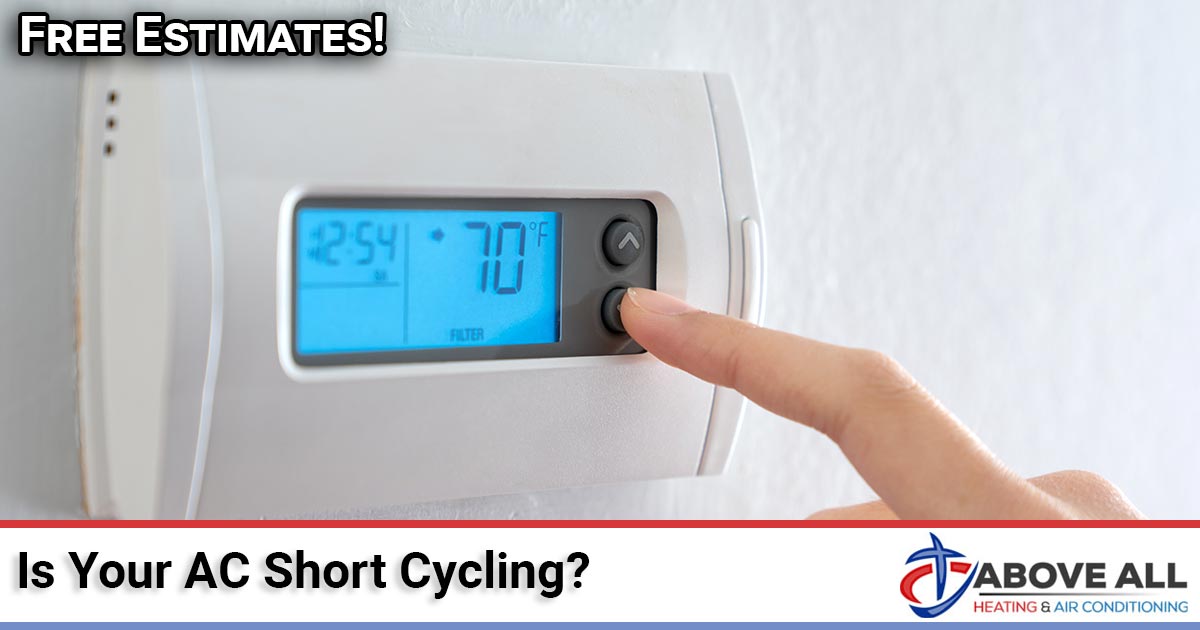
If your air conditioner is turning on, running for just a few minutes, and then shutting off again — over and over, sometimes every few minutes throughout the day — you’re dealing with a problem HVAC technicians call short cycling. It’s more than an annoyance. Short cycling wastes energy, strains your equipment, and is often an early warning sign of a bigger issue building underneath the surface.
At Above All Heating and Air, we get calls about short cycling throughout the cooling season across Temecula, Murrieta, Menifee, Lake Elsinore, Hemet, and Wildomar. This guide explains exactly what short cycling is, why it happens, what it means for your system long-term, and when it’s time to bring in a licensed technician.
What Does It Mean When an AC “Short Cycles”?
A healthy central air conditioning system runs through a complete cooling cycle: the compressor starts, the system runs long enough to pull heat and humidity out of your home, and then shuts off once the thermostat setpoint is reached. A typical cycle should last somewhere in the range of 15 to 20 minutes, depending on outdoor temperature and how well-insulated your home is.
Short cycling means that cycle gets cut dramatically short — the system might run for just two or three minutes before shutting off, then kick back on again a few minutes later. Over the course of a day, this adds up to dozens of start-and-stop cycles instead of the handful of longer runs a properly functioning system should complete.
The compressor is the hardest-working, most expensive component in your outdoor unit, and it draws the most electrical current at the moment it starts up. Every time the system short cycles, that compressor is forced through another high-draw startup. Multiply that by dozens of extra starts per day, and it’s easy to see why short cycling accelerates wear on components that are expensive to replace.
Why Short Cycling Matters
Homeowners sometimes assume that as long as cool air is still coming out of the vents, a system that cycles frequently isn’t a real problem. In practice, short cycling causes several compounding issues:
- Higher energy bills. Air conditioners use the most electricity during startup. Frequent starts mean your system spends more of its runtime in that high-draw phase and less time operating efficiently.
- Reduced dehumidification. Your AC removes humidity from the air gradually, over the course of a full cycle. A system that shuts off after a few minutes never gets the chance to pull meaningful moisture out of your home, which can leave the house feeling clammy even when the temperature reads correctly on the thermostat.
- Accelerated component wear. Compressors, capacitors, and contactors are all rated for a certain number of start cycles over their lifespan. Short cycling burns through that rated lifespan much faster than normal operation.
- Uneven temperatures. A system that never completes a full cycle struggles to evenly cool every room, particularly in larger or multi-story homes.
- Increased risk of a costly breakdown. Left unaddressed, the underlying cause of short cycling often progresses to a full system failure — frequently during the hottest, highest-demand days of the year.
Common Causes of AC Short Cycling
Short cycling is a symptom, not a diagnosis on its own. Below are the most common underlying causes our technicians identify when we’re called out for this issue.
An Oversized AC Unit
This is one of the most frequent causes of short cycling, especially in homes that have had a system replaced without a proper load calculation. An oversized unit cools the air in the home so quickly that it satisfies the thermostat before it has run long enough to complete a full cycle. The system reaches the setpoint almost immediately, shuts off, and then the temperature creeps back up minutes later, triggering another short run.
Correct sizing is based on a Manual J load calculation — a room-by-room assessment of your home’s square footage, insulation, window orientation, and ceiling height — not simply matching tonnage to square footage. An oversized system is not “better” than a correctly sized one; it’s actually a common source of comfort complaints and premature equipment failure. Our AC installation services always include a Manual J calculation for exactly this reason.
A Dirty or Clogged Air Filter
A clogged filter restricts airflow across the evaporator coil. Reduced airflow can cause the coil to drop below freezing, which trips the system’s safety controls and shuts the unit down prematurely — appearing to the homeowner as short cycling. This is usually the easiest cause to rule out: check your filter, and if it’s visibly dirty or has been in place longer than 30 to 60 days, replace it before calling for service.
Low Refrigerant or a Refrigerant Leak
Refrigerant is the substance that actually absorbs heat from your indoor air. When a system is low on refrigerant — always due to a leak somewhere in the sealed system, never normal “loss” over time — the evaporator coil can freeze, or the system’s pressure switches can shut the compressor down as a protective measure. This produces the same start-stop pattern homeowners describe as short cycling.
Electrical and Control Component Issues
A failing capacitor, a worn contactor, or a malfunctioning control board can all cause a system to shut down shortly after starting. In some cases these issues will also trip a breaker, which is a related but distinct symptom. If your system is short cycling and you’ve also noticed the breaker tripping, that combination points strongly toward an electrical fault rather than a sizing or airflow issue.
Thermostat Problems or Poor Placement
A thermostat that’s miscalibrated, has a failing internal sensor, or is mounted somewhere it receives direct sunlight, sits near a supply vent, or is close to a heat-generating appliance can misread the actual room temperature. This causes it to signal the system to shut off well before the home has actually reached the target temperature, and then call for cooling again shortly after.
A Frozen Evaporator Coil
Whether caused by restricted airflow or low refrigerant, a frozen coil is itself a trigger for short cycling — many systems include a safety control that shuts the compressor down if coil temperatures drop too low, in order to protect the equipment. If you notice visible ice on the indoor unit or the refrigerant lines, this is very likely connected to the short cycling you’re experiencing. Learn more about the difference between warm-air symptoms and cycling symptoms in our guide on AC blowing warm air.
Is Short Cycling Dangerous for My System Long-Term?
Short cycling itself won’t cause a sudden catastrophic failure overnight, but sustained short cycling meaningfully shortens the usable life of your system. The compressor is the single most expensive component to replace in a central air conditioner, and it is also the component most directly stressed by repeated startups. A system that short cycles for months without correction is significantly more likely to need a compressor repair or replacement well ahead of its expected lifespan.
Beyond the equipment itself, short cycling also means you’re paying more for less comfort — higher electric bills, worse humidity control, and inconsistent temperatures — while the underlying cause continues to go unaddressed.
How We Diagnose Short Cycling
When one of our licensed technicians is dispatched for a short-cycling complaint, the diagnostic process typically includes:
- Reviewing the cycle pattern. We ask how long the system runs before shutting off, how frequently it restarts, and whether the pattern changes with outdoor temperature or time of day.
- Inspecting the air filter and airflow path. A quick visual check rules out the simplest cause first.
- Checking refrigerant pressures. Using gauges connected to the system, we confirm whether refrigerant charge is within the correct range for your specific equipment.
- Testing electrical components. Capacitors, contactors, and control boards are checked with a multimeter against manufacturer specifications.
- Evaluating system sizing. If the system is running very short cycles even with correct refrigerant charge and clean airflow, we assess whether the equipment was ever correctly sized for the home.
- Confirming thermostat function and placement. We verify the thermostat is reading temperature accurately and installed in a location free from external heat influence.
Once we’ve identified the actual cause, we walk you through what we found in plain language, provide an upfront repair estimate, and complete most repairs on the same visit whenever parts allow.
How to Prevent AC Short Cycling
Several of the most common causes of short cycling are also some of the most preventable:
- Replace your air filter on a consistent schedule — monthly during peak summer use for most households.
- Schedule professional maintenance each spring, before peak cooling season, so refrigerant levels and electrical components are checked before problems develop.
- Make sure your thermostat is mounted away from direct sunlight, supply vents, and heat-generating appliances.
- If you’re replacing your system, insist on a Manual J load calculation rather than a simple square-footage estimate — correct sizing prevents short cycling from day one.
- Address ice on the indoor unit or refrigerant lines immediately rather than waiting to see if it resolves on its own.
Serving Homeowners Across Southwest Riverside County
Above All Heating and Air provides short-cycling diagnosis and repair throughout Temecula, Murrieta, Menifee, Lake Elsinore, Hemet, and Wildomar, along with the surrounding communities we serve. Southwest Riverside County’s long, hot cooling season puts extended demand on residential AC systems, which makes correcting issues like short cycling early — before compressor damage sets in — especially worthwhile here. If you’re located in Menifee specifically, our Menifee air conditioning repair guide covers a broader range of AC issues homeowners in that community commonly ask about.
Schedule a Short Cycling Diagnosis Today
If your air conditioner is turning on and off every few minutes, don’t wait for it to progress into a bigger repair. Contact Above All Heating and Air to schedule a diagnostic visit, or learn more about our full range of services on our homepage. Our licensed technicians will identify the actual cause of your short cycling and walk you through clear, upfront options to fix it.
Frequently Asked Questions About AC Short Cycling
What does it mean when an AC “short cycles”?
Short cycling means your air conditioner turns on, runs for only a few minutes, and then shuts off — repeating this pattern many times throughout the day instead of completing normal, longer cooling cycles.
Can an oversized AC unit cause short cycling?
Yes. An oversized system cools the air so quickly that it satisfies the thermostat before completing a full cycle, which is one of the most common causes of short cycling we diagnose.
Is short cycling dangerous for my system long-term?
Short cycling won’t cause an immediate breakdown, but it accelerates wear on the compressor and electrical components, which can shorten your system’s overall lifespan if left uncorrected.
Could a dirty filter cause short cycling?
Yes. A clogged filter restricts airflow, which can cause the evaporator coil to freeze and trigger a safety shutoff — producing the same start-stop pattern as short cycling.
When should I call a technician about short cycling?
If short cycling continues after you’ve checked and replaced the air filter, it’s time to call a licensed technician, since the remaining causes typically require diagnostic tools and professional repair.
Can low refrigerant cause an AC to short cycle?
Yes. Low refrigerant, always due to a leak, can cause the evaporator coil to freeze or trigger pressure-based safety shutoffs, both of which result in short, repeated cycling.
Does short cycling affect my energy bill?
Yes. Air conditioners draw the most electricity during startup, and frequent restarts mean more of your system’s runtime is spent in that high-draw phase rather than efficient steady operation.
Why does my AC turn on and off so often even though the house feels warm?
This pattern often points to a thermostat that’s misreading the room temperature, an oversized unit satisfying the thermostat too quickly, or a safety shutoff triggered by a frozen coil or refrigerant issue.
Can a bad capacitor cause short cycling?
Yes. A weak or failing capacitor can prevent the compressor from starting and running normally, which can present as the system shutting down shortly after each startup attempt.
Is it normal for my AC to cycle on and off during mild weather?
Some variation in cycle length is normal as outdoor temperatures change, but if cycles are consistently under five minutes regardless of outdoor conditions, that’s a sign of an underlying issue rather than normal operation.
Can thermostat placement really cause short cycling?
Yes. A thermostat mounted in direct sunlight, near a supply vent, or close to a heat-generating appliance can read an inaccurate temperature and shut the system off before the home has actually cooled.
How long should a normal AC cooling cycle last?
A properly functioning system typically runs for roughly 15 to 20 minutes per cycle, depending on outdoor temperature, home size, and insulation levels.
Will short cycling eventually damage my compressor?
Sustained short cycling puts repeated startup stress on the compressor, which is the most expensive component in your outdoor unit, and can meaningfully shorten its expected lifespan.
Can a frozen evaporator coil cause short cycling?
Yes. Many systems include a safety control that shuts the compressor off when coil temperatures drop too low, which produces a short-cycling pattern until the underlying airflow or refrigerant issue is corrected.
Should I keep running my AC if it’s short cycling?
It’s generally safe to keep the system running for a short period while you check the filter, but if short cycling continues, running it for an extended time can accelerate component wear — it’s best to schedule a diagnostic visit.
Does short cycling mean I need a whole new AC system?
Not necessarily. Many causes, like a dirty filter, weak capacitor, or low refrigerant, are repairable. Sizing-related short cycling from an incorrectly matched system is the scenario most likely to point toward replacement.
How much does it cost to fix an AC that’s short cycling?
Cost depends entirely on the underlying cause — a filter replacement or capacitor repair is relatively inexpensive, while a refrigerant leak repair or correcting an oversized system involves more cost. We provide a clear, upfront estimate after diagnosing the specific cause of your system’s short cycling.
Can Above All Heating and Air diagnose short cycling the same day I call?
In most cases, yes. We prioritize short cycling complaints given the added strain they place on your compressor, and our technicians carry common replacement parts on their service vehicles to complete repairs during the same visit whenever possible.
Schedule an Appointment Today
Get in touch with Above All Heating and Air Conditioning by calling us or filling out the form. We look forward to working with you.
