
AC Leaking Water? Causes, Fixes, and When to Call a Pro
CONTACT US
Contact Us

Our
SERVICEs
AC Leaking Water? Causes, Fixes, and When to Call a Pro
Above All Heating And Air Conditioning / August 10, 2026 / AC Repair, Air Conditioner Repair, Air Conditioning, HVAC Services
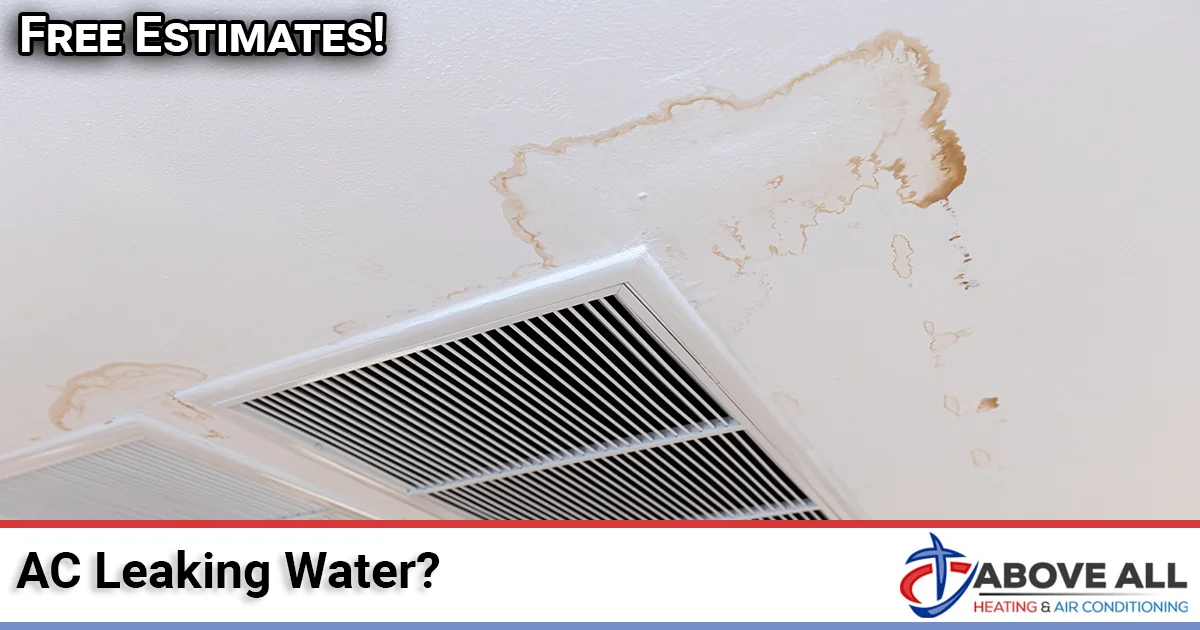
Finding water pooling around your indoor air conditioner is unsettling. One day the system is cooling your home without a second thought, and the next there is a damp spot on the floor, a stain spreading across the ceiling, or a steady drip coming from the air handler in the closet or attic. At Above All Heating and Air, we get calls about an AC leaking water throughout the hottest stretch of every Southern California summer, and the good news is that the cause is usually something we can identify quickly and fix affordably. This guide walks you through why your AC leaks water, which problems are safe to handle yourself, and when it is time to bring in a professional before a small drip turns into real damage.
Why Your AC Produces Water in the First Place
Before we talk about leaks, it helps to understand why there is water inside your air conditioner at all. As warm, humid indoor air passes over the cold evaporator coil, moisture condenses out of it, exactly the way beads of water form on a cold glass of iced tea on a summer afternoon. That condensation is a normal, healthy part of how your system cools and dehumidifies your home. On a hot, muggy day, a working AC can pull several gallons of water out of the air.
All of that moisture is supposed to drip into a condensate drain pan beneath the coil, flow into a drain line, and exit your home safely, usually outside near the foundation or into a household drain. A leak happens when something interrupts that path. Once you understand that your AC is designed to make water and then carry it away, it becomes much easier to see why a leak almost always points to a drainage problem rather than a mysterious failure. When you notice your AC leaking water indoors, it means the water your system produces is no longer draining the way it should.
The Most Common Cause: A Clogged Condensate Drain Line
If your AC is leaking water, the odds are high that a clogged condensate drain line is to blame. The drain line is a length of PVC pipe that carries condensation away from the drain pan. Because that line stays dark and damp all summer, it is the perfect environment for algae, mold, and slime to build up, and dust or debris pulled through the system can add to the blockage. Over time the line narrows and eventually clogs completely.
When the drain line clogs, the water has nowhere to go. It backs up into the drain pan, fills it, and then spills over the edge onto whatever is below, your floor, ceiling, or the platform the unit sits on. This is why a leak often appears suddenly during a heat wave: the system is producing more condensation than usual, and a partially blocked line that kept up during mild weather simply cannot handle the extra volume. A clogged drain line is one of the more approachable AC problems, but it is also one that tends to come back if the underlying buildup is not fully cleared and the system is not maintained.
Other Reasons Your AC Is Leaking Water
While a clogged drain line is the usual suspect, it is not the only one. When our technicians arrive to diagnose a leak, these are the other causes we most often find:
- A cracked or rusted drain pan. On older systems, the pan that catches condensation can corrode or crack, allowing water to escape even when the drain line is perfectly clear. A damaged pan needs to be replaced rather than patched.
- A dirty air filter. A clogged filter restricts airflow across the evaporator coil. Without enough warm air moving over it, the coil can get too cold and freeze. When that ice later melts, the runoff can overwhelm the drain pan and leak. This is one of the most common and most preventable causes we see.
- A frozen evaporator coil. Ice on the coil can form from restricted airflow, a dirty coil, or low refrigerant. As the ice thaws, it releases far more water than the drain system is built to handle at once, and the overflow shows up as a leak.
- Low refrigerant. When refrigerant is low, pressure inside the coil drops and the coil temperature falls below freezing. The result is the same freeze-and-thaw cycle that causes leaks. Low refrigerant almost always means there is a leak somewhere in the sealed system, which is a repair for a licensed professional.
- A disconnected or broken drain line. Vibration, age, or a past repair can leave a drain line loose or cracked, letting water escape before it ever reaches its exit point.
- A failed condensate pump. Systems installed in basements, attics, or spots below the drainage point rely on a small pump to move water out. When that pump fails, water backs up and overflows.
- Improper installation. A unit that is not level, or a drain line that was routed without enough slope, can keep water from flowing the way it should, causing recurring leaks that never quite resolve until the setup is corrected.
Because several of these causes produce the exact same symptom, water where it should not be, guessing at the source can lead you to fix the wrong thing. Some of these issues, like low refrigerant or a frozen coil, also overlap with other cooling problems. If your system is struggling in more ways than one, our guide on what to do when your AC compressor is not working covers related warning signs worth knowing about.
What to Do the Moment You Notice a Leak
If you spot water around your AC, a few quick steps can limit the damage while you figure out the cause:
- Turn the system off at the thermostat. Running a leaking AC can worsen water damage and, if a frozen coil or low refrigerant is involved, add strain to expensive components.
- Clean up standing water. Soak up pooled water and move anything valuable out of the area to protect flooring, drywall, and belongings from ongoing moisture.
- Check your air filter. If it is visibly dirty, replace it. A fresh filter restores airflow and, in the case of a lightly frozen coil, may be part of the solution.
- Look for ice. If you see frost or ice on the refrigerant lines or coil, leave the system off and let it thaw fully before anyone inspects it.
- Note when the leak happens. Does it leak only when running, only on hot days, or even when the unit is off? These details help a technician pinpoint the cause faster.
Which Fixes You Can Safely Try Yourself
Some leak causes are well within reach for a hands-on homeowner. Replacing a dirty air filter is the simplest and often prevents freeze-related leaks going forward. Clearing a clogged condensate drain line is also a reasonable DIY task in many cases: with the system off, you can locate the drain line near the indoor unit, attach a wet/dry vacuum to the outdoor end of the pipe to pull the clog free, or flush the line with a small amount of distilled vinegar to break down buildup. Keeping the area around the indoor and outdoor units clean and clear also goes a long way.
What we do not recommend is opening the sealed refrigerant system, handling electrical components, or attempting to replace a drain pan or condensate pump without the right tools and experience. If a basic filter change or drain-line flush does not stop the leak, that is a clear sign the cause is deeper and it is time to call a professional rather than keep experimenting.
When to Call a Pro
It is time to bring in a licensed technician when the leak keeps coming back after you have cleared the drain line, when you see ice on the system, when the unit is not cooling well in addition to leaking, or when the leak is significant enough to threaten your floors, walls, or ceiling. Leaks tied to low refrigerant, a frozen coil, a cracked drain pan, a failed pump, or an installation problem all call for professional diagnosis and repair. Refrigerant work in particular is regulated and requires proper equipment and certification.
There is also no harm in calling simply because you are not sure. A short professional visit can confirm the cause, resolve it correctly the first time, and give you peace of mind, which is often well worth it compared to the risk of water damage or a repeat leak in the middle of the hottest part of the year. If you would like us to take a look, you can contact our team or request a free quote to get started.
How Above All Heating and Air Diagnoses and Fixes a Leaking AC
When you call us about an AC leaking water, our approach is to find the true source rather than treat the symptom. A technician inspects the condensate drain line and pan, checks the air filter and evaporator coil for signs of freezing, verifies refrigerant levels, and confirms that the drain path and any condensate pump are working as designed. Because a leak can have more than one contributing cause, this full check keeps us from clearing a drain line only to have the same problem return a week later because a dirty coil was freezing all along.
Once we know what is happening, we explain what we found and provide upfront pricing before any work begins, so there are no surprises. Whether the fix is a straightforward drain-line clearing, a new drain pan, a refrigerant repair, or a condensate pump replacement, we handle it and then confirm the system is draining properly before we leave. Our goal is a repair that lasts, not a quick patch.
Preventing AC Water Leaks Before They Start
Most leaks we respond to trace back to small, preventable issues. A few simple habits dramatically reduce the odds of finding water around your unit. Change your air filter on a regular schedule so the coil never freezes from restricted airflow. Keep the area around your indoor and outdoor units clean and unobstructed. And schedule annual professional maintenance, ideally before the peak of summer, so a technician can clear the condensate drain line, inspect the pan, and confirm refrigerant levels before the system is under its heaviest load.
Maintenance is the single most effective way to avoid leaks, because it catches the buildup and wear that cause them while they are still minor. If your system has not been serviced recently, a seasonal tune-up is a smart investment that often pays for itself by preventing exactly the kind of mid-summer leak, or worse breakdown, that sends homeowners scrambling for emergency help on a 100-degree afternoon.
Why Southern California Homeowners Call Above All Heating and Air
Our long, hot summers push every air conditioner hard, and drainage problems have a way of surfacing at the worst possible moment. Homeowners across the region trust Above All Heating and Air because we show up, diagnose the real cause, explain your options in plain language, and stand behind our work with honest, upfront pricing. When your AC is leaking water and you want it handled right, we are ready to help. Reach out through our contact page or explore more cooling tips and guides on our homepage any time.
Frequently Asked Questions About an AC Leaking Water
What usually causes an AC unit to leak water?
The most common cause is a clogged condensate drain line. As your AC removes humidity from the air, that moisture drips into a drain pan and flows out through a drain line. When algae, dirt, or debris clog that line, water backs up and overflows near the indoor unit. Other causes include a cracked or rusted drain pan, a frozen evaporator coil, a dirty air filter, low refrigerant, or a disconnected drain line.
How do I clear a clogged AC condensate drain line?
Turn off the system first. Locate the drain line, a PVC pipe near the indoor unit, and use a wet/dry vacuum at the outdoor end to pull out the clog, or flush the line with a small amount of distilled vinegar. If the clog is stubborn or you cannot locate the access point, a professional can clear it quickly and check for related issues.
Can a leaking AC cause water damage if ignored?
Yes. A slow, ongoing leak can damage drywall, flooring, ceilings, and framing, and the trapped moisture can encourage mold growth. Because leaks often start small and get worse, it is best to address the source promptly rather than wait.
Is a leaking AC always a DIY fix?
Not always. A simple clogged drain line or a filter change is often within reach for a homeowner. But leaks caused by a frozen coil, low refrigerant, a failed condensate pump, or a cracked drain pan usually require a licensed technician to diagnose and repair safely.
When does a water leak signal a frozen coil instead of a drain clog?
If you see ice on the refrigerant lines or evaporator coil, or the leak appears after the system has been struggling to cool, a frozen coil is a likely cause. When the ice melts, it can overwhelm the drain pan and leak. Turn the system off, let it thaw, and have a technician find out why it froze.
Why is my AC leaking water only on hot days?
On hot, humid days your AC runs longer and pulls more moisture from the air, so any drainage problem shows up faster. A partially clogged drain line that keeps up on mild days can easily overflow during a heat wave when condensation volume is at its highest.
Can a dirty air filter cause my AC to leak water?
Yes, indirectly. A clogged filter restricts airflow across the evaporator coil, which can cause the coil to get too cold and freeze. When that ice melts, the runoff can exceed what the drain pan holds and lead to a leak. Changing the filter regularly is one of the simplest ways to prevent this.
What is the condensate drain pan and why does it overflow?
The drain pan sits beneath the evaporator coil and catches the condensation the system removes from your air. It overflows when the drain line is clogged, when the pan itself is cracked or rusted through, or when the volume of water is higher than normal, such as during a coil freeze-and-thaw cycle.
Is it normal for my AC to leak water outside?
Some condensation dripping from the outdoor unit or the end of the condensate line can be normal, especially on humid days. Water pooling indoors near the air handler is not normal and should be addressed. If you are unsure which you are seeing, our team can help you tell the difference.
Why is water leaking from my AC when the unit is turned off?
This often points to a frozen coil that is now thawing, releasing more water than the drain can handle. It can also mean water backed up in the drain pan while the unit ran and is now overflowing. Leave the system off and have the cause inspected.
Can low refrigerant cause an AC to leak water?
Yes. Low refrigerant lowers the pressure and temperature at the evaporator coil, which can cause the coil to freeze. As the ice melts, the excess water can overflow the drain pan. Low refrigerant usually means there is a leak in the sealed system, which requires professional repair.
How much does it cost to fix an AC that’s leaking water?
It depends on the cause. Clearing a clogged drain line is typically a modest, straightforward repair, while issues like a refrigerant leak, a failed condensate pump, or a cracked drain pan cost more. Above All Heating and Air provides upfront pricing after diagnosing the problem so you know what to expect before work begins.
Can I keep running my AC while it’s leaking water?
It is best not to. Continuing to run a leaking system can worsen water damage and, if the cause is a frozen coil or low refrigerant, can strain the compressor. Turn the system off, dry the area, and have the leak diagnosed before running it again.
How can I prevent my AC from leaking water in the future?
Change your air filter regularly, keep the area around the indoor unit clean, and schedule annual professional maintenance. During a tune-up, a technician clears the condensate drain line, checks the drain pan, and confirms refrigerant levels, catching the small issues that lead to leaks.
Does a leaking AC mean I need a new system?
Usually not. Most water leaks come from a clogged drain line, a dirty filter, or a drain pan issue, all of which are repairable. Replacement only becomes a consideration when a leak is tied to a larger failure on an older system. A technician can tell you whether a repair or replacement makes more sense.
How quickly can Above All Heating and Air respond to an AC water leak?
Response times vary by season and demand, but our team works to reach Southern California homeowners promptly, especially during peak summer months. Contact us or request a free quote and we will help you get the leak diagnosed and resolved.
Schedule an Appointment Today
Get in touch with Above All Heating and Air Conditioning by calling us or filling out the form. We look forward to working with you.
