
AC Load Calculation: Why the Right Size Matters More Than the Brand
CONTACT US
Contact Us

Our
SERVICEs
AC Load Calculation: Why the Right Size Matters More Than the Brand
Above All Heating And Air Conditioning / August 28, 2026 / Air Conditioner Replacement, Air Conditioning, HVAC Services
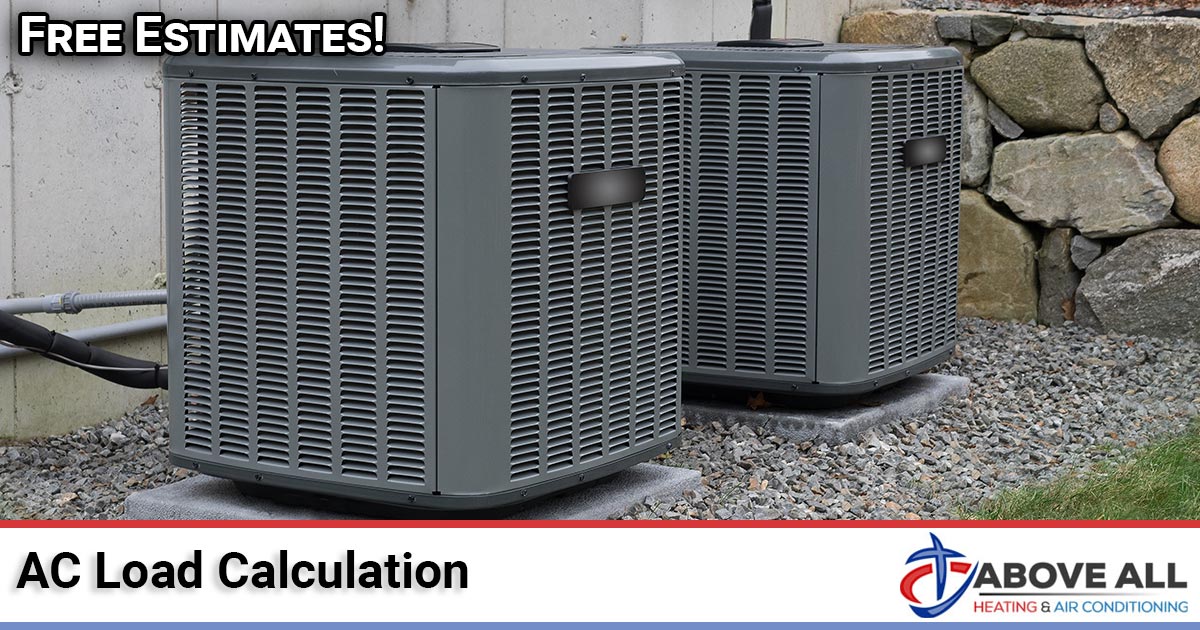
When a homeowner starts shopping for a new air conditioner, the conversation almost always turns to brand names. Carrier, Trane, Lennox, Bryant, American Standard — the manufacturer badge on the outdoor unit feels like the decision that matters most. In reality, the single factor that determines whether a new AC system performs the way it should has almost nothing to do with the brand on the label. It comes down to whether the unit is sized correctly for the home it’s cooling, and that sizing decision starts with something most homeowners have never heard of: an AC load calculation.
At Above All Heating and Air, we see the consequences of skipped or shortcut sizing decisions regularly across Temecula, Murrieta, Menifee, and the rest of the Inland Empire. A premium-brand system that’s the wrong size for the home it’s installed in will underperform a mid-range system that’s sized correctly, every time. This guide explains what a load calculation actually is, why guessing at AC size costs homeowners money and comfort, and what goes into getting it right.
Why “Bigger Is Better” Is the Wrong Way to Buy an AC
It’s a common assumption: if a bigger unit means more cooling power, then a bigger unit should mean a more comfortable home. Southern California summers push triple digits often enough that the instinct to oversize makes intuitive sense. Unfortunately, it’s backward. Air conditioning isn’t just about raw cooling capacity — it’s about matching that capacity to the specific amount of heat a particular home actually gains over the course of a day, and running long enough in each cycle to also remove humidity from the air.
An oversized system cools the air quickly, satisfies the thermostat, and shuts off — often within a few minutes of starting. That short run time isn’t a sign of efficiency. It means the system never runs long enough to properly dehumidify the home, which leaves the space feeling clammy and uncomfortable even at the target temperature. It also means the compressor cycles on and off far more often than it was designed to, which accelerates wear on the very components that are the most expensive to repair or replace. An undersized system creates the opposite problem: it runs almost continuously during peak heat, struggles to ever reach the thermostat’s setpoint, and still leaves rooms farther from the return air duct feeling warmer than the rest of the house. Either mistake costs the homeowner money, whether through higher utility bills, more frequent repairs, or a shorter equipment lifespan than the system should have delivered.
What Is an AC Load Calculation?
A load calculation is the engineering process HVAC professionals use to determine exactly how much cooling capacity a specific home needs. In the industry, the most widely recognized standard for residential cooling and heating load calculations is Manual J, published by the Air Conditioning Contractors of America (ACCA). A Manual J calculation isn’t a rough estimate based on square footage alone — it’s a room-by-room analysis of how much heat a home gains from the outdoor environment, from sunlight, from appliances, and from the people living inside it, balanced against how much of that heat the home’s construction and insulation can resist.
The output of a proper load calculation is a specific number, measured in BTUs (British Thermal Units) per hour, that tells a contractor exactly what size system the home needs — not the size that’s convenient to install, not the size the previous system happened to be, and not a size rounded up “to be safe.” That number becomes the foundation for every other decision in the installation: equipment selection, ductwork design, and airflow balancing.
The Factors That Go Into a Proper Load Calculation
A load calculation pulls together a long list of details about a home, many of which have nothing to do with its square footage. Some of the most significant factors include:
- Insulation levels in the attic, walls, and floor, which determine how much heat transfers into the living space from outside.
- Window area, type, and orientation, since a home with large west-facing windows absorbs significantly more afternoon heat than one with the same square footage and smaller, shaded, or north-facing glass.
- Ceiling height and floor plan, because a home with vaulted ceilings or an open-concept layout has more air volume to condition than a home with the same footprint and standard eight-foot ceilings.
- Ductwork condition and layout, since leaky, undersized, or poorly routed ducts can force a correctly sized system to work as if it were undersized.
- Local climate data, including the design temperatures typical for the Temecula, Murrieta, and Menifee area, rather than a generic regional average.
- Number of occupants and typical usage patterns, since people, cooking, and electronics all add measurable heat to a home’s interior.
- Home orientation and shading, including nearby trees, patio covers, and neighboring structures that reduce direct solar heat gain.
Two homes with identical square footage in the same neighborhood can require different-sized systems once these variables are accounted for. That’s exactly why a load calculation, rather than a rule-of-thumb estimate, is the only reliable way to determine correct AC sizing.
How Southern California’s Climate Changes the Math
Load calculations use local climate data as a core input, and that matters more in Southern California than in milder parts of the country. The Inland Empire regularly sees extended stretches of triple-digit heat during peak summer months, along with the kind of dry, intense afternoon sun that drives significant heat gain through roofs and west-facing windows. A load calculation performed with generic national averages, rather than data reflecting the actual design conditions for Temecula, Murrieta, or Menifee, can under-predict how much cooling a home really needs during the hottest stretches of the season — which is exactly when an undersized system is most likely to fail to keep up.
This is also where zoning and lifespan considerations connect back to sizing. A home with an uneven heat load between floors, common in two-story Inland Valley homes, may be a better candidate for a zoned system than for simply installing a larger single unit. And a system that’s been sized and installed correctly from the start typically reaches the upper end of its expected service life without the added strain that comes from constant short cycling or from running nonstop trying to catch up on a hot afternoon.
Why Above All Heating and Air Performs a Load Calculation on Every Installation Quote
Skipping the load calculation is faster and cheaper for a contractor in the moment, which is why some companies quote AC installations based on a quick look at the old unit’s size or a rough square-footage rule. That shortcut shifts all of the risk onto the homeowner, who ends up living with whatever comfort or efficiency problems come from an incorrectly sized system for the next 15 or more years.
Our technicians perform a proper load calculation as part of every new installation and full-system replacement quote, rather than treating it as an optional upgrade. That means walking the home, documenting insulation and window details, reviewing the existing ductwork, and running the numbers before recommending equipment. It’s one of the reasons homeowners across our service area choose to work with a company that’s more than just a brand reseller — the sizing methodology behind the recommendation is just as important as the equipment itself.
Signs Your Current System Might Be the Wrong Size
Homeowners don’t need to wait for a full system failure to suspect a sizing problem. A few patterns tend to show up consistently in homes with an incorrectly sized AC system:
- The system turns on and off frequently, sometimes every few minutes, rather than running in longer, steady cycles.
- Indoor humidity feels noticeably high even when the thermostat reads the correct temperature.
- Some rooms stay significantly warmer or cooler than others, regardless of how vents are adjusted.
- Energy bills climb steeply during peak summer months, out of proportion with the size of the home.
- The system runs almost continuously on hot afternoons and still struggles to reach the setpoint.
Any one of these symptoms can have more than one possible cause, so they’re worth having evaluated by a technician rather than assumed. But when they show up together, an incorrect original sizing decision is often at the root of the problem.
The Real Cost of Skipping the Calculation
The financial argument for a proper load calculation is straightforward. An oversized system costs more to purchase upfront than the correctly sized alternative, while also increasing long-term repair costs from accelerated wear and shortening the realistic service life of major components like the compressor. An undersized system may cost less initially but drives up monthly energy bills for as long as it’s in service, since it has to run longer and harder to deliver less comfort. In both cases, the homeowner pays for the sizing mistake for years after the installation crew has left — long after the appeal of a particular brand name has stopped mattering.
Getting the load calculation right the first time is also simply less expensive than correcting a sizing mistake later. Replacing an AC system that was installed only a few years earlier because it never performed properly is a cost most homeowners would rather avoid entirely.
Getting Sizing Right the First Time
If you’re planning a new AC installation, a full system replacement, or you’re simply trying to understand why your current system isn’t performing the way it should, a proper load calculation is the place to start. Our team can walk through your home, review your AC installation options, and explain exactly how we arrived at a sizing recommendation before you commit to any specific piece of equipment. If you’re weighing whether your current system is close to the end of its service life, our guide on when to replace your heating and AC system is a helpful companion resource, and our AC installation cost and process guide covers what to expect once sizing has been determined.
You can request a free AC installation quote that includes a proper load calculation, or reach out through our contact page with questions about your specific home. Getting the size right from the start is the single best thing you can do to protect your comfort, your energy bills, and the lifespan of your investment — no matter which brand ends up on the outdoor unit.
Frequently Asked Questions
What is an AC load calculation and why does it matter?
An AC load calculation is an engineering process, most commonly following the Manual J standard, that determines exactly how much cooling capacity a specific home needs based on its construction, insulation, windows, layout, and local climate. It matters because it’s the only reliable way to avoid installing a system that’s too large or too small for the home.
Can an oversized AC unit actually cool a home worse than a properly sized one?
Yes. An oversized unit cools the air quickly and shuts off before it has run long enough to remove humidity from the home, which can leave rooms feeling clammy even at the correct temperature. It also cycles on and off more frequently, adding wear to the compressor and other components.
Does Above All Heating and Air perform a load calculation before installation quotes?
Yes. We perform a proper load calculation as part of every new installation and full-system replacement quote, rather than estimating size from the old unit or square footage alone.
What factors go into calculating the right AC size for a home?
Key factors include insulation levels, window size and orientation, ceiling height and floor plan, ductwork condition, local climate data, the number of occupants, and shading from trees or nearby structures.
How does home insulation affect load calculation results?
Better insulation slows the rate at which outdoor heat transfers into a home, which lowers the cooling load. Two homes of the same size with different insulation levels can require noticeably different AC capacities as a result.
Is a bigger AC unit always better for a hot Southern California summer?
No. A bigger unit isn’t automatically better, even in extreme heat. An oversized system short-cycles, fails to properly dehumidify the home, and puts extra strain on the compressor, all of which can make comfort worse rather than better.
What is Manual J, and is it the same thing as a load calculation?
Manual J is the residential load calculation standard published by the Air Conditioning Contractors of America. When HVAC professionals refer to performing a load calculation, they’re typically referring to a Manual J calculation or a comparable method built on the same engineering principles.
Can I just match the size of my old AC unit when replacing it?
It’s not a reliable approach. The original system may have been sized incorrectly to begin with, or the home may have changed since it was installed, through new windows, added insulation, or a remodel. A new load calculation accounts for the home’s current condition rather than repeating a past decision.
How do window size and orientation affect the load calculation?
Larger windows, and windows facing west or south, allow more direct solar heat into a home during the afternoon, which increases the cooling load for those rooms. Smaller, shaded, or north-facing windows contribute less heat gain.
Does ductwork condition factor into proper AC sizing?
Yes. Leaky, undersized, or poorly routed ductwork can prevent a correctly sized system from delivering conditioned air effectively, which can make a properly sized unit perform as if it were undersized.
What are the warning signs that my current AC was sized incorrectly?
Frequent short cycling, high indoor humidity despite a correct thermostat reading, uneven temperatures between rooms, steep summer energy bills, and a system that runs constantly without reaching the setpoint are all common signs of a sizing mismatch.
Will a properly sized AC actually lower my energy bills?
In most cases, yes. A correctly sized system runs in longer, more efficient cycles instead of short-cycling or running continuously, which typically results in lower energy consumption than either an oversized or undersized alternative.
Does ceiling height or an open floor plan change the calculation?
Yes. Vaulted ceilings and open-concept layouts increase the volume of air that needs to be conditioned compared to a home with the same square footage and standard ceiling heights, which increases the calculated cooling load.
How long does a professional load calculation take?
The on-site portion typically takes place during the same visit as an installation estimate, since it involves documenting the home’s insulation, windows, and layout. The exact time varies by home size and complexity.
Is a load calculation required, or is it optional for AC installation?
Industry best practices, including ACCA standards, call for a Manual J load calculation before sizing new equipment. While not every contractor performs one, it’s considered the professional standard for a reliable installation.
Can two homes of the same square footage need different-sized AC units?
Yes. Differences in insulation, window area, orientation, ceiling height, and ductwork condition mean two homes with identical square footage can have meaningfully different cooling loads.
Does the number of people living in the home affect sizing?
Yes, though typically to a smaller degree than factors like insulation and window area. Occupants, along with appliances and electronics, add measurable heat to a home’s interior that a load calculation accounts for.
What should I ask a contractor to confirm they’re sizing my AC correctly?
Ask whether they perform a Manual J load calculation, or an equivalent room-by-room assessment, before recommending equipment size, and ask to see the resulting numbers rather than accepting a size based solely on the old unit or a square-footage rule of thumb.
Schedule an Appointment Today
Get in touch with Above All Heating and Air Conditioning by calling us or filling out the form. We look forward to working with you.
