
AC Keeps Tripping the Breaker? Electrical Safety Signs and When to Call a Pro
CONTACT US
Contact Us

Our
SERVICEs
AC Keeps Tripping the Breaker? Electrical Safety Signs and When to Call a Pro
Above All Heating And Air Conditioning / August 21, 2026 / AC Repair, Air Conditioner Repair, Air Conditioner Replacement, Air Conditioning, Air Conditioning Replacement, Air Conditioning Service
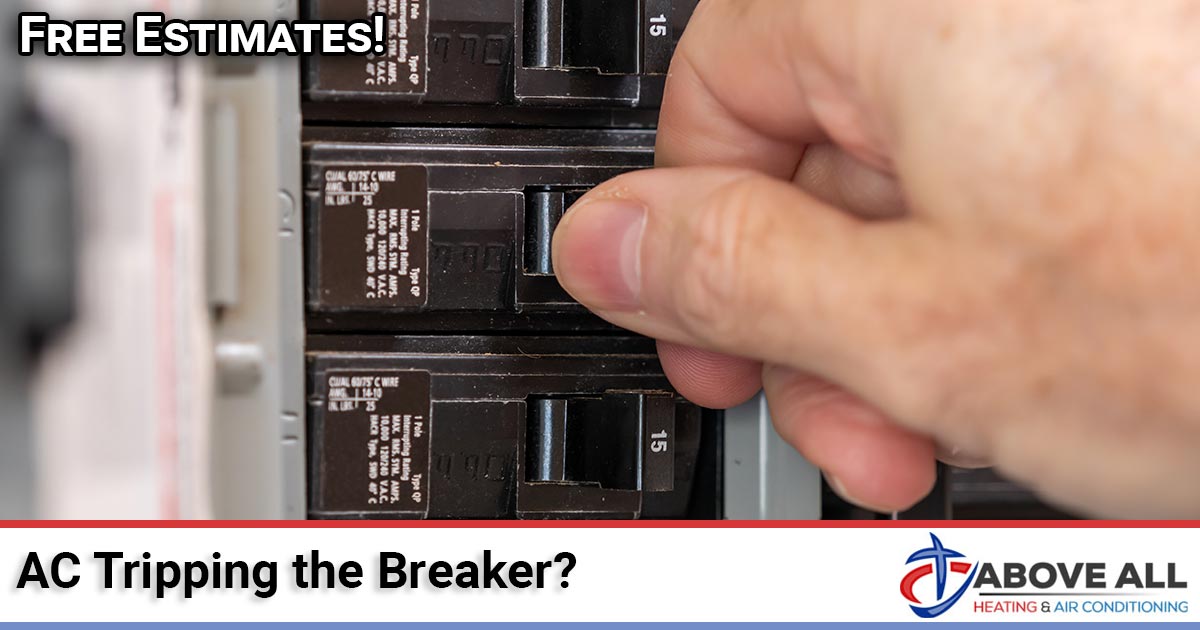
If your air conditioner has tripped the circuit breaker once, twice, or several times over the past few days, it’s tempting to just walk down to the electrical panel, flip the switch back, and move on with your day. But a breaker that trips repeatedly isn’t a random glitch — it’s your home’s electrical system doing exactly what it’s designed to do: shutting off power before something gets damaged or, in a worst case, before an electrical fire starts.
At Above All Heating and Air, we get calls throughout the summer from homeowners across Southern California whose AC has started tripping the breaker, often more than once in the same day. This guide explains what’s actually happening when that occurs, which causes are relatively minor and which ones are genuine safety concerns, and when it’s time to stop resetting the breaker yourself and call a licensed technician.
What Does It Mean When Your AC Trips the Breaker?
A circuit breaker is a safety device. Its job is to monitor the amount of electrical current flowing through a circuit and cut power automatically if that current exceeds a safe level. When your air conditioner’s breaker trips, the breaker has detected that the system — usually the outdoor condenser unit and its compressor — is drawing more current than the circuit is rated to handle safely.
That’s an important distinction to start with: the breaker itself is very rarely the actual problem. In the overwhelming majority of cases, the breaker is simply reacting correctly to a fault somewhere in the AC system’s electrical components. Replacing or resetting the breaker without addressing that underlying fault doesn’t fix anything — it just delays the next trip.
Common Causes of an AC Tripping the Breaker
Several different issues can cause an air conditioner to pull excess current and trip its dedicated breaker. Below are the causes our technicians encounter most often.
A Dirty or Failing Capacitor
The start and run capacitors give your compressor and fan motor the initial jolt of energy they need to start turning. A capacitor that’s weakening with age can force the compressor motor to strain and draw excessive current during startup, which is one of the most common single causes of a breaker trip on an AC circuit.
A Struggling or Failing Compressor
The compressor is the hardest-working component in your outdoor unit, and it’s also the component most likely to draw dangerously high current when something is wrong internally — worn bearings, damaged windings, or a motor that’s beginning to fail can all cause this. For a deeper look at compressor-specific symptoms and what repair typically involves, see our guide on AC compressor problems, causes, and costs.
Dirty or Blocked Condenser Coils
The outdoor condenser coil releases the heat your system pulls out of your home. When that coil is coated in dirt, pollen, or debris, the system can’t reject heat efficiently, so the compressor has to work harder and draw more current to keep up — which can be enough to trip the breaker, especially during the hottest part of the day.
Restricted Airflow From a Clogged Filter
A severely clogged air filter restricts airflow across the indoor coil. Over time, this forces the whole system — and particularly the compressor — to work under more strain than it was designed for, increasing current draw. This is one of the easiest causes to rule out yourself before calling for service.
A Refrigerant Issue or Frozen Evaporator Coil
Low refrigerant, a refrigerant leak, or restricted airflow can all cause the evaporator coil to freeze. Running a system with ice on the coil forces the compressor to work against abnormal pressure conditions, which can pull enough extra current to trip the breaker. If you’ve noticed visible ice on your indoor unit or refrigerant lines, don’t keep running the system — shut it off and call a technician.
Faulty Wiring, a Failing Contactor, or Loose Connections
Electrical connections inside the outdoor unit’s disconnect box or control panel can loosen or corrode over time, and a failing contactor (the relay that switches power to the compressor) can stick or arc. Both conditions can cause abnormal current draw and are genuine electrical safety concerns rather than routine wear.
A Breaker That’s Undersized or Nearing the End of Its Life
Less commonly, the breaker itself is mismatched to the circuit, or it has simply aged to the point where it trips more easily than it should. This is something a licensed technician or electrician needs to evaluate directly rather than something a homeowner should try to diagnose by swapping breakers.
Is It Safe to Keep Resetting the Breaker Yourself?
Resetting a breaker once, to see if the trip was an isolated event, is generally reasonable. Resetting it a second, third, or fourth time without figuring out why it keeps happening is where the real risk begins. Each trip means the system pulled more current than the circuit was designed to carry, and repeated overcurrent events can damage wiring insulation, degrade the breaker itself, and in some cases create a fire hazard at the panel or at the disconnect box outside.
A breaker that won’t stay reset, that trips within seconds of the AC starting, or that trips even when the AC isn’t running are all signs that you should stop resetting it and have it inspected before using that circuit again.
AC Tripping the Breaker vs. AC Short Cycling: What’s the Difference?
These two symptoms sometimes get confused, but they’re not the same thing. Short cycling is when your AC turns on, runs briefly, and shuts itself back off through its own internal controls — the system is still receiving power the whole time. A breaker trip, by contrast, cuts power to the entire circuit from outside the unit, and the system won’t run again at all until the breaker is manually reset. If your system is cycling on and off on its own rather than losing power entirely, our guide to AC short cycling covers that issue and its causes in more detail. It’s also worth noting that some underlying problems, like a failing capacitor or a struggling compressor, can contribute to both symptoms, which is one more reason a professional diagnosis is worth scheduling rather than guessing between the two.
When a Tripping Breaker Signals an Electrical Emergency
Most AC-related breaker trips are mechanical or electrical component failures rather than immediate hazards, but a few signs mean you should treat the situation as urgent and avoid touching the panel or the unit until a professional arrives:
- A burning smell coming from the electrical panel, the outdoor disconnect box, or the unit itself
- Visible scorch marks, melted plastic, or discoloration around the breaker or outlet
- Buzzing, crackling, or popping sounds from the panel or the outdoor unit
- The breaker feels warm or hot to the touch
- Sparks visible when the breaker is switched, or when the AC attempts to start
- The breaker trips immediately, within a second or two of resetting it
Any of these warrant shutting off the system at the disconnect (if you can do so safely) and calling a licensed professional right away rather than waiting for a scheduled appointment.
What to Do When Your AC Trips the Breaker
If your air conditioner trips the breaker, a few simple, safe steps can help you and your technician narrow down the cause before a service visit:
- Turn the thermostat off. This prevents the system from immediately trying to restart and tripping the breaker again the moment you reset it.
- Reset the breaker once. Flip it fully to the “off” position before switching it back to “on.” If it won’t stay on, or trips again within seconds, stop here and call a technician.
- Check your air filter. If it’s visibly dirty or hasn’t been changed recently, replace it — restricted airflow is one of the more common and easily fixed contributors to this problem.
- Look (without touching) at the outdoor unit and panel. Note any burning smell, scorch marks, or unusual sounds and mention them when you call for service — this helps our technicians prioritize and prepare for the visit.
- Avoid repeated resets. If the breaker trips again after you’ve reset it once and checked the filter, don’t keep cycling it. Leave the system off and schedule a diagnostic visit.
How Above All Heating and Air Diagnoses a Tripping AC
When one of our licensed technicians is dispatched for a breaker-tripping complaint, the diagnostic process typically includes checking the capacitor’s output against manufacturer specifications, testing the contactor for proper operation and signs of arcing or pitting, measuring the compressor’s amp draw against its rated values, inspecting wiring and connections inside the disconnect box and control panel for damage or corrosion, evaluating airflow and refrigerant charge to rule out a coil freeze-up, and confirming the breaker and circuit are correctly sized for the equipment.
Once we’ve identified the specific cause, we explain what we found in plain language, provide an upfront repair estimate, and complete most repairs during the same visit whenever the necessary parts are available on our service vehicles.
Preventing Future Breaker Trips
Several of the most common causes of AC-related breaker trips are also preventable with routine care:
- Replace your air filter on a consistent schedule, especially during peak summer cooling months
- Keep the outdoor condenser unit clear of leaves, grass clippings, and debris, and have the coils professionally cleaned periodically
- Schedule seasonal maintenance so capacitors, contactors, and wiring connections are inspected and tested before they fail outright
- Address any ice on the indoor coil or refrigerant lines immediately rather than continuing to run the system
- Have an aging system evaluated before peak season, since components like capacitors and contactors wear out gradually over years of use
Serving Homeowners Throughout Southern California
Above All Heating and Air provides AC electrical diagnostics and repair throughout Murrieta, Temecula, Menifee, Wildomar, Hemet, and the surrounding Southern California communities we serve. Long, hot cooling seasons in this region put sustained demand on compressors, capacitors, and electrical components, which is exactly the kind of strain that leads to breaker trips later in the summer. Catching the underlying cause early — rather than repeatedly resetting the breaker — is the difference between a straightforward repair and a compressor replacement.
To see the full range of cooling services we offer, visit our air conditioning services page, or head to our homepage to learn more about Above All Heating and Air.
Schedule an AC Electrical Diagnostic Today
If your air conditioner has tripped the breaker more than once, don’t keep resetting it and hoping it resolves on its own. Contact Above All Heating and Air to schedule a diagnostic visit, or request a free service quote and one of our licensed technicians will identify the exact cause and walk you through clear, upfront repair options.
Frequently Asked Questions About an AC Tripping the Breaker
Why does my AC keep tripping the circuit breaker?
Most often it’s because a component inside the system — commonly a weak capacitor, a failing contactor, or a struggling compressor — is drawing more electrical current than the circuit is rated to carry safely, causing the breaker to shut off power as designed.
Is it safe to keep resetting the breaker myself?
Resetting it once to check for an isolated trip is reasonable, but repeatedly resetting a breaker that keeps tripping can allow an underlying electrical fault to continue causing damage, and in some cases creates a fire risk. If it trips more than once, leave the system off and call a technician.
Could a failing compressor cause repeated breaker trips?
Yes. A compressor with worn bearings, damaged windings, or other internal wear can draw abnormally high current, especially during startup, which is a common cause of repeated breaker trips.
When does a tripping breaker mean an electrical hazard?
Treat it as urgent if you notice a burning smell, scorch marks, melted plastic, buzzing or crackling sounds, a warm or hot breaker, visible sparks, or a breaker that trips immediately after being reset.
How quickly should I call a technician after this happens?
If the breaker trips once and stays reset, monitoring the system is reasonable. If it trips again, or if you notice any signs of an electrical hazard, call a licensed technician right away rather than continuing to use the circuit.
Can a dirty air filter really cause a breaker to trip?
Yes. A severely clogged filter restricts airflow and forces the system, particularly the compressor, to work harder than designed, which can increase current draw enough to trip the breaker.
What’s the difference between a breaker tripping and my AC short cycling?
Short cycling is the system turning itself on and off through its own internal controls while still receiving power. A breaker trip cuts power to the entire circuit from outside the unit, and the system won’t restart until the breaker is manually reset.
Can a dirty outdoor condenser unit cause the breaker to trip?
Yes. Dirt and debris on the condenser coil reduce the system’s ability to release heat, forcing the compressor to work harder and draw more current, which can be enough to trip the breaker during high heat.
Does a frozen evaporator coil have anything to do with breaker trips?
It can. Running a system with a frozen coil puts the compressor under abnormal pressure conditions, which can increase current draw enough to trip the breaker. If you see ice on the indoor unit, shut the system off and call for service.
Should I try replacing the breaker myself?
No. Swapping the breaker without identifying why it’s tripping doesn’t address the underlying fault, and electrical panel work should be handled by a licensed professional for safety reasons.
Is a tripping breaker ever just a coincidence unrelated to my AC?
It’s possible if multiple large appliances share the same circuit, but a dedicated AC circuit that trips specifically when the system starts or runs is almost always related to the AC equipment itself rather than an unrelated coincidence.
Can extreme summer heat make an AC more likely to trip the breaker?
Yes. High outdoor temperatures increase the workload on the compressor and condenser, which can push a system with an existing weak component, like an aging capacitor, past the point where it trips the breaker.
What does Above All Heating and Air check during an electrical diagnostic?
We test the capacitor’s output, check the contactor for proper operation, measure the compressor’s amp draw, inspect wiring and connections for damage or corrosion, evaluate airflow and refrigerant charge, and confirm the breaker and circuit are correctly sized for the equipment.
Can routine maintenance prevent breaker trips?
In many cases, yes. Seasonal maintenance catches weakening capacitors, worn contactors, and dirty coils before they progress to the point of causing a breaker trip.
Is a breaker trip more common with an older AC system?
Older systems are more likely to have aging capacitors, contactors, and wiring, all of which are common contributors to breaker trips, so yes, older equipment trips more often than a well-maintained newer system.
Will my homeowner’s insurance care if I ignore a repeatedly tripping breaker?
We’re not in a position to speak to insurance policy details, but from a safety standpoint, a breaker that keeps tripping should always be professionally inspected rather than repeatedly reset and ignored.
Does Above All Heating and Air offer same-day service for breaker trip complaints?
In many cases, yes. Given the electrical safety implications, we prioritize these calls when scheduling allows, and our technicians carry common replacement parts like capacitors and contactors to complete repairs during the same visit whenever possible.
Schedule an Appointment Today
Get in touch with Above All Heating and Air Conditioning by calling us or filling out the form. We look forward to working with you.
