
Do You Need a Whole-Home Air Purifier? Signs Your AC Filter Isn’t Enough
CONTACT US
Contact Us

Our
SERVICEs
Do You Need a Whole-Home Air Purifier? Signs Your AC Filter Isn’t Enough
Above All Heating And Air Conditioning / September 17, 2026 / Air Conditioning, Air Filtration, HVAC Accessories
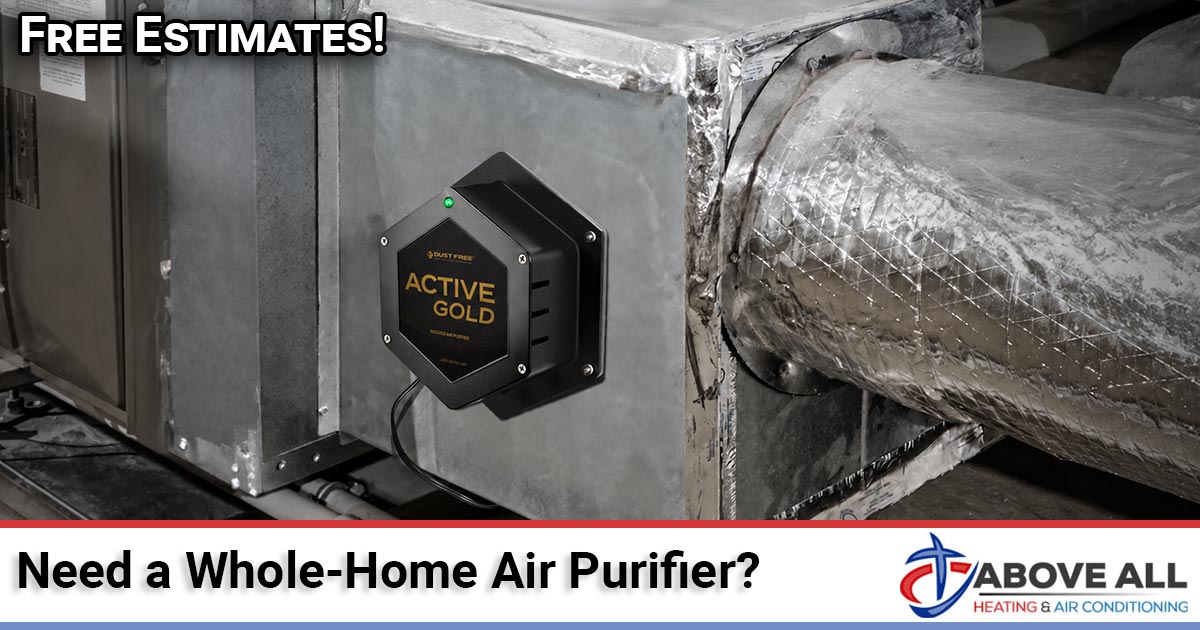
Southern California homeowners already ask a lot of their AC filter. It’s expected to catch everyday dust, pet dander, pollen, and whatever else gets pulled into the return air, all while the system runs for months at a stretch during the warmer part of the year. Most of the time, a standard filter does that job well enough that homeowners never think twice about it. But there are stretches of the year, and specific situations, where a standard filter simply isn’t built to keep up, and that’s usually when the question of a whole-home air purifier comes up.
At Above All Heating and Air, we get more questions about indoor air quality in the fall than any other time of year, largely because that’s when Santa Ana wind events and wildfire activity tend to pick up across the Inland Empire. This guide explains what a standard AC filter actually does, where its limits are, how a whole-home air purifier works alongside your existing system, and how to tell whether your household would benefit from the upgrade.
What a Standard AC Filter Actually Does
Every central air conditioning system pulls air through a filter before it reaches the blower and the evaporator coil. That filter’s primary job isn’t air quality at all — it’s protecting the equipment. A clean filter keeps dust and debris off the coil and blower components, which matters for airflow and system longevity. Any improvement to indoor air quality is a secondary benefit, not the filter’s main purpose.
Standard filters are rated using the MERV scale (Minimum Efficiency Reporting Value), which measures how effectively a filter captures particles of different sizes. Most residential systems use filters in the MERV 8 to MERV 11 range. That’s enough to catch larger particles like dust, lint, and some pollen, but it lets a meaningful amount of smaller particulate matter pass straight through, including fine smoke particles, some mold spores, and the smallest allergens. Pushing to a much higher MERV rating in a standard filter slot can also restrict airflow more than a residential blower is designed to handle, which is part of why “just buy a better filter” isn’t always a simple fix.
What Is a Whole-Home Air Purifier?
A whole-home air purifier is a separate piece of equipment installed directly into your ductwork or air handler, working alongside your existing AC and furnace rather than replacing anything. Unlike a portable purifier that only treats the air in one room, a whole-home system treats the air moving through your entire duct system every time the blower runs, which means every room served by that system gets the benefit.
These systems generally fall into a few categories. Media-based systems use a higher-efficiency filter than what came with your standard system, housed in a dedicated cabinet designed to handle it without overloading the blower. UV light systems use ultraviolet lamps positioned near the coil or in the ductwork to help control mold, mildew, and certain airborne pathogens. Electronic and ionization-based systems use an electrical charge to capture particles that would otherwise pass through a standard filter. Some systems combine two or more of these approaches. Which one makes sense for a given home depends on what the household is actually trying to address, whether that’s allergens, smoke, odor, or general indoor air quality.
Signs Your Standard Filter Isn’t Enough
A few patterns tend to show up in homes where a standard filter is falling short. Recognizing them is usually the first step toward deciding whether an upgrade is worth it.
- Persistent dust on surfaces shortly after cleaning, even with regular filter changes on schedule.
- Increased allergy or asthma symptoms indoors, particularly ones that seem to ease up when away from home.
- A household member with a compromised respiratory system who is more sensitive to airborne particles than most people would be.
- Noticeable haze or smoke smell indoors during wildfire season, even with windows and doors closed.
- Frequent filter changes because the filter looks visibly dirty well before its rated replacement interval.
- Pets that shed heavily, adding a steady stream of dander that a standard filter wasn’t really designed to fully manage.
- A home near construction, agriculture, or unpaved roads, where outdoor particulate levels are higher than average to begin with.
None of these signs on their own means a whole-home system is mandatory. But when several show up together, it’s usually a sign that the filtration currently in place is being asked to do more than it’s designed for.
Wildfire Smoke and Southern California Air Quality
Wildfire season and the Santa Ana wind events that often accompany it are one of the most common reasons Southern California homeowners start looking into upgraded filtration. Wildfire smoke carries very fine particulate matter, small enough that a standard MERV 8 to MERV 11 filter doesn’t capture most of it efficiently. That’s a different problem than everyday household dust, and it’s part of why a home can still smell smoky indoors during a bad air quality day even with the AC filter in good condition.
A whole-home system built around a higher-MERV media filter, sized correctly for the ductwork and blower it’s paired with, is generally better equipped to reduce that fine smoke particulate as air recirculates through the house. It won’t eliminate outdoor smoke infiltration entirely, since some will always come in through normal air exchange around doors, windows, and other openings, but it meaningfully reduces what’s circulating indoors compared to a standard filter alone.
How a Whole-Home Purifier Works With Your Existing AC System
One of the most common questions homeowners ask is whether adding a purifier means replacing their current AC or furnace. In almost all cases, it doesn’t. A whole-home system is installed to work with the equipment already in place, typically in the return air duct or directly in the air handler cabinet. The system still needs to be sized correctly for your home’s ductwork, static pressure, and airflow requirements, which is why professional installation matters more here than with a simple filter swap. An undersized or improperly installed unit can restrict airflow and put unnecessary strain on the blower motor, while a properly matched system runs efficiently alongside equipment your household already relies on.
Before recommending a specific system, we look at the existing ductwork, the age and condition of the AC and furnace, and what the household is actually trying to solve, whether that’s smoke season air quality, allergy relief, or general indoor air quality improvement. Not every home needs the most advanced option available, and matching the system to the actual problem tends to produce better results than defaulting to the highest-end equipment on the market.
Will a Whole-Home Purifier Fix a Musty AC Smell?
It’s worth being direct about this, since it comes up often: a whole-home air purifier is not a fix for a musty smell coming from your AC. A musty odor almost always points to moisture sitting somewhere in the system, whether that’s the evaporator coil, the condensate drain pan, or the ductwork itself, and a purifier addresses airborne particles, not standing moisture or the mold and mildew growth it can cause. If that’s the issue you’re dealing with, our guide on why your AC smells musty and how to fix it walks through the actual causes and the repair steps that resolve them. A whole-home purifier and a musty-smell repair solve two different problems, and it’s common for a home to benefit from both without one substituting for the other.
Installation and Cost Considerations
Cost for a whole-home air purification system varies based on the type of system, the complexity of the ductwork, and whether any additional electrical work is needed. Media-based systems tend to be the most affordable option, UV systems fall in a middle range depending on lamp count and placement, and combination or higher-end electronic systems cost more upfront but may be worth it for households with more significant air quality concerns. In every case, a proper in-home evaluation is the only reliable way to get an accurate number, since ductwork layout and the existing AC equipment both factor into installation complexity.
Ongoing costs are generally modest. Media filters need periodic replacement, UV lamps need replacement roughly on a yearly basis depending on the system, and most whole-home systems don’t add meaningfully to energy costs when sized and installed correctly.
Why Homeowners Trust Above All Heating and Air
Above All Heating and Air has served homeowners throughout the Inland Empire and Southern California with air conditioning, heating, and indoor air quality services for years. We evaluate each home’s ductwork, existing equipment, and actual air quality concerns before recommending a system, rather than pushing a one-size-fits-all product. Whether wildfire season, allergies, or everyday dust is driving the conversation, we walk homeowners through the realistic options and what each one costs before any work begins. You can learn more about our indoor air quality offerings on our Air Purification services page, or contact us to schedule an in-home evaluation. You can also get started with a free AC service quote.
Frequently Asked Questions
1. What’s the difference between a standard AC filter and a whole-home air purifier?
A standard AC filter is designed primarily to protect your system’s equipment from dust and debris, with air quality improvement as a secondary benefit. A whole-home air purifier is a dedicated piece of equipment installed into your ductwork specifically to improve indoor air quality, often using a higher-efficiency filter, UV light, or electronic filtration in addition to standard filtration.
2. Can a whole-home purifier be added to an existing AC system?
In almost all cases, yes. Whole-home systems are designed to work alongside your existing AC and furnace rather than replace them, typically installed in the return duct or air handler cabinet.
3. Does a whole-home purifier help during wildfire smoke events?
Yes, generally. A properly sized system built around a higher-MERV media filter captures more of the fine particulate matter in wildfire smoke than a standard filter, reducing what circulates indoors, though it won’t eliminate all smoke infiltration from outside air exchange.
4. What are the signs my current filter isn’t doing enough?
Common signs include persistent dust on surfaces despite regular filter changes, worsening allergy or respiratory symptoms indoors, a noticeable smoke smell during wildfire season, and filters that look overdue for replacement well before their rated interval.
5. Does Above All Heating and Air install whole-home air purification systems?
Yes. We evaluate your home’s ductwork and existing equipment, then recommend and install a system matched to your household’s actual air quality needs.
6. What does MERV rating mean, and why does it matter?
MERV stands for Minimum Efficiency Reporting Value, a scale that measures how effectively a filter captures particles of different sizes. Higher MERV ratings capture smaller particles, but going too high in a standard filter slot can restrict airflow beyond what a residential blower is designed to handle.
7. Will a whole-home air purifier fix a musty smell from my AC?
No. A musty smell is caused by moisture sitting in the system, usually on the evaporator coil, in the drain pan, or in the ductwork. A purifier addresses airborne particles, not standing moisture, so it won’t resolve the underlying cause of a musty odor.
8. What types of whole-home air purification systems are available?
Common options include media-based systems using a higher-efficiency filter in a dedicated cabinet, UV light systems that target mold and certain pathogens, and electronic or ionization-based systems that capture particles a standard filter would miss. Some systems combine more than one approach.
9. Do I need a whole-home purifier if I don’t have allergies?
Not necessarily. Many households without diagnosed allergies still benefit during wildfire season or in homes near construction, agriculture, or unpaved roads where outdoor particulate levels are higher. It comes down to the specific air quality challenges a household is dealing with.
10. How much does a whole-home air purification system cost?
Cost depends on the type of system, ductwork complexity, and whether electrical work is required. Media-based systems tend to be the most affordable, with UV and combination electronic systems costing more depending on features and placement. An in-home evaluation is the only reliable way to get an accurate estimate.
11. Does a whole-home purifier require ongoing maintenance?
Yes, though it’s generally modest. Media filters need periodic replacement, and UV lamps typically need replacing roughly once a year, depending on the specific system.
12. Will adding a whole-home purifier increase my energy bill?
When a system is sized and installed correctly for your existing ductwork and blower, it shouldn’t add meaningfully to energy costs. An improperly sized or installed system, on the other hand, can restrict airflow and force your blower to work harder.
13. Can a whole-home purifier help with pet dander?
Yes. Homes with pets that shed heavily often see a noticeable improvement, since whole-home systems are better equipped to manage a steady stream of dander than a standard filter alone.
14. Is a whole-home purifier better than a portable air purifier?
A whole-home system treats air throughout your entire duct system every time the blower runs, covering every room served by that system. A portable unit only treats the air in the room it’s placed in, which makes it a more limited solution for whole-house air quality concerns.
15. How do I know which type of whole-home system is right for my home?
The right system depends on what you’re trying to address, whether that’s wildfire smoke, allergens, odor, or general air quality, along with your home’s existing ductwork and equipment. A professional evaluation is the best way to match the system to the actual problem rather than defaulting to the most expensive option available.
16. Can a whole-home purifier be installed with any AC or furnace system?
Most systems can be installed alongside existing residential AC and furnace equipment, but the ductwork, static pressure, and blower capacity all need to be evaluated first to make sure the added system doesn’t restrict airflow.
17. Does a whole-home air purifier help with wildfire smoke odor specifically, or just visible smoke particles?
A properly sized media or combination system reduces both the fine particulate matter and much of the associated odor, since much of the smell from wildfire smoke is carried on the same fine particles the filtration is designed to capture.
18. How long does installation typically take?
Installation timelines vary by system type and ductwork complexity, but most whole-home air purification installations are completed in a single service visit once the system has been selected and sized for the home.
Schedule an Appointment Today
Get in touch with Above All Heating and Air Conditioning by calling us or filling out the form. We look forward to working with you.
