
Ductless Mini Split Installation: A Southern California Buyer’s Guide
CONTACT US
Contact Us

Our
SERVICEs
Ductless Mini Split Installation: A Southern California Buyer’s Guide
Above All Heating And Air Conditioning / July 23, 2026 / Air Conditioner Replacement, Air Conditioning Replacement
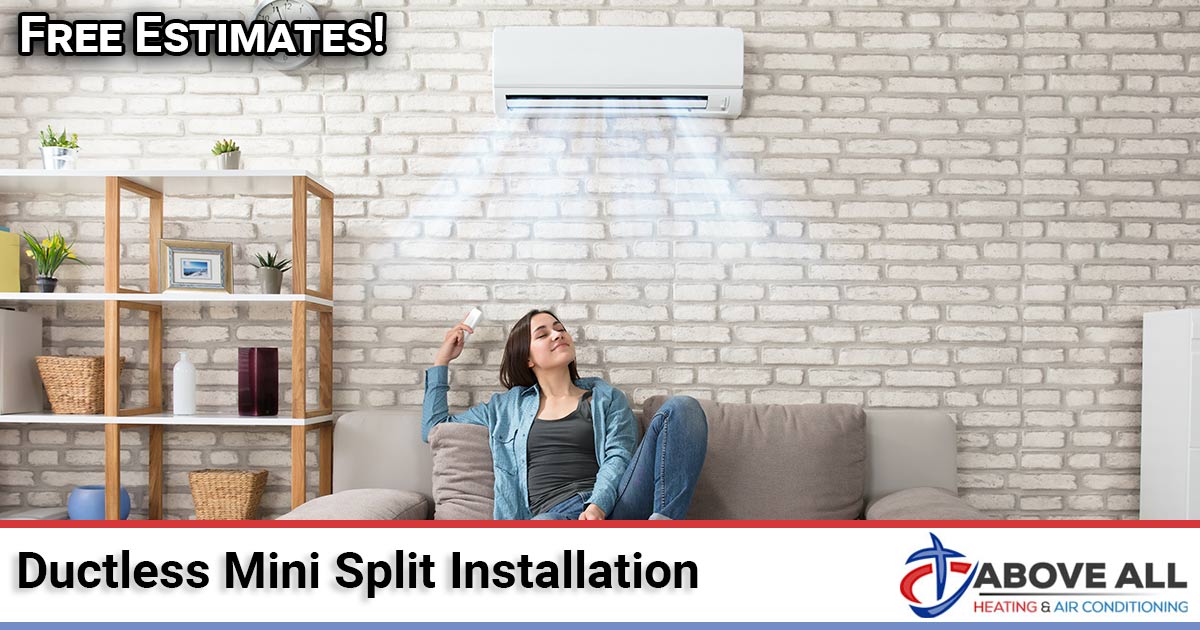
Southern California summers push cooling systems to their limit, and not every home is a good fit for extending or replacing central ductwork. That’s where ductless mini split installation comes in. Whether you’re cooling a room addition, a converted garage, an older home that never had ducts, or you simply want more control over comfort room by room, a ductless mini split system can be a smart, efficient alternative to a traditional central AC overhaul. At Above All Heating and Air, we install ductless mini split systems throughout the Inland Valley, and this guide walks through exactly what installation involves, what it costs, and how to know if it’s the right choice for your home.
What Is a Ductless Mini Split System?
A ductless mini split system consists of two main components: an outdoor compressor/condenser unit and one or more indoor air-handling units mounted on a wall, ceiling, or floor. The two are connected by a small conduit that carries refrigerant lines, a condensate drain, and electrical wiring through a hole just a few inches in diameter drilled through an exterior wall. Because there’s no ductwork involved, installation is far less invasive than a traditional forced-air system, and the units can cool (or heat, with a heat pump-style mini split) individual rooms or zones independently.
Most systems fall into one of two categories: single-zone, where one outdoor unit powers a single indoor head, and multi-zone, where one outdoor unit can support two to eight indoor heads throughout the home, each with its own thermostat control.
Why Southern California Homeowners Choose Ductless Mini Splits
A few reasons come up again and again with our customers across Temecula, Murrieta, Lake Elsinore, Menifee, Hemet, and Wildomar:
- No ductwork required. Older homes, converted garages, sunrooms, and additions often don’t have existing ducts, and running new ductwork can be expensive and disruptive.
- Zoned comfort. Multi-zone systems let you cool the primary living areas without conditioning rooms that sit empty most of the day, which can meaningfully reduce energy use during peak summer heat.
- High efficiency. Because there’s no duct system to lose conditioned air through leaks or poor insulation, ductless systems can be significantly more efficient than a central system with an aging or poorly sealed duct run.
- Flexible placement. Indoor units can go almost anywhere there’s a wall or ceiling with access to the exterior, which makes mini splits a practical option for additions, ADUs, garages converted to living space, and multi-story homes with uneven cooling.
- Heating and cooling in one system. Many mini splits function as heat pumps, providing efficient heating during the Inland Valley’s cooler winter nights as well as cooling in summer.
The Ductless Mini Split Installation Process
Every home is a little different, but a typical installation with Above All Heating and Air follows the same general steps:
- 1. In-home assessment. A technician evaluates the space you want to cool, checks square footage, ceiling height, insulation, sun exposure, and existing electrical capacity to determine the right system size and number of zones.
- 2. System design and proposal. Based on that assessment, we recommend a single-zone or multi-zone configuration, the appropriate BTU capacity for each indoor unit, and a placement plan for both indoor heads and the outdoor condenser.
- 3. Mounting the indoor unit(s). Indoor air handlers are mounted to a wall bracket (or ceiling cassette, depending on the model) in the location that gives the best airflow coverage for the room.
- 4. Running the conduit. A small hole is drilled through the exterior wall to route the refrigerant lines, power wiring, and condensate drain line between the indoor and outdoor units.
- 5. Installing the outdoor unit. The condenser is mounted on a pad or wall bracket outside, positioned for adequate airflow clearance and away from areas that trap heat or debris.
- 6. Line set connection, vacuum, and charge. Technicians connect the refrigerant lines, pull a vacuum to remove moisture and air from the system, and charge it with the correct refrigerant amount per manufacturer specifications.
- 7. Electrical connection and testing. The system is wired to a dedicated circuit, and every zone is tested for cooling (and heating, if applicable) performance, airflow, and thermostat/remote function.
- 8. Walkthrough. We walk you through operation, remote or smart control setup, and basic maintenance like filter cleaning before we consider the job complete.
For most single-zone installations, the work can be completed in a single day. Multi-zone systems with several indoor units typically take one to two days, depending on the number of zones and the complexity of running conduit to each location.
How Much Does Ductless Mini Split Installation Cost?
Ductless mini split installation cost depends primarily on how many zones you’re installing, the capacity (BTU rating) needed for each space, and the complexity of the installation itself. Single-zone systems cooling one room are generally the most affordable option, while multi-zone systems covering several rooms or an entire home cost more due to the additional indoor units, longer line sets, and larger outdoor condenser required. Other factors that affect price include:
- The number of indoor units (zones) needed
- The efficiency rating (SEER2) of the system you choose
- Whether the installation is a straightforward wall-mount or a more involved ceiling cassette or floor-mounted unit
- Electrical work required to support the new system, such as adding a dedicated circuit
- Accessibility of the exterior wall and distance between indoor and outdoor units
Because pricing varies so much based on these factors, the most accurate way to know what your specific installation will cost is an in-home assessment. Above All Heating and Air provides upfront, itemized quotes before any work begins, and we also offer financing options for homeowners who’d rather spread the cost of a new system over time.
Single-Zone vs. Multi-Zone: Which Fits Your Home?
A single-zone system makes sense when you’re cooling one specific space — a garage conversion, a home office, a bonus room, or a single bedroom that never seems to cool evenly with the rest of the house. It’s a targeted, lower-cost way to solve a specific comfort problem.
A multi-zone system is worth considering when you’re cooling several rooms independently, replacing an aging central AC system that struggles to keep every room comfortable, or outfitting a home addition or ADU that doesn’t connect to your existing ductwork. Multi-zone systems give you the flexibility to run only the zones you’re actually using, which can translate into real energy savings during long Inland Valley summers.
Is a Ductless Mini Split Right for Your Home?
Ductless mini splits tend to be a strong fit when:
- Your home doesn’t have existing ductwork, or extending ducts to a specific room isn’t practical
- You’re finishing a garage, sunroom, or other addition that needs standalone climate control
- Certain rooms in your home are consistently hotter or colder than the rest, even with central AC running
- You want more precise, room-by-room control over temperature and energy use
- You’re looking for a combined heating and cooling solution without installing a separate furnace
They may be less ideal as a whole-home replacement for a large house with an already well-designed duct system in good condition — in that case, a central AC replacement may be more cost-effective. A technician can walk through your specific layout and goals to help you decide which direction makes the most sense.
Ductless Mini Split Installation vs. Repair
It’s worth noting the difference between installation and repair, since the two come up in different situations. If you already have a ductless system that’s blowing warm air, leaking, short-cycling, or throwing an error code, that’s a repair issue — you can read more about diagnosing and fixing those problems on our mini split repair page. This guide, on the other hand, focuses specifically on installing a new ductless system in a home or room that doesn’t currently have one.
Choosing a Qualified Installer in the Inland Valley
Ductless mini split systems are sensitive to correct installation. An undersized or oversized unit, a poorly sealed conduit penetration, an incomplete vacuum process, or an incorrect refrigerant charge can all lead to poor performance, higher energy bills, or premature system failure. When you’re comparing installers, look for a company that:
- Performs an in-home load assessment rather than guessing at system size over the phone
- Provides a written, itemized quote before starting work
- Is licensed and insured to perform HVAC installation in California
- Stands behind the installation with a workmanship warranty in addition to the manufacturer’s equipment warranty
- Can explain, in plain language, why they’re recommending a specific system size and configuration for your home
Above All Heating and Air has installed ductless systems across Temecula, Murrieta, Lake Elsinore, Menifee, Hemet, Wildomar, and the surrounding Inland Valley communities, and we’re happy to walk you through our process before you commit to anything. You can also see how a ductless system compares to a whole-house AC install on our Temecula air conditioning installation page.
Maintaining Your New Ductless Mini Split
Ductless systems are relatively low-maintenance compared to central AC, but they’re not maintenance-free. Indoor unit filters should be cleaned every few weeks during peak cooling season, since dust and debris can build up quickly and reduce airflow. Outdoor condenser units should be kept clear of leaves, dirt, and vegetation to maintain proper airflow. We recommend a professional tune-up at least once a year to check refrigerant levels, clean the coils, inspect electrical connections, and confirm the system is running at its rated efficiency.
Ready to Talk Through Your Options?
If you’re considering a ductless mini split for a room addition, an older home without ductwork, or a specific space that’s never cooled well, Above All Heating and Air can walk you through sizing, placement, and cost based on your actual home — not a generic estimate. Contact us to schedule an in-home assessment, or request a free quote to get started.
Frequently Asked Questions
How much does ductless mini split installation cost?
Cost depends on the number of zones, the capacity needed for each space, and the complexity of the installation. Single-zone systems are generally the most affordable, while multi-zone systems covering several rooms cost more. An in-home assessment is the most accurate way to get pricing specific to your home.
Are mini splits efficient for Inland Empire summer heat?
Yes. Because there’s no ductwork to lose conditioned air through leaks, ductless systems can be more efficient than a central system with an aging or poorly sealed duct run, and zoned operation lets you avoid cooling rooms you’re not using.
Can a mini split replace central AC entirely?
In some homes, yes — particularly homes without existing ductwork or homes where a multi-zone system can cover every room. In homes with a large, well-designed duct system already in place, replacing the central AC directly may make more sense. A technician can help you compare both options for your specific layout.
How long does mini split installation typically take?
Most single-zone installations are completed in a single day. Multi-zone systems with several indoor units typically take one to two days depending on the number of zones and installation complexity.
Do mini splits work well in older homes without ductwork?
Yes — this is one of the most common reasons homeowners choose ductless systems. Since installation only requires a small conduit through an exterior wall rather than a full duct system, mini splits are a practical option for older homes.
What’s the difference between a single-zone and multi-zone system?
A single-zone system has one outdoor unit connected to one indoor air handler, ideal for cooling a single room or space. A multi-zone system connects one outdoor unit to two or more indoor units, each independently controlled, allowing you to cool multiple rooms with separate temperature settings.
Do ductless mini splits provide heating as well as cooling?
Many mini split systems function as heat pumps, providing both efficient cooling in summer and heating during the Inland Valley’s cooler winter nights, all from the same system.
Will I need an electrician for mini split installation?
Most installations require a dedicated electrical circuit for the new system. Our technicians assess your existing electrical capacity during the in-home evaluation and handle any needed electrical connections as part of the installation.
How much wall space does an indoor unit need?
Indoor units are compact and mount flush or near-flush against a wall or ceiling. Exact clearance requirements vary by model, and your technician will confirm placement during the assessment to ensure proper airflow and access for maintenance.
Is a ductless mini split a good option for a garage conversion?
Yes. Garage conversions and other additions without existing ductwork are one of the most common and effective uses for ductless mini split systems, since they provide standalone climate control without extending ducts into a space that wasn’t originally designed for them.
How often should mini split filters be cleaned?
Indoor unit filters should generally be cleaned every few weeks during peak cooling season to maintain airflow and efficiency. Your installer can provide model-specific maintenance guidance.
Does Above All Heating and Air offer financing for mini split installation?
Yes. We offer financing options for homeowners who want to spread the cost of a new ductless system over time. Visit our financing page for details.
What size mini split system do I need?
Sizing depends on square footage, ceiling height, insulation quality, sun exposure, and how many zones you’re cooling. An in-home load assessment is the most reliable way to determine correct system sizing — guessing based on square footage alone can lead to an undersized or oversized system.
Can a mini split be installed in a single day?
Single-zone installations are often completed in a single day. Multi-zone systems generally take longer due to the additional indoor units and conduit runs required.
What happens if a mini split is installed incorrectly?
Improper installation — such as an incorrect refrigerant charge, poor conduit sealing, or incomplete vacuum process — can lead to reduced efficiency, higher energy bills, or premature equipment failure. This is why professional installation and a workmanship warranty matter.
Do ductless systems require ductwork of any kind?
No. Ductless mini split systems don’t use traditional ductwork at all. Refrigerant lines, wiring, and a condensate drain run through a small conduit rather than through ducts.
How is a mini split different from a window AC unit?
Unlike a window unit, a mini split has a separate outdoor condenser and one or more indoor units connected by refrigerant lines rather than sitting in a window. Mini splits are generally quieter, more efficient, and better suited as a permanent installation.
Does Above All Heating and Air service the system after installation?
Yes. We provide ongoing maintenance and repair service for the ductless systems we install, along with a workmanship warranty on the installation itself.
Schedule an Appointment Today
Get in touch with Above All Heating and Air Conditioning by calling us or filling out the form. We look forward to working with you.
