
Smart Thermostat Installation: Is It Worth It for Your Inland Valley Home?
CONTACT US
Contact Us

Our
SERVICEs
Smart Thermostat Installation: Is It Worth It for Your Inland Valley Home?
Above All Heating And Air Conditioning / August 4, 2026 / Air Conditioner Repair, Air Conditioner Replacement, Air Conditioning, HVAC Accessories, HVAC Services
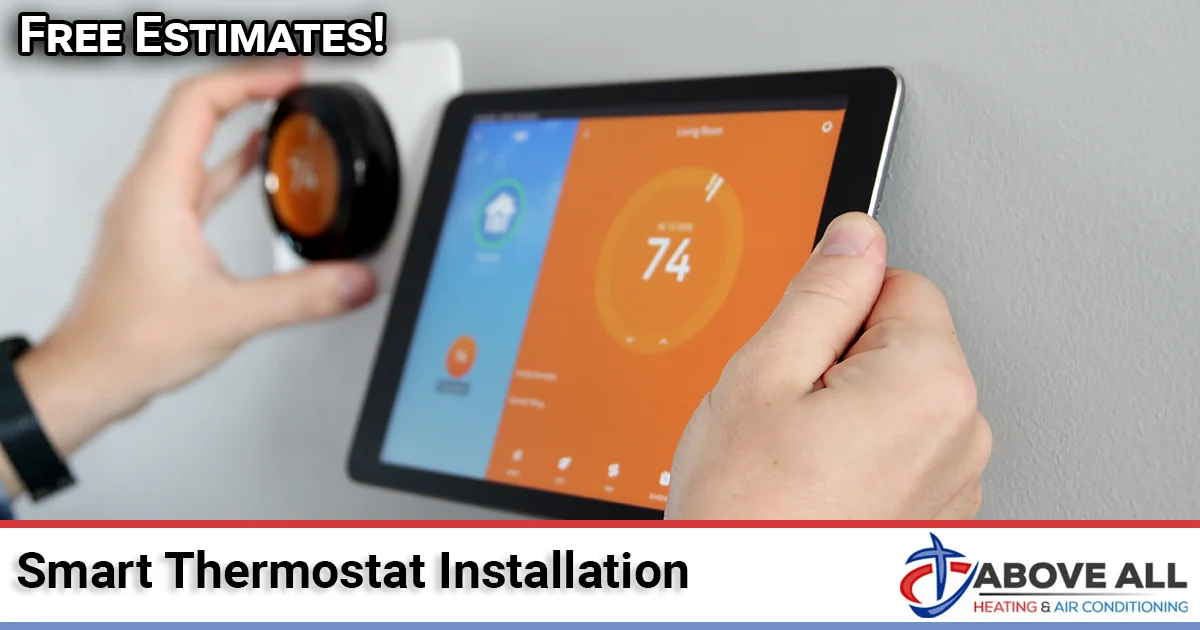
By late July and August, Inland Valley homeowners already know the drill: triple-digit afternoons, an AC system that barely gets a break, and an electric bill that climbs right alongside the temperature. Every summer, more homeowners in Murrieta, Temecula, Menifee, and the surrounding Temecula Valley ask the same question when they call Above All Heating and Air: is a smart thermostat actually worth the cost, or is it just another gadget?
The honest answer is that it depends on how your home is currently being cooled, how consistent your household’s schedule is, and whether the thermostat is installed and configured correctly. A smart thermostat that’s mounted crooked, wired incorrectly, or left on default settings won’t deliver the savings homeowners expect. One that’s properly matched to your system and set up with your actual routine in mind can make a real difference in comfort and monthly cooling costs. This guide breaks down what smart thermostat installation involves, what it costs, how it compares to a standard programmable thermostat, and what to expect from the installation process itself.
What Makes a Thermostat “Smart”?
A standard programmable thermostat runs on whatever schedule you punch in manually. It doesn’t know if you left for vacation, if the kids came home early, or if today is unusually hot. It just follows the schedule, exactly as programmed, until someone changes it.
A smart thermostat connects to your home’s Wi-Fi network and can be controlled remotely from a phone or tablet. Many models also learn from how your household actually uses the system over time, gradually adjusting the schedule to match real patterns rather than a fixed program. Some include features like geofencing, which detects when everyone has left the house and adjusts the temperature automatically, or energy usage reports that show exactly how much your AC is running.
For homeowners who want more control and less guesswork, this shift from a fixed schedule to a responsive one is usually where the real value shows up, particularly during a Southern California summer when a few extra degrees of unnecessary cooling can add up quickly on a utility bill.
Programmable Thermostat vs. Smart Thermostat: What’s the Real Difference?
It’s a common question, and the two are often confused because both let you set a schedule. The difference comes down to flexibility and intelligence:
- Programmable thermostats require you to manually set and update a fixed weekly schedule. They don’t connect to the internet, can’t be adjusted remotely, and don’t learn from your habits.
- Smart thermostats connect to Wi-Fi, allow remote control through an app, and often adapt automatically based on occupancy, weather, and usage patterns. Many also send alerts if the system is behaving unusually.
For a household with a predictable, unchanging routine, a basic programmable thermostat may cover the essentials. But for most Inland Valley families with shifting schedules, vacations, and unpredictable summer heat waves, a smart thermostat tends to offer more practical value for the investment.
What Does Smart Thermostat Installation Actually Involve?
Installation itself is usually straightforward for a licensed technician, but there are a few steps worth understanding before scheduling one:
1. Compatibility Check
Not every smart thermostat works with every HVAC system. Central air conditioning and standard heat pump systems are generally compatible with most major smart thermostat brands, but ductless mini split systems often require a different type of smart control, sometimes a manufacturer-specific adapter rather than a universal smart thermostat. Before recommending a model, a technician from Above All Heating and Air will check your existing equipment to confirm compatibility.
2. Wiring Inspection
Many smart thermostats require a common wire, often called a C-wire, to stay continuously powered for Wi-Fi connectivity. Older homes in the Inland Valley sometimes weren’t wired with a C-wire because older analog thermostats didn’t need one. If yours is missing, a technician can typically add one during installation rather than requiring a separate visit.
3. Mounting and Wiring
Once compatibility is confirmed, the old thermostat is removed and the new one is mounted, wired according to the system manufacturer’s specifications, and tested to confirm it’s communicating properly with the AC system.
4. Wi-Fi Setup and App Configuration
The thermostat is connected to your home network and paired with its companion app. This is also when initial scheduling preferences are set, so the system starts learning your household’s patterns from day one rather than starting from a generic default.
5. System Test
Before the technician leaves, the system is tested through a full cooling cycle to confirm the thermostat is accurately reading temperature and properly signaling the AC system to turn on and off as expected.
Most installations are completed in under an hour when no additional wiring work is needed. Homes that require a C-wire installation or a panel adjustment may take a bit longer.
What Does Smart Thermostat Installation Cost?
Total cost depends on two main factors: the thermostat model itself and whether any additional wiring is needed. Thermostat units range from budget-friendly options to premium models with advanced learning features and detailed energy reporting. Professional installation labor is typically a modest addition on top of the device cost, and any necessary wiring work, such as adding a C-wire, is usually priced separately if it’s needed.
Above All Heating and Air provides an upfront quote before any work begins, so there are no surprises once installation is complete. In many cases, smart thermostat installation can also be bundled into a routine AC maintenance visit or a repair call, saving homeowners a separate trip and service fee.
Will a Smart Thermostat Actually Lower Your Summer Cooling Bill?
This is the question most homeowners really care about, and the honest answer is that savings vary by household. A smart thermostat reduces cooling costs primarily by avoiding unnecessary runtime, cooling an empty house less aggressively, adjusting automatically when everyone leaves, and gradually refining the schedule based on actual usage rather than guesswork.
The size of the savings depends on a few things: how large the home is, how well it’s insulated, local electricity rates, and how consistently the household actually uses the scheduling and remote-control features. A smart thermostat left on a single static setting all summer won’t outperform a well-programmed traditional thermostat. The savings come from actively using the flexibility the device offers.
Common Concerns Homeowners Have Before Installing a Smart Thermostat
Will It Void My AC System’s Warranty?
Installing a smart thermostat generally does not void an AC system’s warranty, as long as it’s installed correctly and wired according to the manufacturer’s specifications. This is one of the main reasons professional installation is worth considering over a DIY approach, since incorrect wiring is the most common cause of warranty-related issues.
Can I Install It Myself?
Many smart thermostats are marketed as DIY-friendly, and for some straightforward setups, that’s true. But incorrect wiring can damage the thermostat itself or, in some cases, the AC system’s control board. A professional installation confirms the wiring is correct the first time and verifies the system is communicating properly before the technician leaves.
What If I Don’t Have Reliable Wi-Fi Near the Thermostat?
Most smart thermostats will still control basic heating and cooling functions even without an internet connection, but remote access, scheduling sync, and app-based features require a stable Wi-Fi signal near the thermostat’s location. If your home’s Wi-Fi coverage is spotty near the thermostat, that’s worth mentioning before installation so the technician can advise on placement or connectivity options.
Is a Smart Thermostat Worth It for Your Inland Valley Home?
For most homeowners across Murrieta, Temecula, Menifee, Lake Elsinore, Hemet, and Wildomar, the answer is yes, particularly for households with changing schedules, second homes, rental properties, or anyone who wants more visibility into how their AC system is actually running through a long, hot cooling season. The value comes from combining the right thermostat model with proper installation and a household that actually uses the scheduling and remote features it offers.
If you’re weighing a smart thermostat against a standard programmable model, or you’re not sure whether your current AC system is compatible, the team at Above All Heating and Air can walk through your options and provide an honest recommendation based on your specific home and system. Contact us to schedule a smart thermostat installation or ask about bundling it with an upcoming maintenance visit.
Frequently Asked Questions
1. How much does smart thermostat installation typically cost?
Cost depends on the thermostat model and whether your home’s wiring needs any updates. The unit itself ranges from budget-friendly to premium options, and professional installation adds a modest labor cost. Homes without a common (C) wire sometimes need a small wiring addition, which can add to the total. Above All Heating and Air provides an upfront quote before any work begins.
2. Will a smart thermostat work with my existing AC system?
Most smart thermostats are compatible with standard central air conditioning and heat pump systems, but compatibility depends on your system’s wiring configuration and voltage. Ductless mini split systems often require a different type of smart control. Above All Heating and Air can check your system before installation to confirm compatibility.
3. How much can a smart thermostat actually save on summer cooling costs?
Savings vary by household, but smart thermostats generally reduce cooling costs by automatically adjusting temperatures when no one is home and learning a family’s schedule over time. The exact dollar savings depend on local electricity rates, home insulation, and how consistently the schedule features are used.
4. Can Above All install a smart thermostat during a routine service call?
Yes. Smart thermostat installation can often be bundled with a routine maintenance visit or a standalone repair call, which saves a separate trip. Ask when scheduling so the technician arrives prepared with compatible equipment.
5. Do smart thermostats work with ductless mini split systems?
Some ductless mini split systems support smart control, but it usually requires a manufacturer-specific adapter or a compatible smart control kit rather than a standard smart thermostat. Above All Heating and Air can review your mini split model and recommend the right option.
6. What’s the difference between a programmable thermostat and a smart thermostat?
A programmable thermostat runs on a fixed schedule you set manually and does not adjust unless you change it. A smart thermostat connects to Wi-Fi, can be controlled remotely from a phone, and often learns household patterns to adjust automatically, which typically delivers greater convenience and efficiency.
7. Do I need a professional to install a smart thermostat, or can I do it myself?
Many smart thermostats are marketed as DIY-friendly, but incorrect wiring can damage the thermostat or the AC system’s control board. Professional installation confirms the wiring is correct, tests system compatibility, and ensures the thermostat is calibrated properly for accurate cooling.
8. How long does smart thermostat installation take?
A standard installation usually takes under an hour for a technician, assuming no additional wiring work is needed. Homes that require a C-wire installation or panel adjustments may take a bit longer.
9. Will a smart thermostat void my AC system’s warranty?
Installing a smart thermostat generally does not void an AC system’s warranty as long as it is installed correctly and wired according to the system manufacturer’s specifications. Professional installation helps protect against wiring mistakes that could affect coverage.
10. Can a smart thermostat help identify problems with my AC system?
Many smart thermostats track runtime, temperature swings, and system alerts, which can help flag unusual behavior such as excessively long cooling cycles or frequent short cycling. While it isn’t a diagnostic tool on its own, it can be a helpful early indicator worth mentioning to a technician.
11. Do smart thermostats need a Wi-Fi connection to work at all?
Most smart thermostats will still control basic heating and cooling functions without Wi-Fi, but remote access, scheduling sync, and app-based features require an internet connection. A stable home Wi-Fi signal near the thermostat’s location helps it perform as intended.
12. Can a smart thermostat control humidity as well as temperature?
Some smart thermostat models include humidity monitoring and can work alongside a home’s HVAC system to help manage indoor humidity, though dedicated dehumidification typically requires additional equipment. Above All Heating and Air can advise on options if humidity control is a priority.
13. Is a smart thermostat worth it for a smaller Inland Valley home?
Smart thermostats can benefit homes of any size, since the energy savings come from smarter scheduling and remote control rather than square footage. Smaller homes still benefit from avoiding unnecessary cooling while no one is present.
14. What should I look for when choosing a smart thermostat model?
Key factors include compatibility with your specific AC and heating equipment, ease of app control, scheduling flexibility, and whether the model supports features like geofencing or multi-zone control. A technician can help narrow down options based on your system.
15. Does Above All Heating and Air offer financing for smart thermostat installation?
Financing options are available for larger HVAC projects, and a standalone smart thermostat installation can often be added to a service visit at a straightforward, upfront cost. Contact Above All Heating and Air to discuss current options.
16. How do I know if my current thermostat wiring supports a smart thermostat?
The clearest way to confirm compatibility is to have a technician inspect the existing wiring behind your current thermostat. Homes built without a dedicated common (C) wire may need a small addition, which a professional can identify and resolve during installation.
17. Can a smart thermostat be integrated with other smart home devices?
Many smart thermostats integrate with popular smart home ecosystems and voice assistants, allowing temperature control alongside other connected devices. Compatibility varies by brand, so it’s worth checking against any smart home system already in place.
Schedule an Appointment Today
Get in touch with Above All Heating and Air Conditioning by calling us or filling out the form. We look forward to working with you.
