
Choosing the Right AC Filter: Sizes, MERV Ratings, and What Actually Matters
CONTACT US
Contact Us

Our
SERVICEs
Choosing the Right AC Filter: Sizes, MERV Ratings, and What Actually Matters
Above All Heating And Air Conditioning / October 6, 2026 / AC Filters, AC Maintenance, Air Conditioner Repair, Air Conditioning, Air Conditioning Service
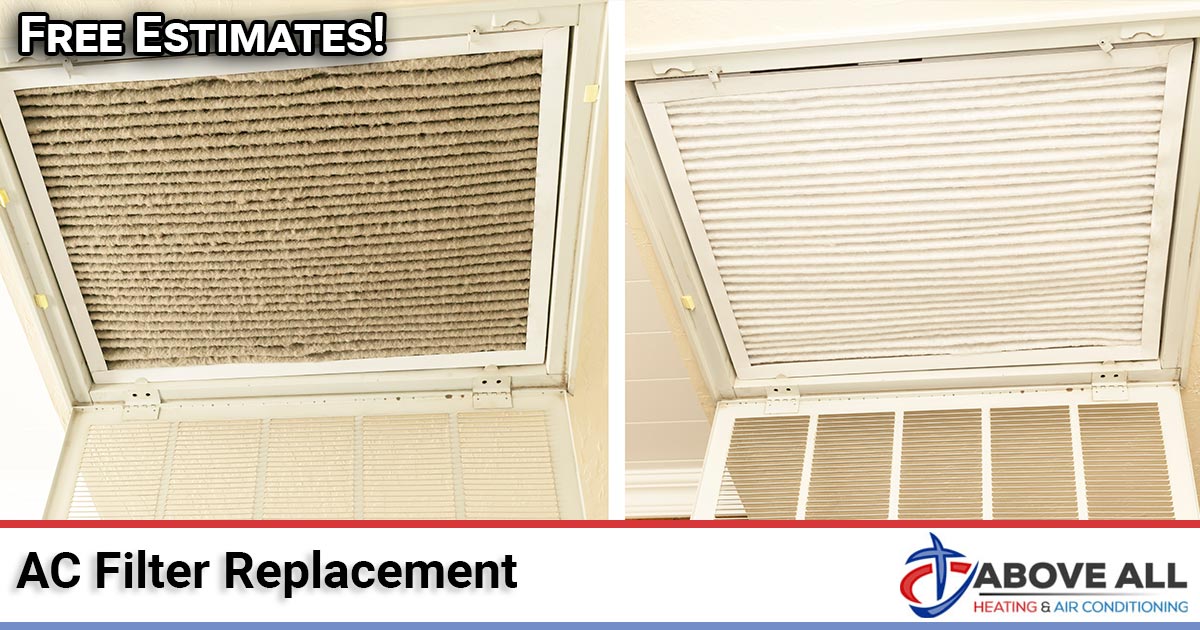
Why the Right AC Filter Matters More Than Most Homeowners Realize
Most homeowners think of the AC filter as a simple, interchangeable part: pull the old one out, slide a new one in, done. In practice, the filter you choose affects airflow, energy use, indoor air quality, and even how hard your system’s blower has to work every time it runs. At Above All Heating and Air, we get calls every week from homeowners dealing with weak airflow, a system that seems to be working harder than it should, or dust that keeps showing up no matter how often they clean. More often than homeowners expect, the answer traces back to the filter: the wrong size, the wrong rating, or simply one that’s overdue for a change.
This guide walks through how to find the right filter size, what a MERV rating actually tells you, and how to decide between the different filter types on the market, so you can make an informed choice the next time you’re standing in the HVAC aisle.
Finding the Correct AC Filter Size for Your System
Before thinking about filter quality or rating, the size has to be right. AC filters are sized by their frame dimensions, typically listed as length by width by depth, such as 16x25x1 or 20x20x4. These numbers refer to the nominal size, which is usually printed somewhere on the frame of your current filter or along the edge of the filter slot itself.
A few places to check if you’re not sure what size your system uses:
- The edge of your existing filter. Most manufacturers print the size directly on the cardboard frame.
- The filter slot or return air grille. If the filter is missing or the old packaging is long gone, measuring the actual opening (length, width, and depth) will get you close, though actual filters typically measure slightly smaller than the “nominal” size printed on the box to allow for a proper fit.
- Your system’s installation paperwork or owner’s manual, if you still have it on hand.
A filter that’s the wrong size is a common, avoidable problem. Too small, and air bypasses the filter around the edges, pulling dust and debris past it and into the system unfiltered. Too large, and it won’t seat properly, which can also allow air to bypass filtration or make the filter difficult to install correctly at all. If you’re ever uncertain, a technician can confirm the correct size during a routine visit.
Understanding MERV Ratings: What the Number Actually Means
MERV stands for Minimum Efficiency Reporting Value, a standardized scale that measures how effectively a filter captures airborne particles of different sizes. The scale generally runs from 1 to 16 for residential and light commercial filters (higher-rated filters used in hospitals and specialized facilities go higher, but those aren’t relevant to a typical home system). The higher the MERV number, the smaller the particles a filter is able to capture.
In broad terms:
- MERV 1-4 filters are basic, low-cost options that primarily protect the equipment itself from larger debris like lint and dust, with minimal impact on air quality.
- MERV 5-8 filters capture smaller particles like mold spores, pet dander, and dust mite debris, and represent a common middle ground for many households.
- MERV 9-12 filters capture finer particles, including some smoke and smog components, and are a frequent choice for homeowners dealing with allergies.
- MERV 13-16 filters capture the smallest residential-grade particles, including many bacteria and finer smoke particulates, but require a system with enough blower capacity to pull air through that dense a filter without being overworked.
A higher MERV number isn’t automatically “better” for every home. It’s better at filtration, but only if your system’s equipment can move air through it without a meaningful airflow penalty, which brings up the next question we hear constantly from homeowners.
Can a Higher MERV Rating Actually Hurt Your System?
Yes, in some cases. Every filter creates some resistance to airflow, and that resistance increases as the filter’s MERV rating goes up, since a denser filter media is what allows it to trap smaller particles in the first place. Residential blowers are designed to work within a specific range of static pressure, and pushing air through a filter rated well beyond what the system was designed to handle can restrict airflow, make the blower work harder than it should, and in some cases contribute to problems like a frozen evaporator coil or reduced cooling performance throughout the home.
This doesn’t mean higher-MERV filters are off the table for most homes. It means the choice should be based on your specific system’s equipment and ductwork rather than defaulting to the highest number on the shelf. If you’re interested in moving to a higher-MERV filter, it’s worth having a technician confirm your system can handle it before making the switch, especially on an older system or one with existing airflow issues.
Filter Material: Fiberglass, Pleated, and Reusable Options
Beyond size and MERV rating, filters also differ by the material they’re made from, and that affects both cost and performance:
- Fiberglass filters are the least expensive option, typically rated around MERV 1-4. They’re disposable, create minimal airflow resistance, and do a reasonable job protecting the equipment itself, but they do relatively little for indoor air quality.
- Pleated filters use a folded, higher-surface-area media that allows them to capture more particles while managing airflow resistance more efficiently than a flat fiberglass filter at a similar price point. Most filters in the MERV 5-13 range homeowners buy for better air quality are pleated.
- Reusable/washable filters are marketed as a long-term cost saver, but they require consistent cleaning on a strict schedule to perform as advertised, and improperly dried or infrequently cleaned washable filters can actually promote mold growth inside the filter media itself.
For most Southern California households, a quality pleated filter in the MERV 8-11 range strikes a reasonable balance between filtration and airflow for a standard residential system, though the right choice always depends on your specific equipment, household needs, and any air quality concerns like allergies or pets.
How Often Should You Replace Your AC Filter?
The honest answer is that it depends on your filter type and household conditions, but a few general guidelines hold up well for most homes in our service area:
- Basic 1-inch fiberglass or pleated filters: every 30 to 60 days.
- Higher-capacity pleated filters (4-5 inch media cabinets): every 6 to 12 months, since the larger surface area holds more debris before airflow is affected.
- Homes with pets, nearby construction, or heavy dust: check monthly regardless of filter type, since conditions can shorten the usable life of any filter.
- Homes running the AC nearly continuously through a long Inland Empire cooling season: lean toward the shorter end of the recommended range, since more run-time means more air (and more debris) moving through the filter.
When in doubt, a quick visual check tells you most of what you need to know: hold the filter up to a light source. If you can’t see light passing through it clearly, it’s overdue for a change.
Signs Your Filter Needs Changing Right Now
A handful of symptoms point directly back to a dirty or clogged filter, including reduced airflow from the vents, a system that seems to run longer than usual to reach the set temperature, a noticeable increase in dust settling on furniture, and in more advanced cases, ice forming on the indoor evaporator coil as a result of severely restricted airflow. If you’ve been troubleshooting weak airflow and checked the filter without finding an obvious problem, it’s also worth considering whether the issue is with the ductwork itself rather than the filter, since dirty or leaky ducts can produce similar symptoms even with a clean filter in place.
If this is simply a reminder that it’s been a while since your last filter change, our earlier post on why regular filter replacement matters covers the basics of staying on schedule. This guide goes a step further, focused specifically on getting the size and rating right in the first place.
When a Standard Filter Isn’t Enough: Whole-Home Air Purification
Even the right filter, changed on the right schedule, has limits. A standard AC filter is designed first to protect your equipment, with air quality improvement as a secondary benefit. For households dealing with persistent allergy symptoms, heavy pet dander, or seasonal wildfire smoke that a standard filter simply isn’t built to manage, a whole-home air purifier is worth considering as a dedicated step up, installed directly into your ductwork alongside your existing AC and furnace equipment rather than replacing it.
Getting Filter Size and Rating Right the First Time
Choosing an AC filter shouldn’t feel like guesswork, but between nominal versus actual sizing, MERV ratings, and the tradeoffs between filter materials, it’s easy to end up with the wrong one. Above All Heating and Air is glad to confirm the correct filter size and recommend a MERV rating that fits your specific system’s airflow capacity during any maintenance or service visit, so you’re not left guessing at the store.
If you have questions about your system’s filter requirements, want a professional opinion on whether a higher-MERV filter or a whole-home air purifier makes sense for your household, or need to schedule a visit, contact Above All Heating and Air today. You can also visit our homepage to learn more about our full range of air conditioning services throughout the Temecula Valley and Inland Empire, or request a free service quote to get started.
Frequently Asked Questions
How do I find the right filter size for my AC system?
Check the frame of your current filter, which usually has the size printed on the edge, or measure the filter slot opening directly (length, width, and depth) if you don’t have the old filter on hand. Your original installation paperwork may also list the correct size.
What does a filter’s MERV rating actually mean?
MERV stands for Minimum Efficiency Reporting Value, a scale from 1 to 16 for residential filters that measures how effectively a filter captures particles of different sizes. A higher number means smaller particles get captured.
Can a higher MERV rating restrict airflow and hurt the system?
Yes, it can. Denser filter media creates more resistance to airflow, and a filter rated well beyond what your system’s blower was designed to handle can strain the equipment and reduce cooling performance. It’s worth confirming your system can handle a higher-MERV filter before switching.
Are pleated filters worth the extra cost over fiberglass?
For most households, yes. Pleated filters capture more particles than basic fiberglass filters while managing airflow more efficiently, which generally makes them a better overall value for households wanting improved filtration.
When does a standard filter stop being enough, and a whole-home purifier make sense?
When a household is dealing with persistent allergy symptoms, heavy pet dander, or smoke infiltration that a standard filter isn’t resolving even with regular changes, a whole-home air purifier installed into the ductwork is typically the next step up.
How often should I replace my AC filter?
Most basic 1-inch filters should be changed every 30 to 60 days, while larger 4 to 5-inch media filters can often go 6 to 12 months. Homes with pets or heavy dust should check monthly regardless of filter type.
What happens if I use the wrong size filter?
A filter that’s too small lets unfiltered air bypass it around the edges, while one that’s too large may not seat properly in the slot. Either situation reduces how effectively the system filters incoming air.
Can I use a higher MERV filter than my system recommends?
Not without some caution. It’s possible, but it can increase strain on the blower and reduce airflow if the system wasn’t designed for that level of filtration. A technician can confirm whether your specific equipment can handle it.
What’s the difference between MERV, MPR, and FPR ratings?
MERV is an ASHRAE industry standard used across most filter brands, while MPR (Microparticle Performance Rating) and FPR (Filter Performance Rating) are proprietary scales used by specific retailers and manufacturers. The three scales don’t convert directly to one another, which is why MERV remains the most universally recognized reference point.
Do reusable or washable filters work as well as disposable ones?
They can, but only with consistent, correct cleaning on a strict schedule. A washable filter that isn’t cleaned often enough, or isn’t dried completely before being reinstalled, can perform worse than a disposable filter and may even promote mold growth.
Where is the filter located in most Southern California homes?
Filter location varies by system, but it’s commonly found in a return air grille in a wall or ceiling, inside a slot near the air handler or furnace, or in some cases within the air handler cabinet itself.
What size filter does my AC system actually need?
It depends entirely on your specific equipment and filter slot dimensions. Common residential sizes include 16x25x1, 20x20x1, and 16x20x1 among 1-inch filters, with larger media cabinets using deeper sizes like 20x25x4 or 20x25x5, but the only way to know for certain is to check your existing filter or filter slot.
Can a dirty filter cause my AC to break down?
It can contribute to a breakdown indirectly. A severely clogged filter restricts airflow enough to cause the evaporator coil to freeze or force the blower and compressor to work harder than intended, both of which can lead to more significant repair needs if left unaddressed.
Should I buy filters in bulk?
If you’ve confirmed the correct size and rating for your system, buying several at once is a reasonable way to make sure you always have one on hand when it’s time for a change, since running without a filter or on an overdue one is harder on the system than most homeowners realize.
Does a higher-MERV filter automatically mean better air quality?
Generally, yes, in terms of particle capture, but only if the system can handle the added airflow resistance without being strained. A filter that’s technically higher-rated but causes airflow problems can end up being a net negative rather than a clear improvement.
Can filter choice affect my AC’s energy efficiency?
Yes. A clogged or improperly rated filter forces the blower to work harder to move the same amount of air, which increases energy use. Keeping the correct filter size and rating, changed on schedule, helps the system run at the efficiency it was designed for.
What’s the risk of running a system without a filter at all?
Running without a filter, even temporarily, allows dust and debris to reach the evaporator coil and blower components directly, which can reduce efficiency and contribute to premature wear. It should be avoided outside of a brief window during a filter change itself.
Should pet owners use a different type of filter?
Many households with pets benefit from a pleated filter in the MERV 8-11 range, which captures more pet dander than a basic fiberglass filter, along with more frequent filter checks, since pet hair and dander can shorten a filter’s usable life between changes.
Schedule an Appointment Today
Get in touch with Above All Heating and Air Conditioning by calling us or filling out the form. We look forward to working with you.
