
What Temperature Should You Set Your Thermostat in Winter? A Southern California Guide
CONTACT US
Contact Us

Our
SERVICEs
What Temperature Should You Set Your Thermostat in Winter? A Southern California Guide
Above All Heating And Air Conditioning / November 6, 2026 / Furnace Service, HVAC Services, hvac tips
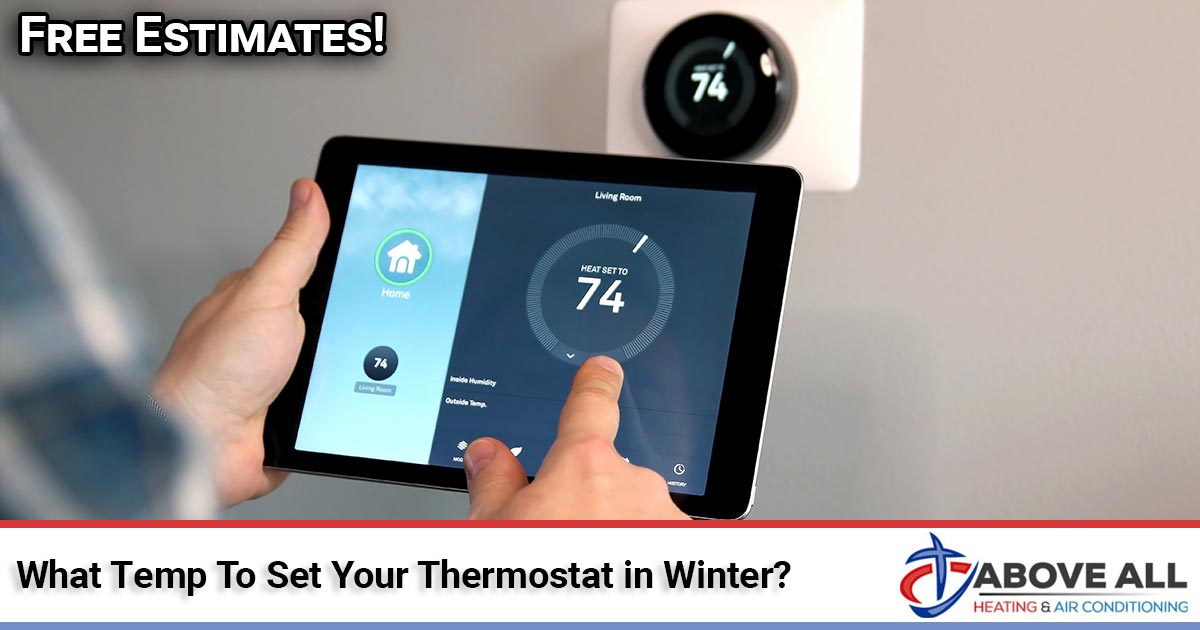
For most homes, the best answer to what temperature you should set your thermostat in winter is about 68°F while you’re home and awake, then a few degrees lower while you sleep or are away. The U.S. Department of Energy recommends setting the thermostat as low as is comfortable, starting around 68 to 70°F, and says setting it back for at least 8 hours a day can save as much as 10% a year on heating and cooling. Heat pump owners should use smaller setbacks so the backup heat doesn’t kick on.
At Above All Heating and Air, we get this question every fall, usually right after the first chilly night in the Temecula Valley. The right number depends on who lives in the home, what kind of heating system you have and how your house holds heat. This guide walks through the settings we recommend for daytime, sleeping and away hours, how much setbacks really save, what’s different with a heat pump, and how to tell when the thermostat itself is the problem.
What Temperature Should I Set My Thermostat in Winter? The Short Answer
Start at 68°F when people are home and awake. According to the U.S. Department of Energy’s Energy Saver guidance on thermostats, you should set the thermostat as low as is comfortable in winter, beginning around 68 to 70°F and adjusting from there. That range keeps most households comfortable in normal indoor clothing without asking the furnace or heat pump to fight a large temperature difference all day.
From there, two habits make the biggest difference:
- Lower it when nobody needs the heat. Overnight and during the workday, a lower setting means the house loses heat more slowly, and your system runs less.
- Raise it a little at a time. Cranking the thermostat to 80°F does not heat the house faster. A furnace or heat pump delivers heat at the same rate regardless of the setpoint; a higher number just means it runs longer and overshoots.
If 68°F feels cold in your home, that’s useful information. It often points to drafts, low humidity, poor airflow to certain rooms or a thermostat in a bad location, all of which we cover below. The goal is not to suffer through a number. It’s to find the lowest setting that keeps everyone comfortable and healthy.
Best Thermostat Setting for Winter: Day, Night and Away
Here’s a simple starting schedule. These figures come from the Department of Energy’s starting point and published guidance from utility and thermostat sources, and you can adjust each one by a degree or two for your household.
| Time of day | Suggested setting | Why |
|---|---|---|
| Home and awake | 68 to 70°F | The DOE’s recommended starting range for winter comfort and efficiency. |
| Sleeping | About 60 to 67°F | Most people sleep comfortably in a cooler room under blankets. Constellation’s thermostat guide lists 60 to 67°F for sleeping. |
| Away at work or school (8+ hours) | 7 to 10°F below your normal setting | Long setbacks are where most of the savings come from. |
| Away on vacation | About 55 to 60°F | Honeywell Home suggests 55 to 60°F for winter travel. That keeps the house from getting damp or cold while using little energy. |
| Heat pump homes | Same comfort targets, but setbacks of only a few degrees | Large setbacks can trigger expensive electric backup heat during recovery. |
| Homes with infants, older adults or someone ill | Keep it steadier and warmer | Vulnerable people need more protection from cold; see the section below. |
If you only change one thing, program a lower setting for the hours you’re asleep and the hours the house is empty. That’s eight or more hours a day for most families, which is exactly where the DOE’s savings estimate comes from.
How Much Do Thermostat Setbacks Really Save?
The Department of Energy’s figure is the one to remember: setting your thermostat back for at least 8 hours per day can save as much as 10% per year on heating and cooling costs. Constellation’s guide gives the same practical version: lowering the thermostat 7 to 10 degrees for eight hours a day can cut annual heating costs by up to 10%.
Why does a setback save money? Your house loses heat to the outdoors faster when the inside is warmer. Keeping it a bit cooler for part of the day slows that heat loss, so there is less heat to replace. Your actual savings depend on several things:
- How long the setback lasts. A short dip of an hour or two saves very little. The longer the stretch, the more you save.
- How well the house is insulated and sealed. A drafty home loses more heat, so setbacks save more in absolute terms, but sealing those drafts saves even more.
- Your system type. Gas furnaces handle setbacks easily. Heat pumps need a gentler approach (see the next section).
- Your local weather. In a mild climate, the heating system already runs less, so the dollar savings are smaller than in a cold one, even when the percentage is similar.
Does the furnace work harder to warm the house back up?
This is the most common objection we hear. With a gas or electric furnace, the energy needed to bring the house back up after a setback is generally less than the energy you saved while the house was cooler, because the home was losing heat more slowly the whole time. The furnace may run longer during recovery, but it isn’t “working harder” in a way that cancels the savings. The real exception is a heat pump with electric resistance backup, which is why we treat heat pumps separately.
Heat Pump Owners: Keep Setbacks Small and Avoid Aux Heat
More Inland Empire homes now heat with heat pumps, and the thermostat strategy is a little different. A heat pump moves heat from outdoor air into your home, which is efficient. Most systems also have electric heat strips, called auxiliary or backup heat, that turn on when the heat pump can’t keep up. Those strips work like a large toaster and cost much more to run.
The problem is recovery. If you drop the temperature 8 or 10 degrees overnight and then ask for 70°F at 6 a.m., many thermostats bring on the heat strips to close the gap quickly. That one habit can erase the savings from the setback and then some.
Our recommendations for heat pump homes:
- Use small setbacks, just a few degrees, or none at all on the coldest nights.
- Use a heat-pump-compatible smart thermostat with adaptive or “smart” recovery, which starts warming early and slowly instead of calling for backup heat.
- Raise the setting gradually by a degree or two rather than jumping several degrees at once.
- Watch for “AUX” or “AUX HEAT” on the display. Brief aux heat during defrost is normal. Aux heat that runs every morning or for long periods is a sign the schedule, the thermostat settings or the system itself needs attention.
- Don’t switch to EMERGENCY HEAT unless the heat pump has actually failed. Emergency heat runs only the electric strips.
If you’re still deciding between heating systems, our comparison of a heat pump vs. AC for Southern California homes explains how heat pumps fit our climate, and our heating team can walk you through installation options.
How to Set Up a Programmable or Smart Thermostat for Winter
A programmable or smart thermostat does the setbacks for you, which is the only way most families stick with them. Here’s how we suggest setting one up.
- Switch the mode to HEAT and make sure the fan is set to AUTO, not ON. With the fan on ON, the blower runs constantly and pushes air that feels cool between heating cycles.
- Set your wake period about 30 minutes before you get up, at 68°F or your comfort setting.
- Set your away period for the hours the house is empty. Gas furnace homes can drop 7 to 10 degrees. Heat pump homes should drop only a few.
- Set your return period to start shortly before you get home, so the house is comfortable when you walk in.
- Set your sleep period lower, usually 60 to 67°F for gas furnace homes.
- Turn on smart recovery or adaptive recovery if your thermostat has it, especially with a heat pump.
- Use geofencing or away mode if your schedule changes day to day. The thermostat can lower the temperature when everyone’s phone leaves the house.
- Review your schedule after a week. Adjust any period that feels too cold rather than overriding it every day, since frequent manual holds undo the savings.
Not sure your current thermostat is worth keeping? Our guide to smart thermostat installation for Inland Valley homes covers what a modern thermostat can do, and our older post on the benefits of a wireless smart thermostat explains remote control and scheduling features.
Comfort Factors That Let You Set the Thermostat Lower
How warm a room feels depends on more than the air temperature. Fixing these factors often lets you set the thermostat a degree or two lower without anyone noticing.
- Drafts. Weatherstripping doors, sealing gaps around windows and closing the fireplace damper when it’s not in use keep warm air in and stop cold spots near the floor.
- Humidity. Dry air feels cooler on your skin. Our winter air is often dry, especially during Santa Ana conditions, so a room can feel colder than the thermostat says.
- Ceiling fan direction. Running a ceiling fan clockwise on low in winter gently pushes warm air from the ceiling back down. See our post on winter fan direction for how to change it.
- Sunlight. Open south- and west-facing blinds on sunny afternoons and close them after dark.
- Airflow. Keep supply registers and return grilles clear of furniture and rugs, and change a dirty filter. Restricted airflow leaves some rooms cold and can make the system overheat.
- Floors and clothing. Area rugs on tile floors, socks and a light sweater really do change what feels comfortable.
Thermostat Settings for Pets, Infants and Older Adults
Energy savings should never come ahead of health. The World Health Organization’s Housing and Health Guidelines state that indoor temperatures should be high enough to protect residents from the harmful effects of cold, propose 18°C (about 64°F) as a safe and well-balanced indoor temperature for the general population in cold seasons, and note that a higher minimum may be needed for older people, children and people with chronic illnesses.
- Older adults: keep the home steadily warm, especially in bedrooms and the rooms they use most, and skip deep setbacks. Ask their doctor if they have a condition that affects how they handle cold.
- Infants: follow your pediatrician’s guidance on room temperature and safe sleep. Constellation’s guide suggests keeping a baby’s room between 65 and 74°F.
- Pets: most dogs and cats are fine in the same range you are. Constellation lists 64 to 78°F as a range that usually works, with extra care for reptiles, fish and other animals that need supplemental heat.
- Houseplants: most do well from about 60 to 75°F and suffer near cold windows.
Southern California Winters: Mild Days, Chilly Nights
Winter in the Inland Empire and Temecula Valley looks different from the places most thermostat advice is written for. Our heating season is short, many afternoons are mild and sunny, and the coldest hours are usually overnight and early morning. That changes how we suggest using your thermostat:
- Let the sun do some of the work. On a mild, sunny day the heat may not need to run at all once the house warms up. A schedule that lowers the setting in the afternoon makes sense in many local homes.
- Avoid big swings. A large drop at night followed by a big jump in the morning is the pattern that triggers aux heat on heat pumps and long recovery runs on furnaces. Moderate, consistent settings usually work better here.
- Watch for HEAT/COOL changeover. On days that start cold and end warm, a thermostat left in AUTO changeover can run the heat in the morning and the AC in the afternoon. Many homeowners prefer to leave it in HEAT through winter and open windows on warm afternoons instead.
- Check attic ductwork. Many tract homes in our area have the furnace and ducts in the attic. Leaky or poorly insulated attic ducts lose heat before it reaches the rooms, so the thermostat setting has to be higher to feel comfortable.
- Test your heat early. Systems that sit idle all summer often have dust on the burners or a thermostat still set to COOL. Running the heat on a mild fall day catches those problems before the first cold night.
Signs the Thermostat Itself Is the Problem
Sometimes the issue isn’t the setting at all. If the house never seems to match the number on the screen, the thermostat may be misreading, poorly located or failing.
| What you notice | Likely cause | What to do |
|---|---|---|
| Screen is blank or dim | Dead batteries or lost power from the furnace | Replace batteries; check the breaker and furnace service switch. |
| House feels much colder than the display says | Thermostat near a heat source, in direct sun or near a lamp or TV | Have the thermostat checked or relocated to an interior wall away from heat and drafts. |
| Heat runs constantly and never reaches the setpoint | Miscalibrated sensor, dirty filter, duct leaks or a system problem | Replace the filter, then call for service if it continues. |
| Furnace turns on and off every few minutes | Thermostat in a drafty spot, wrong cycle settings, or a furnace safety control tripping | Check the filter and vents; a technician can check cycle settings and the furnace. |
| Blower runs nonstop with cool air | Fan set to ON instead of AUTO | Switch the fan to AUTO. See our guide to a heater blowing cold air on the blog. |
| Schedule keeps resetting or being ignored | Power interruptions, a permanent hold, outdated firmware or a failing thermostat | Clear holds and re-enter the schedule; consider replacement. |
| Nothing happens when you call for heat | Thermostat wiring, mode setting or a furnace fault | Work through our furnace won’t turn on checklist on the blog. |
Thermostat location matters more than most people expect. A thermostat in a hallway next to a supply register, on an exterior wall, or in a sunny spot will shut the heat off early or run it too long. Moving it to a central interior wall is often a simple fix with a noticeable comfort payoff.
When to Stop Adjusting and Call a Technician
Thermostat settings can only do so much. Call us if rooms stay cold no matter what you set, the system runs nonstop, aux heat comes on constantly on a heat pump, or the furnace short cycles. An annual heating tune-up also checks thermostat calibration and the full heating cycle.
And a safety reminder whenever you’re working around a gas furnace: if you smell gas (a rotten-egg odor), don’t touch switches or thermostats. Leave the home right away and call SoCalGas or 911 from a safe location, as SoCalGas’s emergency guidance instructs. If a carbon monoxide alarm sounds, get everyone outside and call 911.
How Above All Heating and Air Can Help
Our technicians can check thermostat wiring and calibration, set up heat pump staging so backup heat runs only when it should, relocate a poorly placed thermostat, or install a new smart thermostat that fits your system. If the settings aren’t the issue, we’ll diagnose the furnace or heat pump itself. Learn more about our heating services in Murrieta and nearby communities, from repairs to new installations.
Frequently Asked Questions
Is 72 a good temperature for heat in the winter?
72°F is comfortable for many people, but it is warmer than the Department of Energy’s recommended starting point of 68 to 70°F, so it costs more to maintain. If 72 is what feels right, try 70 with a sweater and fixed drafts, and keep 72 for times when someone vulnerable needs extra warmth.
What is the cheapest temperature to keep your house in winter?
The cheapest setting is the lowest one that keeps everyone comfortable and safe, usually around 68°F while you’re home and lower while you sleep or are away. The DOE says setting it back for at least 8 hours a day can save as much as 10% a year on heating and cooling.
Is 68 a good temperature for heat in the winter?
Yes. 68°F is the most widely recommended daytime winter setting and the low end of the DOE’s suggested 68 to 70°F starting range. It balances comfort and energy use for most homes, especially when you lower it further at night.
Is 67 a good temperature for heat in winter?
67°F works well for many households, particularly if your home is well sealed and everyone dresses for the season. It also falls in the commonly suggested sleeping range. If anyone in the home is elderly, very young or ill, a steadier, slightly warmer setting may be better.
What should I set my thermostat to in the winter at night?
Most people sleep well between about 60 and 67°F under normal bedding. Gas furnace homes can set back 7 to 10 degrees overnight. Heat pump homes should use a smaller setback of a few degrees so electric backup heat doesn’t run when the system recovers in the morning.
What should I set my thermostat to if it is 74 outside?
If it’s 74°F outside, you likely don’t need heat or air conditioning at all. Turn the system off or leave it in HEAT at a low setting, and open windows if the house feels stuffy. Avoid AUTO changeover on days like this, since it can switch between heating and cooling.
Is 77 a good temperature for heat in the winter?
77°F is higher than most homes need in winter and will noticeably raise your heating bill. If the house only feels comfortable at 77, look for drafts, low humidity, poor airflow to certain rooms or a thermostat sitting in a cool spot. Those are fixable problems.
Is 75 a good temperature to keep your AC on?
For cooling, 75°F is a reasonable comfort setting, though Constellation’s thermostat guide suggests about 78°F when you’re home in summer to save energy. In winter, a heat setting of 75 is on the high side; most homes stay comfortable around 68 to 70°F.
What temperature to set thermostat when on vacation in winter?
Honeywell Home suggests about 55 to 60°F for winter travel. That keeps the house from getting cold and damp while using very little energy. In a heat pump home, set it and leave it rather than scheduling a big recovery right before you return.
What should I set my thermostat to in winter when I’m away during the day?
For a gas furnace, set it 7 to 10 degrees below your normal setting while the house is empty for 8 hours or more, and schedule it to warm up shortly before you get home. For a heat pump, use a smaller setback of a few degrees.
Is it cheaper to leave the heat on all day or turn it down?
With a furnace, turning it down when you’re away or asleep is cheaper, because a cooler house loses heat more slowly. The energy used to warm back up is generally less than what you saved. Heat pumps are the exception if a big recovery triggers electric backup heat.
What temperature should I set my heat pump to in winter?
Use the same comfort targets, around 68°F when home, but keep setbacks small and raise the temperature gradually. A heat-pump-compatible smart thermostat with adaptive recovery helps avoid running the auxiliary heat strips, which cost much more to operate than the heat pump itself.
How do you set a thermostat for a 2 story house in winter?
Warm air rises, so a single thermostat downstairs can leave the upstairs warm and the downstairs cool, or the reverse if the thermostat is upstairs. Set it for the floor you use most, balance airflow with registers, and consider zoning or a smart thermostat with remote room sensors.
Should my thermostat fan be on AUTO or ON in winter?
AUTO is usually best in winter. The blower runs only while the system is heating, so you feel warm air. With the fan on ON, the blower runs between cycles and moves air that feels cool, and it uses more electricity.
What is a safe indoor temperature for older adults in winter?
The World Health Organization proposes about 18°C (64°F) as a safe minimum indoor temperature for the general population in cold seasons and notes that older people may need it warmer. Keep their main rooms steadily warm, skip deep setbacks, and follow their doctor’s advice.
Can Above All Heating and Air help with thermostat problems?
Yes. Our technicians check thermostat wiring, calibration and location, set up heat pump staging so backup heat only runs when needed, and install smart thermostats that match your system. If the problem is the furnace or heat pump, we diagnose that too and quote the repair first.
Get Your Winter Settings Right
If your home never feels comfortable at a reasonable setting, or your heat pump keeps running on aux heat, contact Above All Heating and Air and we’ll find out why. Thinking about a new thermostat or heating system? Request a free quote, or visit our homepage to learn more about our team.
Schedule an Appointment Today
Get in touch with Above All Heating and Air Conditioning by calling us or filling out the form. We look forward to working with you.
