
AC Compressor Replacement Cost: What Southern California Homeowners Should Expect to Pay
CONTACT US
Contact Us

Our
SERVICEs
AC Compressor Replacement Cost: What Southern California Homeowners Should Expect to Pay
Above All Heating And Air Conditioning / September 25, 2026 / AC Repair, Air Conditioner Repair, Air Conditioner Replacement, Air Conditioning, HVAC Services
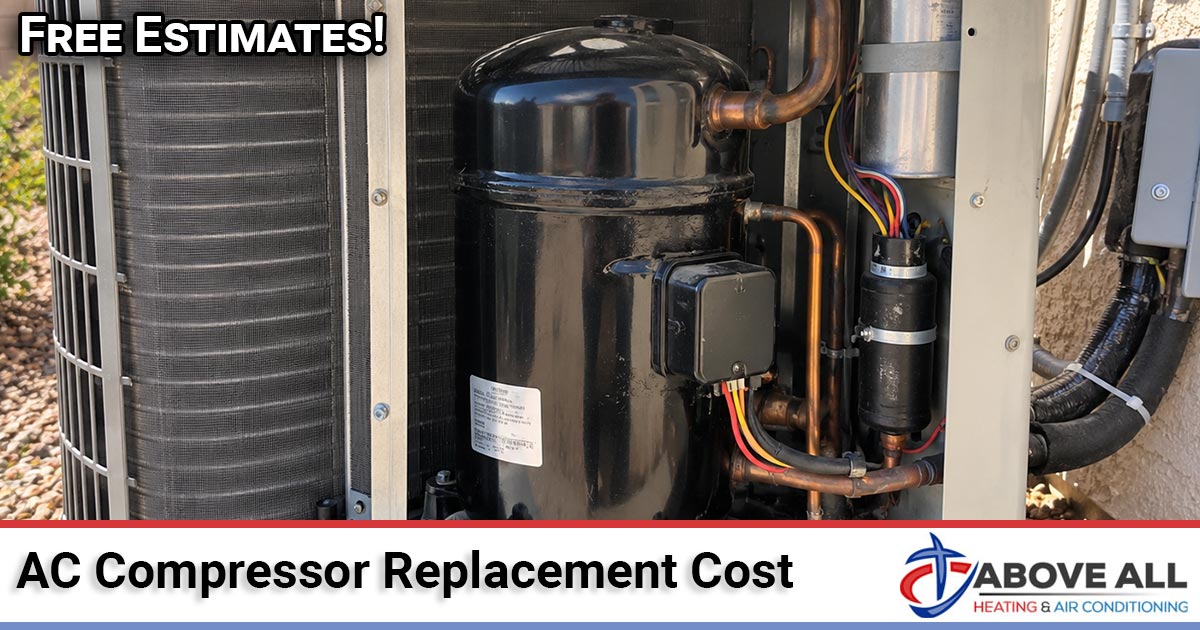
If a technician has told you that your air conditioner’s compressor has failed, one question usually follows right behind the diagnosis: what is this going to cost? It’s a fair question, and it’s also one of the harder ones to answer with a single number, because compressor replacement is one of the most variable repairs in residential air conditioning. At Above All Heating and Air, we walk Southern California homeowners through this decision every summer, and this guide breaks down exactly what drives the price up or down, how compressor replacement compares to full system replacement, and how to think through the decision with confidence.
Why Compressor Replacement Carries a Higher Price Tag
The compressor is the most mechanically and electrically demanding component in your entire air conditioning system. It pressurizes refrigerant and keeps it circulating through the coils that move heat out of your home, and doing that job reliably for years requires precision-built internal parts, heavy-duty electrical components, and a sealed refrigerant system that has to be opened, evacuated, and recharged correctly during replacement. None of that is quick or simple, which is why compressor work costs more than replacing a capacitor, a fan motor, or a thermostat. It’s a skilled, multi-step repair rather than a swap of an inexpensive part.
What Actually Determines the Cost of AC Compressor Replacement
No two compressor replacements cost exactly the same, because so many variables affect the final price. Understanding these factors helps you make sense of the estimate a technician gives you, and helps you ask better questions when you’re comparing options.
System Size (Tonnage)
Compressors are built to match the cooling capacity of your system, measured in tons. A compressor for a larger home with a higher-tonnage system is a bigger, more expensive part than one built for a smaller system, simply because it has more capacity and more robust internal components.
Brand and Model
Compressor pricing varies significantly by manufacturer, and some brands use proprietary compressor designs that cost more to source than more widely available models. If your system is a less common brand, or an older model where parts are harder to find, that can also affect price and availability.
Warranty Coverage
Many manufacturers offer compressor parts warranties, often somewhere in the 5-to-10-year range depending on the brand and whether the original owner registered the equipment. A compressor still under a valid parts warranty can significantly lower your out-of-pocket cost, since you’re typically only responsible for labor, refrigerant, and any additional parts, not the compressor itself. It’s always worth having a technician verify warranty status before assuming you’ll pay full price.
Refrigerant Type
Older systems that still use R-22 refrigerant, which has been phased out of production, can be more expensive to service because that refrigerant is scarcer and pricier than the R-410A used in newer systems. In some cases, this cost gap is exactly what tips the decision toward full system replacement rather than compressor repair.
Labor and Accessibility
Compressor replacement requires recovering refrigerant, removing the failed compressor, installing the new one, and recharging and testing the system, all of which takes skilled labor time. If your outdoor unit is in a hard-to-access spot, that can add to the labor portion of the job as well.
Additional Failed Components
Compressor failure sometimes takes other parts down with it, or happens alongside a separate issue like a failing capacitor or contactor. If those components also need to be replaced, that adds to the total cost of the visit, which is one reason a full diagnostic matters before any pricing conversation.
Why We Don’t Publish a Flat Price Online
You may notice that we don’t list a fixed dollar figure for compressor replacement on this page, and that’s intentional. Between system size, brand, warranty status, refrigerant type, and labor complexity, the honest range for this repair is wide enough that a generic number wouldn’t be useful, and could even be misleading. What we do instead is inspect your specific system, confirm what’s actually wrong, check your warranty status, and then provide a clear, itemized, written estimate before any work begins, so you know exactly what you’re paying for and why.
Repair or Replace? How the Cost Decision Actually Plays Out
When a compressor fails, the real decision isn’t just “how much does the part cost,” it’s whether compressor replacement makes more financial sense than replacing the entire AC system. A few factors tend to drive that decision:
- Age of the system: A compressor failure on a system that’s only a few years old is usually worth repairing, especially if it’s still under warranty. A compressor failure on a system nearing or past the typical end of its service life often makes more sense to address with full replacement, since other components are likely aging too. Our guide on how long an AC unit typically lasts walks through the signs that a system is approaching that point.
- Cost of the compressor relative to a new system: Because compressor replacement is one of the pricier single-part repairs, there’s sometimes a smaller gap than homeowners expect between paying for compressor replacement on an older unit and putting that money toward a new, more efficient system instead.
- Refrigerant type: As mentioned above, an aging R-22 system facing compressor failure often tips toward replacement, since sourcing that refrigerant adds ongoing cost and the system itself is likely near the end of its practical lifespan anyway.
- Overall system condition: If your technician notices other components showing wear during the diagnostic visit, that’s useful information for weighing repair against replacement, not just the compressor in isolation.
There’s no universal right answer here, which is why we walk every homeowner through these specific factors for their specific system rather than giving a blanket recommendation.
Does a New Compressor Come With Its Own Warranty?
In most cases, yes. A newly installed compressor typically carries its own manufacturer parts warranty, separate from the original system warranty, and our team can explain the exact terms and any registration steps needed to keep that coverage valid. Labor for a future repair is generally handled separately from parts warranty coverage, so it’s worth understanding both pieces when you’re comparing your options.
How to Get an Accurate Estimate for Your System
Because so much depends on your specific equipment, the most reliable way to find out what compressor replacement will cost for your home is a diagnostic visit. During that visit, a technician confirms the compressor is actually the failed component (rather than a less expensive electrical issue mimicking the same symptoms), checks your system’s age, size, refrigerant type, and warranty status, and then puts together a written estimate that reflects your actual system rather than a generic average. If you’re not yet sure whether your compressor has failed or you’re still seeing symptoms like warm air or a silent outdoor unit, our guide to diagnosing a compressor that isn’t working covers the warning signs and common causes in detail.
Financing a Compressor Replacement or Full System Upgrade
If a diagnostic points toward full system replacement rather than compressor repair, cost doesn’t have to mean paying the entire amount upfront. Above All Heating and Air offers financing options for qualified homeowners, which can make a larger replacement more manageable if a compressor failure ends up being the moment your system needs to be replaced entirely rather than repaired.
Protecting Your Investment After Replacement
Once you’ve paid for compressor replacement, whether as a standalone repair or as part of a new system, a little ongoing care goes a long way toward avoiding a repeat expense down the road. Scheduling an annual tune-up gives a technician the chance to catch small issues, like a weakening capacitor or a slowly developing refrigerant leak, before they put unnecessary strain on the new compressor. Keeping the outdoor unit clear of dirt, leaves, and overgrown landscaping helps it release heat efficiently instead of working harder than it needs to, and changing your air filter on a regular schedule keeps airflow where it belongs instead of restricting it. None of these steps are expensive or time-consuming, but skipping them is one of the more common ways homeowners end up facing a second costly repair sooner than they should have.
Getting a Clear Answer for Your Home
A failed compressor is stressful enough without an unclear picture of what it’s going to cost to fix. Our goal is to remove the guesswork: an honest diagnosis, a plain-language explanation of your repair-versus-replace options, and a detailed written estimate before any work begins. We serve homeowners throughout Temecula, Murrieta, Menifee, Lake Elsinore, Hemet, Wildomar, and the surrounding Inland Empire communities, and we’re ready to help you figure out the right, most cost-effective path forward for your system.
Contact Above All Heating and Air to schedule a diagnostic visit, or request a free quote to get started on understanding what compressor replacement will actually cost for your home.
Frequently Asked Questions
How much does AC compressor replacement typically cost?
Compressor replacement cost varies widely based on system size, brand, warranty coverage, refrigerant type, and labor complexity. Above All Heating and Air provides a detailed, itemized estimate after diagnosing your specific system rather than publishing a flat online price, since these variables shift the total significantly from home to home.
Is it ever cheaper to replace the whole system instead of just the compressor?
Sometimes, yes. On older systems, especially those nearing the end of their expected lifespan or still using R-22 refrigerant, the cost gap between compressor replacement and full system replacement can be smaller than homeowners expect, which sometimes makes full replacement the more practical long-term choice.
Does a compressor under warranty still involve labor costs?
Usually, yes. Manufacturer parts warranties typically cover the cost of the compressor itself but not the labor to remove the failed unit and install the new one, so even a warranty-covered replacement usually comes with some out-of-pocket labor cost.
What factors make one compressor replacement cost more than another?
The biggest factors are the size (tonnage) of the system, the brand and model of the compressor, whether it’s still under warranty, the type of refrigerant the system uses, how accessible the outdoor unit is for labor, and whether any additional components also need to be replaced during the same visit.
How long does a replaced compressor typically last?
A properly installed replacement compressor is built to last many years under normal conditions, similar to an original compressor, though real-world lifespan depends on system maintenance, refrigerant charge accuracy, and how consistently the system is serviced going forward.
Why is compressor replacement more expensive than other AC repairs?
The compressor is the most mechanically and electrically complex part of the system, and replacing it involves recovering and recharging refrigerant along with skilled electrical and mechanical work, which is why it costs more than replacing a smaller component like a capacitor or fan motor.
Does the age of my AC system affect the cost decision?
Yes. A compressor failure on a newer system is usually a straightforward repair decision, while a failure on an older system often raises the question of whether that money is better spent on a full system replacement instead, since other components may be nearing the end of their service life too.
Can I get a repair-vs-replace recommendation before paying for a full estimate?
Our technicians walk you through the repair-versus-replace factors for your specific system as part of the diagnostic visit itself, including system age, warranty status, and refrigerant type, so you have the information you need to make that decision alongside the cost estimate.
Does refrigerant type affect compressor replacement cost?
Yes. Systems still using R-22 refrigerant, which is being phased out, can be more expensive to service because that refrigerant is scarcer and costlier than the R-410A used in newer equipment, and this is often a factor that pushes older systems toward full replacement.
Will my homeowner’s insurance cover compressor replacement?
Standard AC compressor failure from normal wear is typically considered routine equipment maintenance and isn’t usually covered by homeowner’s insurance, though coverage can vary by policy, especially if the failure was caused by a covered event like an electrical surge from a storm. It’s worth checking your specific policy if you’re unsure.
Does Above All Heating and Air offer financing for compressor replacement?
Yes, financing is available for qualified homeowners, which can be particularly helpful if your diagnostic visit points toward full system replacement rather than compressor repair alone.
How is compressor replacement cost different from AC compressor repair cost?
Repairing a component that’s affecting the compressor, like a failing capacitor or contactor, is typically far less expensive than replacing the compressor itself, which is why a full diagnostic to confirm the compressor is actually the failed part is an important first step before assuming the more expensive repair is necessary.
What size compressor does my system need?
Your replacement compressor needs to match the tonnage and specifications of your existing system to function correctly and maintain efficiency, which is one of the details our technicians confirm during the diagnostic and estimate process.
Can I negotiate the cost of compressor replacement?
What you can do is make sure you’re getting an itemized, written estimate that clearly breaks down parts, labor, and any warranty credit, so you understand exactly what’s driving the total and can compare it meaningfully if you’re getting a second opinion.
Is a universal replacement compressor cheaper than an OEM compressor?
Universal or aftermarket compressors can sometimes cost less upfront than an original-manufacturer (OEM) compressor, but they may affect warranty coverage or long-term reliability, so this is a tradeoff worth discussing directly with your technician based on your system and goals.
How quickly can Above All Heating and Air provide a compressor replacement estimate?
In most cases, we can schedule a diagnostic visit promptly and provide a written estimate the same day, once the technician has confirmed the compressor is the source of the problem and checked your system’s warranty status.
Does replacing the compressor restart the clock on my system’s warranty?
Not on the whole system. A new compressor typically carries its own manufacturer parts warranty, separate from the coverage on the rest of your AC system, so it’s worth asking your technician to explain exactly what’s covered going forward.
What should I do first if I’ve been told I need compressor replacement?
Ask for a written, itemized estimate that explains what’s driving the cost, confirm whether your compressor is still under warranty, and ask your technician to walk you through whether repair or full system replacement makes more sense for your system’s age and condition before making a decision.
Schedule an Appointment Today
Get in touch with Above All Heating and Air Conditioning by calling us or filling out the form. We look forward to working with you.
