
How Long Does an AC Unit Last? Signs Yours Is Nearing the End
CONTACT US
Contact Us

Our
SERVICEs
How Long Does an AC Unit Last? Signs Yours Is Nearing the End
Above All Heating And Air Conditioning / August 31, 2026 / HVAC Accessories
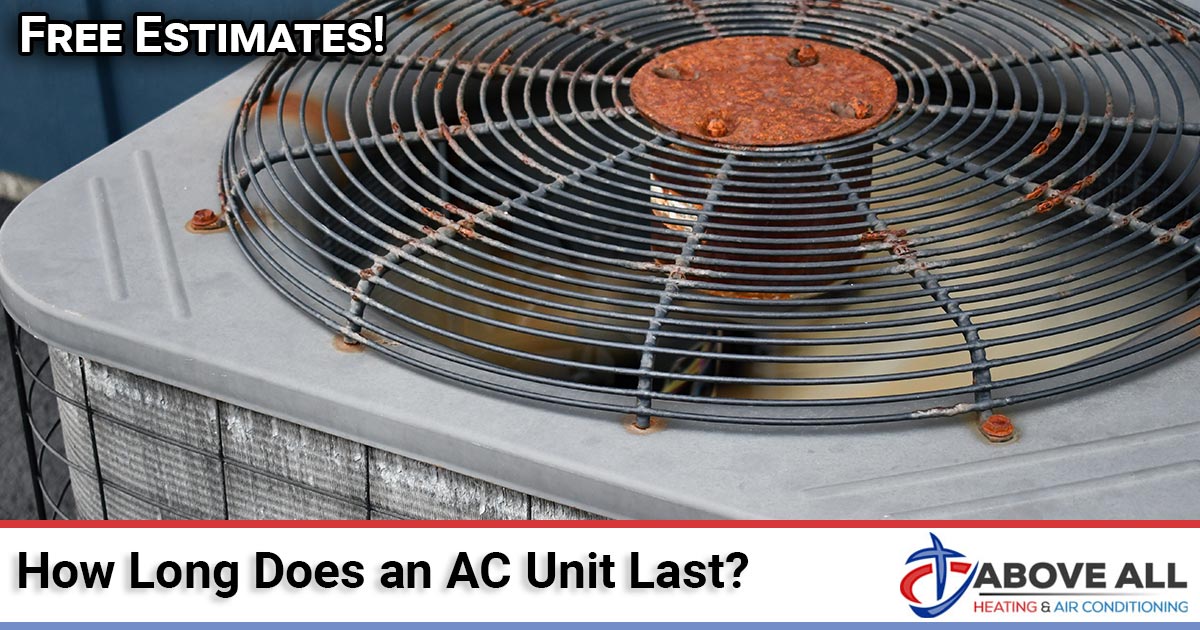
Every air conditioner in Southern California is working against the same relentless opponent: heat that starts early, lingers late, and rarely gives a system a real break to rest. That constant demand raises a question we hear from homeowners across Murrieta, Temecula, and Menifee almost as often as “why is my AC not cooling” — and that question is simply, “how much longer is this thing going to last?” It’s a fair question, and it deserves a straight answer rather than a sales pitch.
At Above All Heating and Air, we get called out to diagnose systems at every stage of life, from units installed last year to ones still limping along after two decades of service. What we’ve learned from that range of experience is that AC lifespan isn’t a fixed number stamped on the unit at the factory. It’s a range, and where your system falls in that range depends heavily on how it was installed, how consistently it’s been maintained, and how hard Southern California’s climate has pushed it over the years. This guide walks through what a realistic lifespan actually looks like, the specific signs that tell you a system is running out of road, and how to think clearly about repairing versus replacing when that time comes.
How Long Does an AC Unit Actually Last?
Most residential central air conditioning systems are built with an expected service life of roughly 12 to 17 years. That range comes from equipment manufacturers’ own engineering and warranty guidance, and it assumes a system that was sized and installed correctly, run within its normal operating limits, and given at least basic annual maintenance along the way.
Where a specific system lands within that range depends on several factors working together rather than any single one. A unit installed by a qualified technician, sized correctly for the home it’s cooling, and serviced on a consistent schedule will often reach the higher end of that window, or occasionally exceed it. A unit that was undersized or oversized for the home, installed with shortcuts, or left to run for years without a single tune-up tends to show serious wear well before the 12-year mark.
Southern California’s climate is a factor too, and not always in the direction homeowners expect. On one hand, our region doesn’t put systems through the same freeze-thaw stress that colder climates do. On the other hand, our cooling season runs long and hot, which means the compressor — the single most expensive component in the system to replace — spends far more hours under load each year than it would in a milder climate. That extra runtime adds up over a decade-plus of service.
Signs Your AC Unit Is Nearing the End of Its Life
Age alone doesn’t tell the whole story. A well-maintained 14-year-old system can still be performing reliably, while a neglected 8-year-old system can already be showing signs of serious wear. These are the patterns we look for when evaluating whether a system is approaching the end of its usable life rather than just needing a routine repair:
- Cooling performance has noticeably declined, with rooms that used to cool quickly now taking much longer, or never quite reaching the temperature on the thermostat.
- Energy bills have crept up over the past year or two without a clear explanation, which often points to a system working harder than it used to for the same result.
- Repair calls are becoming more frequent, especially when they involve different components each time rather than the same recurring issue.
- The system uses an older refrigerant type that’s being phased out, making future repairs more expensive or harder to source parts for.
- Strange noises — grinding, squealing, or persistent rattling — have become a regular occurrence rather than an occasional one.
- The unit cycles on and off more frequently than it used to, a pattern known as short cycling that puts extra strain on aging components.
- Humidity control inside the home has gotten worse, leaving rooms feeling clammy even when the temperature itself seems fine.
- A technician has flagged multiple aging components during a recent service visit, such as a weakening capacitor, a corroding coil, or a compressor showing early signs of strain.
Any single item on this list can sometimes be a straightforward, inexpensive fix. It’s the combination of several of these signs appearing together, especially on a system that’s already ten years old or more, that usually points toward a system nearing genuine end-of-life rather than a one-off repair.
What Shortens an AC Unit’s Lifespan
A handful of factors consistently show up in the systems that fail well before their expected lifespan is up. Improper installation is one of the most common: a system that’s the wrong size for the home, whether too large or too small, cycles inefficiently and wears out its components faster than one that’s correctly matched to the home’s actual cooling load. Skipped or inconsistent maintenance is another major factor, since small issues that would normally get caught and corrected during a routine visit are instead left to compound over months or years.
Restricted airflow is a quieter but equally damaging factor. A consistently dirty air filter, blocked vents, or a dirty condenser coil all force the system to work harder than it should to move the same amount of air, and that extra strain shortens the working life of the compressor and other core components. Electrical issues that go unaddressed, like a failing capacitor that isn’t replaced promptly, can also cause cascading damage to more expensive parts of the system.
Location matters too. Homeowners with an attic-installed AC unit often see faster wear than homes with outdoor or garage-mounted equipment, simply because attic temperatures in a Southern California summer can climb well past what the equipment was designed to operate in comfortably, forcing the system to work harder for the same result.
What Extends an AC Unit’s Lifespan
The good news is that most of the factors that shorten lifespan are within a homeowner’s control, and consistent maintenance is by far the biggest lever available. Regular professional tune-ups catch small problems, like a slightly low refrigerant charge or a fraying electrical connection, before they turn into major failures that damage other components. Homeowners often ask us about ac tune up cost when they’re weighing whether a maintenance plan is worth it, and the honest answer is that a modest annual or twice-yearly tune-up investment is consistently smaller than the cost of a premature compressor failure or an early full-system replacement.
Simple habits matter as well. Changing air filters on a regular schedule, keeping the area around outdoor equipment clear of vegetation and debris, and addressing small issues — a strange noise, a slight decline in cooling — as soon as they appear rather than waiting for a full breakdown all contribute meaningfully to how long a system lasts. Homeowners who stay ahead of these details tend to get noticeably more useful life out of their equipment than those who only call for service once something has already failed.
Condenser Coil Cleaning and Long-Term System Health
One specific maintenance task deserves its own mention because of how directly it connects to lifespan: condenser coil cleaning. The condenser coil, located in the outdoor unit, is responsible for releasing the heat your system pulls out of your home. When that coil is coated in dust, pollen, grass clippings, or general debris — which happens naturally over a Southern California cooling season — it can’t release heat as efficiently, and the compressor has to work harder and run longer to achieve the same cooling result.
Over time, that extra strain adds up. A system with a chronically dirty condenser coil isn’t just running less efficiently and costing more to operate; it’s also accumulating wear on the compressor faster than a system with a clean, well-maintained coil. We cover this topic in more depth in our guide on condenser coil cleaning, including how often it should be done and what the process actually involves. It’s one of the simplest, most cost-effective maintenance tasks a homeowner can invest in, and it’s a standard part of the tune-ups included in our AC maintenance plans.
Repair or Replace? How to Decide When Your AC Is Aging
When an aging system needs a repair, the decision between fixing it again and replacing it comes down to a straightforward comparison most technicians rely on: weigh the cost of the repair against the system’s age and remaining expected life. A widely used guideline in the industry multiplies the repair cost by the age of the unit in years; if that number exceeds the rough cost of a new system, replacement is usually the more sound financial decision. A $600 repair on a 3-year-old system clearly favors repair. That same $600 repair on a 15-year-old system, especially one that’s already needed a few service calls in the past year or two, tells a very different story.
Beyond the math, it’s worth considering what kind of repair is being discussed. A capacitor, contactor, or thermostat issue is a routine, inexpensive fix regardless of the system’s age. A failing compressor or a major refrigerant leak on a system that’s already well into its expected lifespan is a much stronger signal that the unit’s remaining useful life is limited, and that continuing to repair it may just mean paying again for the next failure a few months later. Our guide on whether it’s time to replace your heating and AC system walks through this decision in more detail, including the efficiency gains that often come with a newer system.
What Happens If You Wait Too Long
Continuing to run a system well past its expected lifespan doesn’t just risk an inconvenient breakdown on the hottest day of the year, though that’s certainly a real possibility. It also tends to mean paying a premium in smaller ways along the way: higher energy bills from declining efficiency, more frequent repair visits, and the ongoing risk that a major component failure, like a compressor going out, ends up costing nearly as much as replacement would have while still leaving you with an old system afterward.
There’s also a comfort cost that’s easy to underestimate. A struggling, aging system often can’t maintain consistent temperatures or manage humidity the way it did when it was newer, which shows up as a home that feels warmer, stickier, or less evenly cooled than it should, even when the thermostat reading looks normal.
How Above All Heating and Air Can Help
If you’re not sure whether your AC unit is simply due for maintenance or genuinely approaching the end of its useful life, the most reliable way to find out is an in-person evaluation rather than guessing based on age alone. Our technicians inspect the condition of the compressor, coils, electrical components, and overall system performance, and give you a straightforward assessment of where your equipment realistically stands, along with honest guidance on whether a repair, a maintenance plan, or a replacement makes the most sense for your situation and budget.
We also handle the full range of AC installation work for homeowners who decide replacement is the right call, from correctly sizing a new system for your home to a clean, professional install designed to get the most life possible out of the new equipment. If your system is showing some of the signs covered above, or you’d simply like a professional opinion before another Southern California summer puts more strain on it, you can request a free quote to have a technician evaluate your system, or contact our team with any questions about your AC’s age, condition, or remaining lifespan.
Frequently Asked Questions
1. What’s the average lifespan of an AC unit in Southern California heat?
Most residential AC systems are built for roughly 12 to 17 years of service. Southern California’s long, hot cooling season means the compressor logs more running hours per year than it would in a milder climate, which is why consistent maintenance matters so much here specifically.
2. What are the clearest signs an AC unit is nearing the end of its life?
Declining cooling performance, rising energy bills without another explanation, more frequent repair calls involving different components, unusual noises, and short cycling are the patterns that most often point to a system nearing the end of its useful life, especially when several appear together.
3. Does regular maintenance meaningfully extend AC lifespan?
Yes. Routine tune-ups catch small issues, like a low refrigerant charge or a weakening electrical component, before they cause cascading damage to more expensive parts. Systems on a consistent maintenance schedule generally reach the higher end of their expected lifespan more often than neglected systems.
4. Is it better to repair or replace an AC nearing the end of its life?
It depends on the repair cost relative to the system’s age and the type of failure involved. A common industry guideline multiplies the repair cost by the unit’s age in years; if that exceeds roughly the cost of a new system, replacement is usually the more sound decision, especially for major components like the compressor.
5. How does Southern California’s long cooling season affect AC lifespan?
Because the cooling season here runs longer and hotter than in many other regions, the compressor and other core components accumulate more operating hours each year. That added strain is a major reason maintenance and airflow (like clean filters and a clean condenser coil) matter so much for getting a full expected lifespan out of a system.
6. How much does a typical AC tune-up cost?
Tune-up pricing varies based on the system and what the visit includes, but it’s consistently a modest expense compared to the cost of an unexpected major repair or an early replacement. Above All Heating and Air provides an exact quote after evaluating your specific system.
7. Does condenser coil cleaning really make a difference in how long a system lasts?
Yes. A dirty condenser coil can’t release heat efficiently, forcing the compressor to work harder and run longer to achieve the same cooling result. Over years of service, that added strain contributes to earlier wear, which is why coil cleaning is a standard part of routine maintenance.
8. What is the “50% rule” for deciding between repair and replacement?
It’s a simplified guideline suggesting that if a repair costs more than about half of what a new system would cost, and the unit is already past the midpoint of its expected lifespan, replacement is often the more practical long-term choice. It’s a starting point for the conversation, not a strict formula, since the type of repair and the system’s overall condition matter too.
9. Can an AC unit be too old to repair even if parts are still available?
Sometimes, yes. Even when a specific part can be sourced, an aging system with several other components nearing failure may not be worth continued investment, since fixing one issue often just shifts the next failure a few months down the road.
10. How does refrigerant type affect the lifespan or replaceability of an older AC system?
Systems built for older, phased-out refrigerants can face higher repair costs and more limited parts availability as those refrigerants become harder to source. This is one factor, alongside age and overall condition, that technicians weigh when discussing repair versus replacement on an aging system.
11. Does a bigger, more expensive AC unit last longer than a standard one?
Not necessarily, and in fact an oversized system for the home can wear out faster due to inefficient cycling. Correct sizing for the home’s actual cooling load matters far more for longevity than simply choosing a larger or more expensive unit.
12. What role does installation quality play in how long an AC unit lasts?
A significant one. A correctly sized system installed by a qualified technician tends to run more efficiently and experience less component strain over time than a system that was installed with shortcuts or sized incorrectly for the home, even if both units are the same age.
13. Are there warning signs that an AC unit could fail completely without notice?
Frequent short cycling, unusual or worsening noises, and repeat repair visits within a short period are all signs that a more serious failure could be approaching. While most breakdowns give some warning, a system already showing several of these signs is at meaningfully higher risk of a sudden failure.
14. How often should homeowners schedule professional maintenance to protect lifespan?
Most residential systems benefit from at least one professional tune-up per year, with many homeowners in our service area choosing a twice-yearly schedule given how much of the year the system is in active use here.
15. Does upgrading to a new AC unit early ever make financial sense before the old one fails?
It can, particularly for a system that’s already well past ten years old, showing declining efficiency, and requiring more frequent repairs. In those cases, the combined cost of ongoing repairs and higher energy bills sometimes outweighs the benefit of waiting for a complete failure before replacing it.
16. What’s the difference in expected lifespan between a well-maintained system and a neglected one?
A well-maintained system is far more likely to reach or exceed the upper end of the typical 12-to-17-year range, while a neglected system, especially one with a consistently dirty filter or condenser coil, can show serious wear well before that window is up.
17. Should homeowners replace an aging AC before or after it breaks down completely?
Replacing before a complete failure gives homeowners more control over timing, budget, and system selection, rather than making a rushed decision during a breakdown in peak summer heat. An evaluation of the system’s current condition is the best way to judge how much time realistically remains.
18. Does Above All Heating and Air offer a free evaluation to determine an AC unit’s remaining lifespan?
Yes. Our technicians can inspect your system’s compressor, coils, and overall condition and give you an honest assessment of where it stands, along with guidance on whether a repair, maintenance plan, or replacement best fits your situation. You can request a free quote to get started.
Schedule an Appointment Today
Get in touch with Above All Heating and Air Conditioning by calling us or filling out the form. We look forward to working with you.
