
Frozen AC Coil: Why It Happens and How to Fix It Safely
CONTACT US
Contact Us

Our
SERVICEs
Frozen AC Coil: Why It Happens and How to Fix It Safely
Above All Heating And Air Conditioning / August 24, 2026 / AC Repair, Air Conditioner Repair, Air Conditioner Replacement, Air Conditioning, Air Conditioning Service
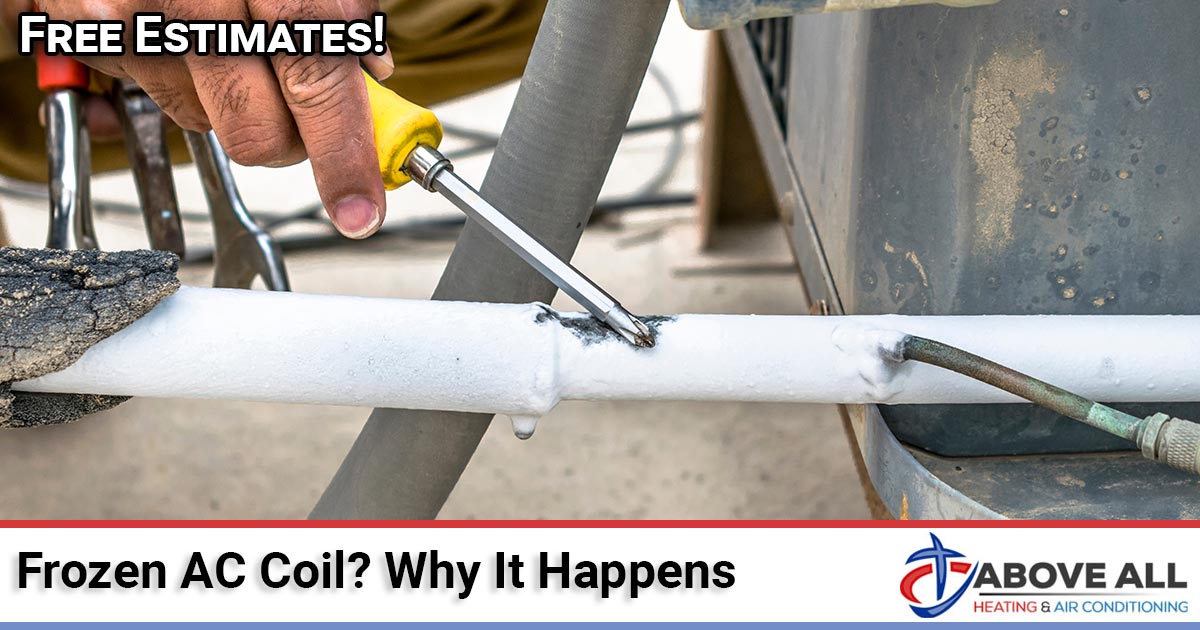
If you’ve pulled the cover off your indoor air handler and found a layer of ice coating the coil, or you’ve noticed frost creeping along the refrigerant line outside, you’re dealing with one of the more common — and more misunderstood — air conditioning problems homeowners across Southern California run into during the hottest months. A frozen AC coil isn’t just an odd inconvenience. It’s a warning sign that something upstream of the coil isn’t working the way it should, and continuing to run the system while it’s frozen can turn a manageable repair into a much more expensive one. In this guide, Above All Heating and Air explains exactly what’s happening when a coil freezes, why it happens, what you can safely do about it yourself, and when it’s time to stop troubleshooting and call a professional.
What Is an AC Evaporator Coil, and Why Does It Freeze?
The evaporator coil is the part of your air conditioning system located inside your air handler or furnace cabinet, usually mounted just above or alongside the blower. Its job is simple in concept: warm air from your home passes across the coil, refrigerant inside the coil absorbs that heat, and cooler air gets pushed back out through your ducts. For that process to work correctly, the coil needs two things in balance — a steady flow of air moving across it, and the correct amount of refrigerant circulating through it at the correct pressure.
When either of those two things is disrupted, the surface temperature of the coil can drop below freezing. Instead of simply cooling the air that passes over it, the coil starts pulling moisture directly out of that air and freezing it on contact. Once a small amount of ice forms, it restricts airflow even further, which makes the coil colder still, which causes more ice to form. Left alone, this cycle can encase the entire coil — and sometimes the refrigerant line running outside to the condenser — in a thick layer of ice within a matter of hours.
Common Causes of a Frozen Evaporator Coil
A frozen coil is a symptom, not a root cause. Below are the issues we most commonly find behind it when we’re called out to a home in Temecula, Murrieta, Menifee, or the surrounding area.
Restricted Airflow
This is by far the most frequent cause. Anything that reduces the volume of air moving across the coil can drop its surface temperature enough to start ice formation, including:
- A dirty or clogged air filter, which is the single most common culprit we see
- Closed, blocked, or furniture-covered supply and return vents
- A dirty evaporator coil itself, where dust and debris have built up on the coil fins over time
- A failing or undersized blower motor that isn’t pushing enough air through the system
- Collapsed, kinked, or poorly designed ductwork restricting airflow to and from the air handler
Low Refrigerant or a Refrigerant Leak
Refrigerant should stay at a factory-set charge level for the life of the system under normal operation — it isn’t a fluid that gets “used up” like motor oil. If the level in your system is low, it’s because refrigerant is escaping somewhere, whether through a small pinhole leak in the coil, a loose fitting, or a worn seal. As the charge drops, the pressure inside the coil drops with it, and that lower pressure allows the coil’s surface temperature to fall below freezing even when airflow is otherwise normal. Common refrigerant leak signs to watch for alongside a frozen coil include a hissing or bubbling sound near the indoor or outdoor unit, reduced cooling performance that gradually gets worse over weeks or months, and oily residue around refrigerant line connections.
Mechanical or Control Issues
Less commonly, a frozen coil traces back to a stuck or malfunctioning component that keeps the system running longer or under different conditions than it should, such as a thermostat sensor reading incorrectly, a faulty run capacitor affecting blower speed, or a metering device (the expansion valve or orifice) that isn’t regulating refrigerant flow correctly.
Running the System in Cool Weather
Central air conditioners are designed to operate within a specific outdoor temperature range. Running your AC when it’s unusually cool outside, particularly overnight in the spring or fall, can occasionally contribute to coil freezing because the system wasn’t designed to reject heat efficiently at those lower outdoor temperatures.
Warning Signs You’re Dealing With a Frozen Coil
Because the coil itself is usually hidden inside the air handler cabinet, most homeowners notice the downstream effects before they ever see the ice directly. Watch for:
- Your AC not blowing cold air, or airflow from the vents that feels weak or barely cool
- Visible frost or ice on the refrigerant lines running to the outdoor condenser
- A hissing, bubbling, or gurgling sound, which can point to a refrigerant leak
- Water pooling around the indoor unit as accumulated ice begins to melt — if this is the symptom you’re seeing most, our guide to AC leaking water causes and fixes covers that specific issue in more depth
- The system running continuously without ever reaching the thermostat’s set temperature
- A musty or damp smell coming from the vents as moisture builds up around the coil
Is It Safe to Keep Running Your AC With a Frozen Coil?
No. It’s tempting to let the system keep running and hope it works through the problem on its own, but continuing to operate an AC with a frozen coil typically makes the underlying issue worse and puts additional components at risk. A coil that stays iced over blocks airflow almost entirely, which starves the system of the return air it needs. More importantly, running a frozen system can force liquid refrigerant back toward the compressor instead of the vapor it’s designed to handle, a condition technicians call “slugging” that can cause serious, expensive damage to the compressor — often the single most costly component in the entire system to replace. If you notice ice anywhere on your system, the safest move is to shut the unit off at the thermostat right away.
How to Safely Thaw and Address a Frozen Coil
There are a few steps a homeowner can safely take before calling for service, and a few things you should never attempt on your own.
What You Can Safely Do
- Turn the thermostat to “off” so the compressor stops running, then switch the fan setting to “on” so air continues to circulate and gradually melt the ice. This can take anywhere from a few hours to a full day depending on how much ice has built up.
- Check and replace your air filter if it’s dirty. This is the most common cause of a frozen coil and the easiest one to rule out yourself.
- Check that all supply and return vents throughout your home are open and unobstructed by furniture, rugs, or curtains.
- Place towels around the base of the indoor unit to catch water as the ice melts, since a significant amount of water can be released during the thawing process.
What You Should Never Do
- Never chip, scrape, or pick at the ice to speed things up. This can puncture the coil or damage the delicate aluminum fins, turning a repairable issue into a full coil replacement.
- Never use a hair dryer, heat gun, or open flame to melt the ice faster. This risks damaging plastic components and electrical wiring near the coil.
- Never attempt to add refrigerant yourself. Handling refrigerant requires EPA certification, and adding it without first locating and repairing the leak simply means it will escape again.
- Never turn the system back on to “test it” while ice is still visible anywhere on the coil or lines.
Once the ice has fully melted and you’ve confirmed the filter is clean and vents are open, you can try running the system again. If the coil freezes a second time, stop and call a professional rather than repeating the thaw-and-restart cycle, since that pattern usually points to a refrigerant leak or a mechanical issue that a fresh filter won’t solve.
When to Call a Professional
Some causes of a frozen coil are well within a homeowner’s ability to diagnose and fix. Others require licensed, specialized tools and training. Call a professional if:
- The coil freezes again after you’ve replaced the filter and confirmed vents are open
- You hear hissing, bubbling, or other unusual sounds near the indoor or outdoor unit
- Cooling performance has been gradually declining over several weeks, which often points to a slow refrigerant leak
- You’re not comfortable opening the air handler cabinet or waiting out a full thaw cycle
- The system is more than a few years old and hasn’t had a professional inspection recently
A technician can pressure-test the system to locate a refrigerant leak, measure airflow across the coil, inspect the blower motor and capacitor, and confirm the coil itself wasn’t damaged during the freeze-thaw cycle. If you’re anywhere in our Southern California service area, including AC repair in Murrieta, our technicians carry the diagnostic equipment and common replacement parts needed to resolve most frozen-coil calls in a single visit.
Preventing a Frozen Coil From Happening Again
Because restricted airflow is the leading cause, the single most effective prevention step is also the simplest: check your air filter monthly during peak cooling season and replace it before it’s visibly clogged. Beyond that, a few habits go a long way toward keeping your coil from freezing again:
- Keep all supply and return vents open, even in rooms you don’t use often
- Schedule annual professional maintenance, which includes cleaning the coil and checking refrigerant charge before problems start
- Avoid running the AC when outdoor temperatures drop unusually low for the season
- Address any unusual sounds, smells, or performance changes promptly rather than waiting for a full breakdown
Why Homeowners Trust Above All Heating and Air
Above All Heating and Air has been diagnosing and repairing air conditioning systems throughout Temecula, Murrieta, Menifee, Lake Elsinore, Hemet, Wildomar, and the surrounding communities for years. A frozen coil can come from several different root causes, and getting the diagnosis right the first time is what separates a quick, affordable fix from a repeat service call. Our technicians arrive equipped to pressure-test for refrigerant leaks, inspect airflow and blower performance, and repair or replace the components actually causing the problem — not just treat the symptom. Learn more about our team and service area on our homepage, or reach out through our contact page to schedule a visit.
Frequently Asked Questions
What causes an AC coil to freeze up?
Most commonly, restricted airflow from a dirty filter, closed vents, or a dirty coil. Low refrigerant from a leak is the second most common cause, and less often a mechanical or control issue is to blame.
Is it safe to run my AC with a frozen coil?
No. Continuing to run the system can force liquid refrigerant into the compressor and cause expensive damage. Turn the thermostat off and let the coil thaw before running the system again.
Can low refrigerant cause a coil to freeze?
Yes. Refrigerant systems are sealed and shouldn’t lose charge under normal operation. If the level is low, it’s leaking somewhere, and the resulting drop in pressure can cause the coil to freeze even with normal airflow.
How long should I let a frozen coil thaw before calling for service?
Set the thermostat to off with the fan running and give it several hours, up to about 24 hours for a heavily iced coil. If it refreezes once the system is back on, stop and call a technician rather than repeating the cycle.
Will a frozen coil damage the compressor if ignored?
It can. Running a frozen system risks sending liquid refrigerant back to the compressor, which can cause serious internal damage over time.
What are the first signs of a frozen AC coil?
Weak or warm airflow from the vents, visible frost on the refrigerant lines outside, and a system that runs constantly without reaching the set temperature are usually the earliest signs.
Can a dirty air filter really cause the coil to freeze?
Yes, and it’s the cause we see most often. A clogged filter chokes off the airflow the coil needs to stay above freezing, so checking and replacing the filter is the first thing to try.
Why is my AC blowing warm air when the coil is frozen?
Ice covering the coil blocks the airflow that would normally be cooled as it passes through, so the system pushes largely unconditioned air out through the vents instead.
Is a hissing or bubbling sound near the outdoor unit a sign of a refrigerant leak?
It can be. A hissing sound often points to refrigerant escaping under pressure, while bubbling can indicate refrigerant mixing with oil at a leak point. Either sound alongside a frozen coil warrants a professional inspection.
Can I use a hair dryer or other tool to speed up thawing?
No. Applying direct heat or trying to chip the ice away risks damaging the coil fins or nearby electrical components. Letting the system thaw naturally with the fan running is the safe approach.
Why does water pool around my indoor unit after the ice melts?
A significant amount of water gets released as accumulated ice thaws, and if the condensate drain line is also restricted, that water can overflow the drain pan. Our guide on AC leaking water causes and fixes covers this in more detail.
Can running the AC at night in cooler weather cause the coil to freeze?
It can contribute, since central air conditioners are designed to operate within a specific outdoor temperature range. Running the system when it’s unusually cool outside can be a contributing factor alongside airflow or refrigerant issues.
How much does it typically cost to repair a refrigerant leak?
Cost depends on the leak’s location, the refrigerant type your system uses, and how much of the system is affected. We provide an upfront, itemized quote after diagnosing the specific issue rather than a one-size-fits-all estimate.
Will the coil freeze again after I fix it myself?
If the cause was a dirty filter or closed vents, resolving that is often enough. If the coil freezes again after those fixes, it usually points to a refrigerant leak or mechanical issue that requires a professional diagnosis.
Can a failing blower motor cause a frozen coil?
Yes. A blower motor that isn’t moving enough air across the coil can lower its surface temperature enough to start ice formation, the same way a dirty filter or blocked vents would.
Is a frozen coil covered under a home warranty or HVAC service plan?
Coverage varies by plan and provider, so we’d recommend checking your specific policy. A current maintenance agreement with our team can help catch the underlying causes before a freeze happens in the first place.
How often should I change my air filter to prevent this?
Most standard filters should be checked monthly during peak cooling season and replaced every one to three months, depending on filter type, household dust levels, and whether you have pets.
Does Above All Heating and Air offer emergency service for a frozen AC coil?
Yes. Given how uncomfortable a non-functioning system can be during Southern California’s peak summer heat, we prioritize frozen-coil and no-cooling calls whenever scheduling allows. Contact our team to get a technician out to diagnose the issue.
Schedule an Appointment Today
Get in touch with Above All Heating and Air Conditioning by calling us or filling out the form. We look forward to working with you.
