
Furnace Replacement Cost: What Inland Empire Homeowners Should Know Before Getting Quotes
CONTACT US
Contact Us

Our
SERVICEs
Furnace Replacement Cost: What Inland Empire Homeowners Should Know Before Getting Quotes
Above All Heating And Air Conditioning / November 9, 2026 / Furnace Service, HVAC Services, Heating Repair
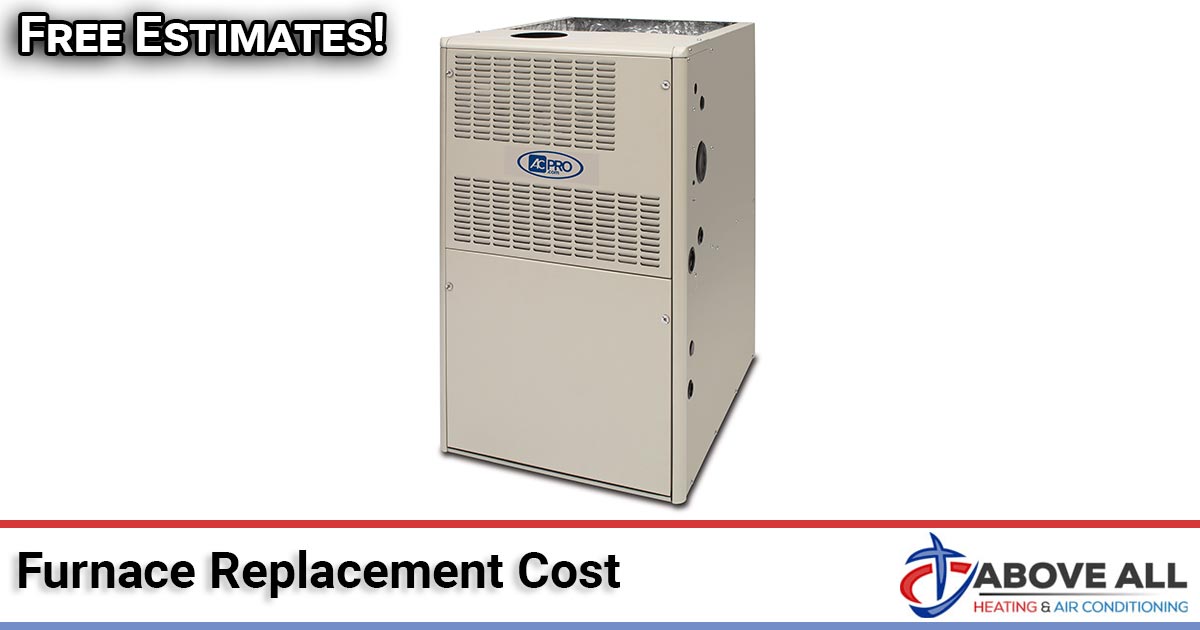
Furnace replacement cost depends on five things more than the brand name: the furnace’s size, its efficiency (80% vs. 90%+ AFUE, which changes the venting), where it sits in your home, the condition of the ductwork and connections around it, and the permits and testing your city requires. Because those vary from one Inland Empire house to the next, the only accurate number is an itemized quote for your home, which Above All Heating and Air provides free.
If you are reading this, your furnace may have failed on the first cold night, a technician may have told you the heat exchanger is cracked, or you are simply planning ahead before an older system gives out. Either way, you want to know what you are getting into before you start collecting quotes. This guide walks through what actually moves the price of a furnace replacement in Murrieta, Temecula, Menifee and the surrounding area, how to compare quotes fairly, and when a repair still makes more sense than a new furnace.
One note before we start: you will find national “average” furnace prices all over the internet. We don’t repeat them here, because they rarely reflect Southern California labor, permit and air-quality requirements. Instead, we explain the cost drivers so you can understand any quote you receive, including ours.
Furnace Replacement Cost: The Short Answer
A furnace replacement quote is the sum of the equipment, the labor to remove the old unit and set the new one, and everything needed to connect it safely and legally: venting, gas and electrical connections, the transition to your existing ductwork, the thermostat, permits and inspection. Two homes on the same street can get very different quotes if one has a closet furnace that swaps cleanly and the other has an attic furnace that needs new venting and duct repairs.
In general, quotes fall into three tiers:
- Entry-level: a single-stage 80% AFUE gas furnace replacing a similar unit in the same location, reusing sound venting and ductwork.
- Mid-tier: a higher-efficiency (90%+ AFUE) or two-stage furnace, often with venting changes, a condensate drain and a better blower.
- High-efficiency or whole-system: a variable-speed or modulating furnace, a furnace replaced together with the air conditioner and coil, or a switch to a heat pump.
Add-ons such as duct sealing, a new return, a smart thermostat or air filtration can sit on top of any tier. The fastest way to see where your home lands is a free furnace replacement quote from our team.
What Drives the Cost to Replace a Furnace
The table below lists the factors we price on every furnace replacement and why each one matters.
| Cost factor | What it means | Why it moves the price |
|---|---|---|
| Furnace size (BTU) | Heating capacity matched to your home’s heat loss | Larger units cost more, and an oversized unit costs more to buy and runs less efficiently. Sizing should come from a load calculation, not the old unit’s label. |
| Efficiency (AFUE) | 80% non-condensing vs. 90%+ condensing | Condensing furnaces cost more and usually need PVC venting and a condensate drain if the old unit was 80%. |
| Staging and blower | Single-stage, two-stage or modulating; standard or variable-speed blower | More stages and smarter blowers add comfort and quieter operation, and add equipment cost. |
| Furnace location | Attic, hall closet, garage or crawlspace | Attic installs take more labor and may need a new platform, service light, drain pan or larger access opening. |
| Configuration | Upflow, downflow or horizontal | A new furnace with a different footprint may need a new plenum or transition. |
| Ductwork and plenum | Condition and sealing of supply and return ducts | Leaky or undersized ducts can require repair, sealing or a new return, especially when testing is required. |
| Gas line and electrical | Gas connector, shutoff, sediment trap, power and disconnect | Older connectors or undersized gas piping may need to be updated to current code. |
| Venting | Metal flue for 80% units, PVC for condensing units | Changing vent type or route adds materials and labor. |
| Matching the AC coil | The indoor coil that sits on top of the furnace | If the coil doesn’t fit the new cabinet or is near the end of its life, it may need to be replaced or adapted. |
| Permits and HERS testing | Local permit plus Title 24 verification | Permit fees, duct leakage testing and a third-party HERS rater are part of a code-compliant job. |
| Removal and haul-away | Disconnecting and disposing of the old furnace | Usually included, but confirm it is listed on the quote. |
Size comes from a load calculation, not square footage
Many homeowners ask what a furnace costs “for a 2,000 square foot house.” Square footage is only a starting point. Insulation, windows, ceiling height, duct location and the number of stories all change how much heat a home loses. The U.S. Department of Energy’s Energy Saver guide to furnaces recommends improving a home’s efficiency first and then having a heating contractor size the furnace, because a properly sized unit operates most efficiently. We use the same approach we describe in our AC load calculation guide: measure the home, then size the equipment.
Attic, closet or garage: location matters
Many tract homes in Murrieta, Temecula and Menifee have furnaces in the attic or a hallway closet. A closet or garage furnace is usually the most straightforward swap. Attic furnaces take longer because everything has to be carried up and down, the work area is tight and hot, and the new unit may need a platform, a secondary drain pan, a service light or a wider access opening to meet code. None of that is unusual, but it should be listed on your quote.
Permits and Title 24 testing in Riverside County
A furnace replacement is not a “just swap it” job in California. Riverside County’s HVAC alterations handout says a permit is required for changeouts, including replacing furnaces, coils and condensers, and that HERS verification is required for all HVAC alterations in Climate Zones 10 through 15. That means duct leakage testing and other checks by a certified third-party rater. Cities in the area run their own building departments, but the state energy code applies everywhere. A quote that leaves out the permit is not a bargain; it can leave you with an unpermitted installation that causes trouble when you sell or file a warranty or rebate claim.
80% vs. 95% AFUE: Which Furnace Makes Sense in a Mild Winter?
AFUE (annual fuel utilization efficiency) is the share of the fuel a furnace turns into usable heat over a year. According to energy.gov, older low-efficiency systems run around 56% to 70% AFUE, while high-efficiency systems reach 90% to 98.5%. Energy.gov also notes that AFUE does not include heat lost through ductwork, which can be significant when ducts run through an unconditioned attic, as they do in many Inland Empire homes.
An 80% furnace vents hot exhaust through a metal flue. A 90%+ condensing furnace pulls extra heat out of the exhaust, which cools it enough to create acidic condensate. Energy.gov explains that these high-efficiency units need a new vent or a lined chimney, and condensing furnaces commonly use PVC venting. They also need a condensate drain, and in an attic that drain needs a safe route and often a pump.
Which one is right for you comes down to how much you heat, where the furnace sits, and how long you plan to stay:
- An 80% furnace can make sense in a home with light heating use, an existing metal flue in good condition and a tight budget, especially if the venting would be hard to reroute.
- A 90%+ furnace makes more sense if you heat often, plan to stay for many years, want a utility rebate (see below), or are already changing venting or ductwork.
With short Southern California heating seasons, the fuel savings from higher efficiency take longer to pay back than they would in a cold climate. We’ll show you both options side by side so you can decide with real numbers for your home.
Furnace-Only vs. Furnace + AC vs. Heat Pump
Most homes here have a split system: a gas furnace indoors and an air conditioner outside, sharing the same blower and ductwork. When the furnace fails, you have three realistic paths.
| Option | When it makes sense | Cost considerations |
|---|---|---|
| Replace the furnace only | Your AC is relatively new and its coil fits the new furnace | Lowest upfront cost; coil fit and blower compatibility must be checked |
| Replace furnace and AC together | The AC is also aging, uses an older refrigerant, or the coil won’t fit | Higher total cost, but one labor visit, one permit and matched equipment |
| Switch to a heat pump (with or without a gas backup) | You want one system for heating and cooling, or you want to move away from gas | Equipment and electrical needs differ; works well in mild winters |
Replacing both at once is usually more efficient than doing them separately a few years apart, because the crew, permit and testing happen once and the components are designed to work together. Our AC replacement cost guide covers the cooling side of that decision. If a heat pump is on your list, ask us to quote it alongside the furnace options.
Gas Furnace Replacement Cost in Southern California: Local Rules That Affect Your Quote
Two local rules shape gas furnace replacement in our area, and both affect which equipment can go into your home.
Ultra-low NOx furnaces (South Coast AQMD Rule 1111)
The California Air Resources Board says the South Coast AQMD covers Orange County, most of Los Angeles County and the western parts of Riverside and San Bernardino counties. Within that district, Rule 1111 requires new and replacement central residential gas furnaces to meet an ultra-low NOx limit of 14 nanograms per joule, as summarized in this California ultra-low NOx furnace guide. In practice, that narrows the models a contractor can install and is one reason Southern California furnace prices don’t line up with national averages.
Is the gas furnace being phased out?
Not right now. In June 2025, the South Coast AQMD board voted 7–5 to reject proposed rules that would have phased in zero-emission targets for home furnaces and water heaters, and sent them back to committee, as CalMatters reported. Policy can change, so we’ll tell you what applies on the day we quote your job, but today you can replace a gas furnace with a compliant gas furnace.
Why Furnace Replacement Looks Different in the Inland Empire
Our heating season is short. Furnaces in the Temecula Valley often sit idle from spring through fall and then run hard on the first cold nights. That light use is one reason local furnaces sometimes outlast their age, and it also means the first sign of trouble often shows up all at once, on a cold evening.
A few local patterns affect replacement cost:
- Attic furnaces and attic ducts. Attic installs mean more labor, and ducts in a hot attic lose heat in winter and cooling in summer, so duct condition matters.
- Dust and Santa Ana debris. Dusty conditions load filters and blowers. Neglected filters can contribute to overheating and shorter equipment life.
- Shared blower with the AC. Because the furnace blower moves air for your air conditioner too, a failing furnace blower affects summer comfort, and a new furnace with a variable-speed blower can improve both seasons.
- Older homes with wall furnaces. Some older homes still heat with wall furnaces. Replacing one with a central system is a bigger project that involves ductwork, so it is priced differently from a like-for-like swap.
Repair or Replace? The $5,000 Rule and Other Signals
Not every furnace problem means a new furnace. Many no-heat calls turn out to be a flame sensor, ignitor, pressure switch or control board. Our guide to knowing when to replace your heating and AC system goes deeper, but here is the quick version.
The $5,000 rule is a rough rule of thumb: multiply the age of the system by the estimated repair cost. As CBS News explains, if the result is over $5,000, replacement is generally the better long-term choice; under $5,000, repair is likely more economical. It is a starting point, not a final answer.
| Signal | Leans toward repair | Leans toward replacement |
|---|---|---|
| Age | Under about 12–15 years | Approaching or past 15–20 years |
| Problem | Ignitor, flame sensor, thermostat, pressure switch, capacitor | Cracked heat exchanger, failed control board plus blower on an old unit |
| Repair history | First significant repair | Repeated repairs over the last few winters |
| Safety | No CO or venting concerns | CO alarm events, soot, rust in the burner area, flame rollout |
| Parts | Readily available | Discontinued or hard to source |
| Comfort | Even heat, normal bills | Uneven rooms, rising bills, constant cycling |
For lifespan context, Carrier says a well-maintained furnace typically lasts 15 to 20 years. A yearly heating tune-up is the best way to catch small problems before they become a replacement.
AC Pro Furnaces: The Line We Install Most
Most of the furnaces we install are from AC Pro, a family-owned HVAC distributor headquartered in Fontana that serves Southern California. Its branded gas furnaces come in both efficiency levels discussed above. According to AC Pro’s product brochures:
- The AC Pro 80G1 is an 80% AFUE single-stage furnace with an aluminized-steel heat exchanger that is crimped rather than welded and an anti-vibration blower assembly.
- The AC Pro 95G1 is a 95% AFUE single-stage furnace with a PSC blower motor and the same crimped aluminized-steel heat exchanger design.
- Both carry a 10-year limited parts warranty and a limited lifetime heat exchanger warranty with registration, for residential applications.
Because AC Pro has branches across the region, replacement parts are close by, which helps if your furnace ever needs service. We also install and service other brands, and we’ll recommend the model that fits your home’s size, venting and budget. You can see more on our furnace installation service page.
Rebates, Tax Credits and Financing in 2026
- Federal tax credit: The IRS says the Energy Efficient Home Improvement Credit applied only to qualifying property placed in service before December 31, 2025. A furnace installed in 2026 does not qualify for that credit.
- SoCalGas rebate: SoCalGas lists a rebate for ENERGY STAR certified furnaces that requires 92% AFUE or higher, installation by a licensed contractor with proof of permit closure, and one per household. Funds are first-come, first-served through December 31, 2026 or until they run out. This is another reason a permitted job matters.
- Financing: If a furnace failure arrives at a bad time, monthly payments can spread out the cost. See our financing options and our article on financing a new HVAC system.
How to Read an Itemized Furnace Replacement Quote
When you compare quotes, compare the scope, not just the bottom line. Here is the order we suggest:
- Check the equipment. Brand, model number, BTU input/output, AFUE, staging and blower type should all be listed.
- Ask how the size was chosen. A load calculation or at least a documented heat-loss review is better than “same size as the old one.”
- Look for venting details. If you are moving to a 90%+ furnace, the quote should cover PVC venting, the condensate drain and any pump.
- Confirm the connections. Gas connector and shutoff, electrical, plenum or transition, filter rack and thermostat.
- Confirm the coil plan. Will your existing AC coil be reused, adapted or replaced?
- Find the permit and HERS testing. Both should be on the quote, along with who schedules them.
- Read the warranty terms. Manufacturer parts and heat exchanger coverage, any registration requirement, and the installer’s labor warranty.
- Check removal and cleanup. Haul-away of the old furnace should be included.
Red Flags in a Low Furnace Quote
- No permit, or an offer to skip the permit to save money.
- No mention of ultra-low NOx compliance for a gas furnace in South Coast AQMD territory.
- A 90%+ furnace quoted with no venting or condensate work.
- Sizing by “the old one was 100,000 BTU” with no look at the home.
- No model numbers, only “new high-efficiency furnace.”
- Pressure to sign on the spot, or a price that only holds “today.”
What Happens on Furnace Replacement Day
- We shut off gas and power, disconnect the old furnace and remove it.
- We set the new furnace, adapt the plenum or transition, and connect the coil.
- We connect the gas line, venting and condensate drain (for condensing models) and wire the thermostat.
- We leak-test the gas connections, start the furnace, and check combustion, temperature rise, airflow and safety controls.
- We walk you through the thermostat and filter, and schedule the permit inspection and HERS testing.
A straightforward closet or garage swap is often finished in a day; attic installs and venting changes can take longer.
Safety: When to Stop and Call
If your old furnace is failing, a few situations call for immediate action rather than waiting on quotes:
- If you smell gas (a rotten-egg odor), leave the home immediately. SoCalGas says to evacuate the area and call 1-800-427-2200 from a safe location, and to call 911 if there is a danger to life or property or you can’t reach SoCalGas.
- If a carbon monoxide alarm sounds, get everyone outside and call 911.
- If you see flames outside the burner area, soot or scorch marks, turn the furnace off at the thermostat and the service switch and call a technician.
Don’t try to replace or re-pipe a gas furnace yourself. It involves gas, combustion venting and permits, and mistakes can be dangerous. If you aren’t sure whether your furnace can be repaired, our furnace repair team can diagnose it first.
Frequently Asked Questions
How much should it cost to replace a furnace?
It should cost what your home actually needs: the right-size furnace, compliant venting, gas and electrical connections, permit and HERS testing, and haul-away. Because those vary by home, a fair price comes from an itemized in-home quote, not a national average. We don’t publish one-size prices because Southern California labor, permits and ultra-low NOx equipment requirements make national figures misleading. Compare quotes line by line using the checklist in this guide.
What is the average cost to have a new furnace installed?
There is no reliable average for the Inland Empire, because installed cost depends on furnace size, AFUE, location, venting, ductwork and permits. National averages you see online don’t reflect local labor or South Coast AQMD equipment rules. A free on-site quote gives you a real installed price for your home, with each part of the job listed.
How much does a new furnace cost for a 2000 square-foot house?
Square footage alone doesn’t set the price. Two 2,000 square-foot homes can need different furnace sizes depending on insulation, windows, duct location and stories, and the installation details matter as much as the unit. We size the furnace from a load calculation, then price the equipment, venting, connections and permits for your specific home.
How much is a furnace for a 1500 sq ft house?
A 1,500 square-foot home usually needs a smaller furnace than a larger home, which can lower the equipment portion of the cost, but labor, venting, permits and testing still apply. Location matters too: a garage or closet furnace is usually simpler to replace than an attic furnace in the same size home.
How much does a new gas furnace cost?
A new gas furnace’s cost depends on its BTU size, AFUE (80% vs. 90%+), staging and blower type, plus the installation work around it. In our area, gas furnaces must also meet South Coast AQMD ultra-low NOx limits. We’ll quote 80% and 90%+ options side by side so you can see the difference for your home.
Is it cheaper to replace furnace and AC together?
Replacing both at once costs more in total than replacing the furnace alone, but it is usually cheaper than doing them separately a few years apart, because labor, permitting and testing happen once. It also makes sense when the AC is aging or its coil won’t fit the new furnace cabinet.
What is the $5000 rule for furnace?
The $5,000 rule says to multiply your furnace’s age by the repair cost. If the result is over $5,000, replacement is usually the better long-term choice; under $5,000, repair is usually more economical. It’s a starting point only. Safety issues such as a cracked heat exchanger outweigh the math.
Is it worth replacing a 30 year old furnace?
Usually, yes. A 30-year-old furnace is well past the 15 to 20 years Carrier gives as a typical lifespan, is far less efficient than current models, and may have hard-to-find parts or safety wear. If it is still running safely, plan the replacement now so you can choose equipment on your schedule instead of after a winter breakdown.
Should a 25 year old furnace be replaced?
A 25-year-old furnace is past its typical lifespan, so it’s worth planning a replacement, especially if it needs a major repair, shows rust or soot, or has had CO alarm events. Light Southern California use means some older furnaces still run, but a safety inspection should decide whether it is safe to keep.
How many years should a furnace last?
Carrier says a well-maintained furnace typically lasts 15 to 20 years. Regular maintenance, correct sizing and clean filters help a furnace reach the upper end of that range. Mild Inland Empire winters mean lighter use, but dust, attic heat and missed maintenance can shorten a furnace’s life.
How much does it cost to fix a furnace instead of replacing it?
Repair cost depends on the part. Common repairs such as a flame sensor, ignitor or pressure switch cost far less than replacement, while a cracked heat exchanger or a failed control board and blower on an older unit often tip the decision toward replacement. We diagnose first and show you both the repair and replacement options when it’s close.
Is a 95% AFUE furnace worth it in Southern California?
It can be, if you heat often, plan to stay for years, or want the SoCalGas rebate, which requires 92% AFUE or higher. With short heating seasons, the fuel savings take longer to pay back than in colder climates. Venting and condensate work can add cost, so we compare both options for your home.
Do I need a permit to replace a furnace in Riverside County?
Yes. Riverside County requires a permit for HVAC changeouts, including furnace replacements, and HERS verification for HVAC alterations in Climate Zones 10 through 15. A permitted job also protects you when you sell your home and is required for the SoCalGas furnace rebate.
Are there rebates or tax credits for a new furnace in 2026?
The federal Energy Efficient Home Improvement Credit only applied to property placed in service before December 31, 2025, so it doesn’t cover 2026 installs. SoCalGas currently lists a rebate for ENERGY STAR furnaces with 92% AFUE or higher. SoCalGas funds run through December 31, 2026 or until they run out, and require a licensed contractor and permit closure.
How long does it take to replace a furnace?
A straightforward closet or garage furnace swap is often completed in a day. Attic furnaces, venting changes or duct work can add time. Permit inspection and HERS testing are scheduled after the installation.
Can I replace just the furnace and keep my old AC?
Often, yes, if your air conditioner is in good shape and its indoor coil fits and matches the new furnace. If the AC is old or the coil doesn’t fit, replacing both may be the better value. We check coil fit and blower compatibility before recommending either option.
Does Above All Heating and Air offer free furnace replacement quotes?
Yes. We provide free in-home furnace replacement quotes in Murrieta, Temecula, Menifee and nearby communities, with the equipment, venting, permits and testing itemized. Request one through our free quote page or contact us to schedule.
Get an Accurate Furnace Replacement Quote
The most reliable way to know your furnace replacement cost is an in-home quote that lists every part of the job. Above All Heating and Air will size your new furnace, show you 80% and high-efficiency options, and include permits and testing up front. Request your free quote or contact us to schedule a visit. You can also learn more about Above All Heating and Air and the communities we serve.
Schedule an Appointment Today
Get in touch with Above All Heating and Air Conditioning by calling us or filling out the form. We look forward to working with you.
