
Heating Tune-Up: What’s Included, Whether It’s Worth It, and When to Book
CONTACT US
Contact Us

Our
SERVICEs
Heating Tune-Up: What’s Included, Whether It’s Worth It, and When to Book
Above All Heating And Air Conditioning / October 30, 2026 / Furnace Service, HVAC Services, hvac tips
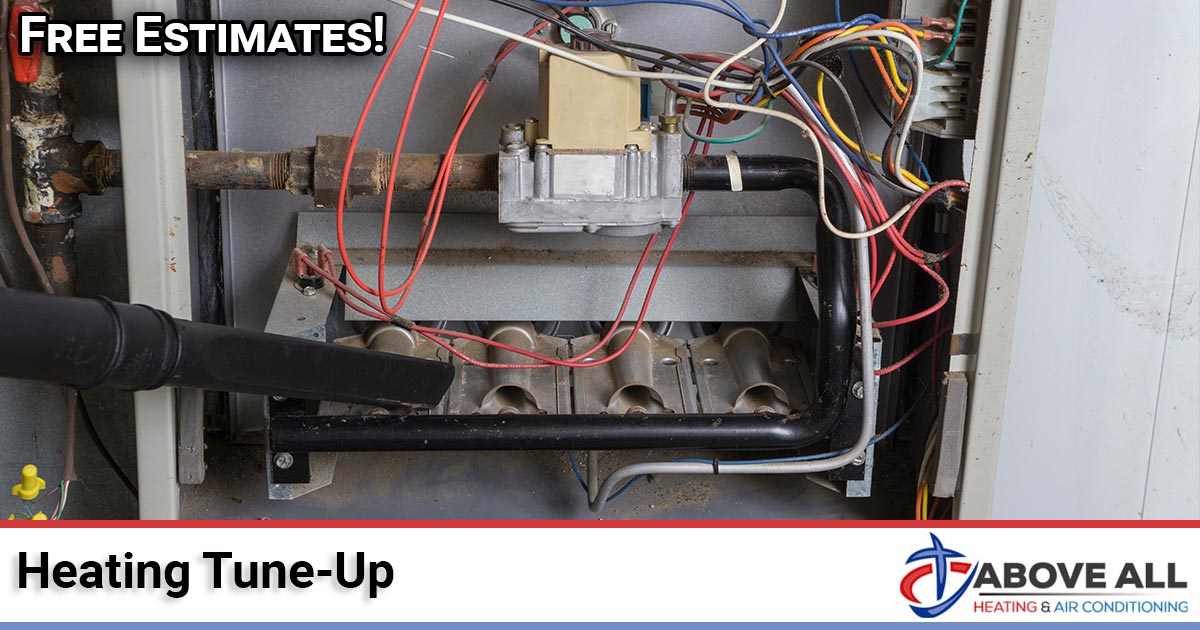
A heating tune-up is a once-a-year inspection, cleaning and safety test of your furnace or heat pump, done before you need the heat. A technician cleans and adjusts the parts that make heat, checks the gas, electrical and venting systems, and tests for safety problems like a cracked heat exchanger or carbon monoxide. For most Inland Empire homes, early fall is the right time to book one.
At Above All Heating and Air, we get the same few questions every October: what actually happens during a heating tune-up, is it worth paying for when our winters are so mild, and how is it different from just calling when something breaks? This guide walks through the full checklist our technicians follow for gas furnaces and heat pumps, what affects the price, how tune-ups tie into your manufacturer warranty, and the signs your system needs attention now rather than later.
What Is a Heating Tune-Up?
A heating tune-up (also called a furnace tune-up, heater tune-up or heating system check-up) is preventive maintenance for the equipment that warms your home. It is not a repair visit. The goal is to find and fix small problems before they become no-heat calls on the first cold night, and to confirm the system is running safely.
The tune-up covers three things at once:
- Safety. Gas furnaces burn fuel inside your home, so the burners, heat exchanger, venting and gas pressure all have to be right. A tune-up is the one time each year someone qualified looks at all of them.
- Reliability. Ignitors, flame sensors, capacitors and switches tend to fail at start-up, after months of sitting idle. Catching a weak part in October is easier than replacing it at 9 p.m. in January.
- Efficiency. Clean burners, a clean blower and correct airflow help the system make heat with less fuel or electricity.
ENERGY STAR recommends a pre-season check-up every year and says it is best to have the heating system checked in the fall, because contractors get busy once the weather turns. The CDC also advises having your heating system and other fuel-burning appliances serviced by a qualified technician every year to help prevent carbon monoxide poisoning.
What’s Included in a Heating Tune-Up for a Gas Furnace
Most homes we service in Murrieta, Temecula, Menifee and the surrounding area heat with a gas forced-air furnace, often installed in the attic, a hall closet or the garage. Here is what a complete furnace tune-up from our team covers, and why each item matters.
| Tune-up item | What the technician does | Why it matters |
|---|---|---|
| Burners | Inspects and cleans burners, checks flame color and shape | A dirty burner can burn unevenly, waste gas and create soot |
| Flame sensor | Cleans the sensor rod and checks its signal | A dirty flame sensor is one of the most common reasons a furnace lights and then shuts off |
| Ignitor | Inspects the hot surface ignitor or spark ignition for cracks and wear | Ignitors often fail on the first start-up of the season |
| Heat exchanger | Visually inspects for cracks, rust, corrosion and heat stress | A cracked heat exchanger can allow combustion gases into the airstream |
| Venting and draft | Checks the flue pipe, connections and draft inducer for blockage, gaps and proper exhaust | Combustion gases must leave the house through the vent, not the living space |
| Gas pressure and connections | Measures manifold gas pressure and checks connections for leaks | Wrong gas pressure causes poor heating, overheating or incomplete combustion |
| Safety switches | Tests the high-limit switch, rollout switches and pressure switch | These shut the furnace down if something goes wrong; they have to work |
| Blower assembly | Inspects and cleans the blower wheel, checks the motor, capacitor and amp draw | A dirty or weak blower reduces airflow and makes the furnace run hot |
| Electrical | Tightens connections, checks voltage, the control board and fault codes | Loose connections and failing boards are common sources of no-heat calls |
| Filter | Checks the filter and replaces it if needed, confirms the airflow direction | A clogged filter is a leading cause of overheating and short cycling |
| Condensate system (90%+ furnaces) | Checks the trap, drain line and condensate pump | High-efficiency furnaces make water; a clogged drain can shut them down or leak |
| Thermostat | Checks settings, calibration and the heat cycle from start to finish | The system can only be as accurate as the control that runs it |
| Carbon monoxide test | Checks for CO in the flue and around the furnace and supply air | Confirms the furnace is burning cleanly and venting safely |
That list lines up with what ENERGY STAR describes for heating check-ups: checking gas connections, gas pressure, burner combustion and the heat exchanger, along with tightening electrical connections, lubricating moving parts, inspecting the condensate drain and checking system controls and start-up cycles. If a company’s “tune-up” is a quick filter change and a look around, it is not covering the safety side of the job.
What’s Included in a Heat Pump Tune-Up
A heat pump heats and cools with the same outdoor unit, so it works in both seasons. A heat pump tune-up includes many of the same electrical and airflow checks as a furnace, plus a few items that only apply to heat pumps.
| Heat pump item | What we check |
|---|---|
| Defrost controls | The defrost board, sensors and a test of the defrost cycle, which keeps frost from building up on the outdoor coil in heating mode |
| Reversing valve | That the valve switches cleanly between heating and cooling |
| Auxiliary heat strips | The backup electric heat, its sequencers and safety limits, and that it is not running more than it should |
| Refrigerant and electrical | Operating pressures and temperatures, capacitor, contactor and wiring |
| Coils and outdoor unit | Indoor and outdoor coil condition, debris around the outdoor unit, fan motor and blades |
| Airflow and thermostat | Filter, blower, ductwork at the air handler, and thermostat staging between heat pump and aux heat |
Because a heat pump runs all year, we recommend two visits: one in spring before cooling season and one in fall before heating season. If you also have central AC with a gas furnace, the spring visit is your AC tune-up and the fall visit is your heating tune-up. Our AC tune-up checklist covers what happens on the cooling side.
How Our Technicians Perform a Heating Tune-Up, Step by Step
Every system is a little different, but a typical furnace tune-up from Above All Heating and Air follows this order:
- Talk with you first. We ask about noises, smells, cold rooms, high bills or anything else you have noticed.
- Check the thermostat and start a heat cycle. We watch the full start-up sequence: inducer, ignition, burner light-off, flame proving and blower start.
- Shut down power and gas, then open the furnace. We remove panels to reach the burners, flame sensor, ignitor and blower.
- Clean and inspect. We clean the burners, flame sensor and blower area and inspect the heat exchanger, ignitor and wiring.
- Test the safety controls. We confirm the limit, rollout and pressure switches are working as designed.
- Measure. We check gas pressure, temperature rise, blower motor amp draw and voltage, and test for carbon monoxide.
- Check venting and drainage. We inspect the flue and, on high-efficiency furnaces, the condensate trap and drain.
- Replace the filter if needed and run a final cycle. We confirm the system starts, heats and shuts off normally.
- Report back. We explain what we found, what is in good shape, and anything that needs repair or should be watched, with options and pricing before any work is done.
Is a Heating Tune-Up Worth It in a Mild Southern California Winter?
This is the most common question we hear, and it is a fair one. Our heating season is short compared with much of the country. But a light-use furnace still benefits from a yearly check, for a few practical reasons:
- It sits idle for months. A furnace that has not run since March collects dust on the burners and heat exchanger, and parts like ignitors and flame sensors are more likely to fail on the first start-up of the season. That first-run dust is also why many homes get a burning smell in fall; our guide to why a heater smells like burning explains which smells are normal.
- The blower is shared with your AC. In most homes, the furnace blower moves the air for both heating and cooling, so it has already run hard all summer.
- Safety does not depend on how often you use it. A cracked heat exchanger, a loose vent connection or wrong gas pressure is a risk whether the furnace runs 50 hours a year or 500.
- Repairs cost more in a hurry. Finding a weak part during a scheduled visit gives you time to plan, instead of paying for an urgent call when the house is cold.
Is it ever reasonable to skip a year? If your furnace is only a year or two old, was installed correctly and has run without issues, the risk of skipping one year is lower. But many manufacturer warranties expect professional maintenance, and the safety checks are the same at any age. For most households, an annual heating tune-up is the simplest way to stay on schedule.
Heating Tune-Up vs. Repair Call vs. Maintenance Plan
These three services overlap, and homeowners sometimes book the wrong one. Here is how they compare.
| Heating tune-up | Repair (diagnostic) call | Maintenance plan | |
|---|---|---|---|
| When to book | System is working; you want it checked before winter | Something is wrong: no heat, odd noise, smell, error code | You want tune-ups handled automatically each year |
| What it covers | Cleaning, adjustment, safety testing, inspection | Finding the cause of a specific problem | Scheduled heating and cooling visits, usually with plan benefits |
| Repairs included? | Minor adjustments; parts and repairs quoted separately | Diagnosis first; repair quoted before work | Depends on the plan; parts are usually extra |
| Best for | Most homes, once a year in fall | Active problems | Homes with heat pumps or both AC and furnace that want two visits a year |
If your heater is already not working, skip the tune-up and call for a repair. A tune-up assumes the system runs; a diagnostic visit is built to track down a fault. If you want spring and fall visits handled for you, our HVAC maintenance service covers both seasons.
How Much Does a Heating Tune-Up Cost? What Affects the Price
We do not publish a single price here, because the right number depends on your equipment, and national averages you see online do not reflect Southern California labor and service costs. What we can tell you is what moves the price up or down:
- System type. A single gas furnace takes less time than a heat pump with electric backup heat, a dual-fuel system, or a home with two systems.
- Location and access. Attic furnaces in tight spaces take longer to service than a garage or closet unit.
- Condition. A system that has not been serviced in several years usually needs more cleaning, and is more likely to need parts.
- Parts and filters. Replacement filters, flame sensors, ignitors and capacitors are normally priced separately from the tune-up itself.
- Plan membership. Customers on a maintenance plan usually have their visits covered by the plan rather than paying per visit.
Be careful with very low-priced “tune-up specials.” A visit that is priced well below what a full inspection takes may be a quick look that leads to a sales pitch. Ask what is on the checklist before you book. For an exact price for your system, request a free service quote.
Heating Tune-Ups and Your Manufacturer Warranty
Many homeowners do not realize that the warranty on a new furnace or heat pump comes with conditions. Manufacturers generally require that the equipment be installed and maintained by a licensed professional, and many require registration within a set window after installation. Trane, for example, says that failing to have a licensed HVAC professional install and maintain your system can affect coverage, and that its registered limited warranty applies when the product is registered within 60 days of installation.
Requirements vary by brand and model, so check the warranty document for your equipment. Either way, a yearly tune-up gives you two things that help if you ever file a claim: a dated service record from a licensed company, and a technician’s notes on the condition of the system. Keep your tune-up invoices with your installation paperwork.
Signs You Need a Heating Tune-Up Now
If any of these sound familiar, do not wait for your regular appointment:
- It has been more than a year since your last heating service, or you do not know when it was last serviced.
- The furnace lights, runs for a few seconds and then shuts off, or makes several tries before it stays lit.
- The heat runs constantly or turns on and off every few minutes.
- Some rooms are much colder than others, or airflow from the vents is weak.
- You hear new noises: banging at start-up, squealing, rattling or humming.
- The burner flame looks yellow or lazy instead of mostly blue (on furnaces where you can see the flame).
- There is soot, rust or water around the furnace.
- Your heating bill has climbed without a change in how you use the system.
- Anyone in the home gets headaches or flu-like symptoms that improve when they leave the house.
That last one can be a sign of carbon monoxide exposure. The CDC lists headache, dizziness, weakness, upset stomach, vomiting, chest pain and confusion as the most common symptoms. If you suspect CO, follow the safety steps below before scheduling anything.
When to Book a Heating Tune-Up in the Inland Empire
In the Temecula Valley and the rest of the Inland Empire, our cooling season is long and our heating season is short. Many furnaces sit unused from spring until the first cold nights of late fall, then are suddenly asked to run every evening. That pattern is exactly why early fall is the best time for a heating tune-up here.
A few local conditions are worth keeping in mind:
- Attic and closet furnaces. Many tract homes in Murrieta, Temecula, Menifee and Wildomar have furnaces in the attic or a hall closet. Attic units spend the summer in high heat and collect dust, and they are easy to forget because no one sees them.
- Dust and Santa Ana winds. Dry, windy conditions push dust into homes and onto filters and outdoor equipment. Heat pump owners should check that leaves and debris are not packed around the outdoor unit after a wind event.
- Wide day-to-night swings. Mild afternoons and chilly nights mean heat pumps and furnaces often run only in the evening and early morning, starting and stopping more often than they would in a steadier climate.
- The October rush. The first cold week of the year brings a wave of no-heat calls. Booking in September or early October means more scheduling flexibility.
If you live in one of our nearby communities, our local guides on furnace inspection in Temecula and furnace inspection in Murrieta cover the same visit from a neighborhood point of view.
What You Can Do Between Heating Tune-Ups
A professional tune-up handles the gas, electrical and safety work, but a few simple habits keep your system in good shape the rest of the year:
- Check the filter monthly. ENERGY STAR recommends inspecting, cleaning or changing filters once a month in your furnace, central AC or heat pump, and replacing them when they are dirty.
- Keep the furnace area clear. Do not store boxes, paint, cleaning products or anything flammable around a closet or garage furnace.
- Keep supply and return vents open. Closing too many vents restricts airflow and can make a furnace overheat.
- Clear the outdoor unit. For heat pumps, keep about two feet around the outdoor unit free of leaves, plants and debris.
- Test your CO and smoke alarms. Press the test button and replace batteries as the manufacturer recommends.
- Pay attention to changes. New noises, smells or longer run times are worth a call before they become a breakdown.
What you should not do yourself: adjust gas valves or gas pressure, bypass a safety switch, or remove the burner assembly. Those steps belong to a licensed technician.
Safety First: When to Stop and Call
Some situations are not tune-up situations. If any of these happen, take these steps right away:
- If you smell gas (a rotten-egg smell), leave the home immediately. Do not flip switches or use anything that could make a spark. From a safe location outside, call SoCalGas at 1-800-427-2200, or 911 if anyone is in danger, as SoCalGas advises.
- If a carbon monoxide alarm sounds, get everyone, including pets, outside into fresh air and call 911. Do not go back in until responders say it is safe.
- If you see smoke or smell burning plastic or wiring, turn the system off at the thermostat and the furnace switch and call a technician.
Once the immediate danger is handled, our team can inspect the furnace and find the cause.
Repair or Replace? Furnace Lifespan and the $5,000 Rule
A heating tune-up is also a good time to get an honest read on your furnace’s age and condition. Lennox says furnaces typically last 15 to 20 years with proper care, and that annual maintenance helps them reach that range. Light use in Southern California can help, but heat exchanger wear, rust and failing parts still add up over time.
When a tune-up turns up a costly repair on an older system, the “$5,000 rule” is a simple starting point. As CBS News explains, multiply the age of the system by the estimated repair cost. If the result is above $5,000, replacement is often the better long-term choice; below $5,000, repair usually makes more sense. It is a rule of thumb, not a substitute for a professional evaluation, and safety issues such as a cracked heat exchanger change the math entirely. If replacement makes sense, our heating services team will walk you through options and a written quote.
Frequently Asked Questions
What does a heating tune-up include?
A full heating tune-up includes cleaning and inspecting the burners, flame sensor and ignitor, inspecting the heat exchanger, checking venting, gas pressure and safety switches, cleaning the blower, tightening electrical connections, checking the filter and thermostat, and testing for carbon monoxide. Heat pump tune-ups add defrost, reversing valve and auxiliary heat checks.
What is a heating tune-up?
A heating tune-up is preventive maintenance for your furnace or heat pump, done once a year before heating season. It is a combined cleaning, adjustment and safety inspection, not a repair visit. The goal is to catch worn parts and safety problems before they cause a breakdown or put your household at risk.
Is it worth it to get a furnace tune-up?
For most homes, yes. A yearly tune-up catches failing ignitors, dirty flame sensors and weak blower parts before they leave you without heat, keeps the furnace burning cleanly, and confirms the venting and heat exchanger are safe. It also creates the service record many manufacturers expect when you make a warranty claim.
Do you really need a furnace tune-up?
You are not legally required to get one, but skipping it means no one checks the gas, venting and heat exchanger on a fuel-burning appliance inside your home. The CDC recommends having heating systems serviced by a qualified technician every year. In a mild climate, the idle months make the first start-up the riskiest time.
How often should you get an HVAC tune-up?
Plan on one tune-up per season the system works. A gas furnace with central AC needs a heating tune-up in fall and an AC tune-up in spring. A heat pump heats and cools with the same equipment, so it should be serviced twice a year as well, once before each season.
How often should I get my furnace tuned up?
Once a year, ideally in early fall before you need the heat. ENERGY STAR recommends checking heating systems in the fall because contractors get busy once cold weather arrives. If your furnace is older or has had recent problems, your technician may suggest a closer look at specific parts between visits.
When is the best time to schedule a heating tune-up?
September through October is ideal in the Inland Empire. The furnace has not been needed yet, scheduling is easier, and any parts that need replacing can be handled before the first cold nights. If you missed fall, book as soon as you can; a mid-winter tune-up is still better than none.
How long does a furnace tune-up usually take?
Most furnace tune-ups take about an hour, sometimes longer. Systems that have not been serviced in years, attic furnaces with tight access, high-efficiency furnaces with condensate systems, and homes with more than one system all take more time. If a repair is needed, that work is quoted and scheduled separately.
How long does an AC tune-up take?
An AC tune-up typically takes about an hour for a single system, similar to a heating tune-up. Coil cleaning, refrigerant checks and a dirty or hard-to-reach indoor unit can add time. If you have a heat pump, the spring and fall visits each focus on the season ahead.
How to do a furnace tune-up?
Homeowners can handle the basics: replace the filter, keep the area around the furnace clear, make sure vents are open and test CO alarms. The rest of a tune-up, including cleaning burners, checking gas pressure, inspecting the heat exchanger and testing safety switches, involves gas and high voltage and should be done by a licensed technician.
How much does a furnace tune-up cost?
The price depends on your system type, where it is installed, its condition and whether you are on a maintenance plan. Parts such as filters, flame sensors or ignitors are usually extra. Because national averages do not reflect Southern California service costs, we recommend requesting a quote for your specific equipment.
How much should a full tune-up cost?
A full tune-up should be priced to cover a complete inspection: burners, heat exchanger, venting, gas pressure, safety controls, blower, electrical and a CO test. Rather than comparing prices alone, compare checklists. A very cheap tune-up may skip the safety work. Ask for the checklist and a written quote before booking.
How much does Home Depot HVAC tune-up cost?
We cannot speak to another company’s current pricing, so check with Home Depot directly for its rates in your area. Whoever you hire, compare what the visit includes, whether the technician is licensed for gas work, and how repairs are quoted. That tells you more than the headline price.
How much is a typical HVAC service call?
Service call pricing varies by company, time of day and the type of problem, and national figures do not reflect Southern California costs. A diagnostic visit is different from a tune-up: it focuses on finding the cause of a specific problem. Ask whether the diagnostic fee applies toward the repair before you book.
What do you call someone who fixes AC units?
Someone who repairs air conditioners is usually called an HVAC technician (heating, ventilation and air conditioning), sometimes an HVAC mechanic or AC technician. In California, HVAC contractors are licensed by the Contractors State License Board. Most HVAC technicians also service furnaces and heat pumps, which is why one company can handle both seasons.
What is a heat pump tune-up?
A heat pump tune-up is seasonal maintenance for a system that both heats and cools. Along with the electrical, airflow and coil checks of an AC tune-up, it tests the defrost controls, reversing valve and auxiliary heat strips. Because heat pumps run year-round, we recommend a tune-up in spring and again in fall.
What is the $5000 rule for HVAC systems?
The $5,000 rule is a quick repair-or-replace test: multiply the age of the system in years by the repair cost. If the result is more than $5,000, replacement is often the better long-term choice; if it is less, repair usually makes sense. It is a starting point, not a replacement for a professional evaluation.
What is the typical lifespan of a furnace?
Lennox says furnaces typically last 15 to 20 years with proper care. Regular maintenance, correct sizing, clean filters and good installation help a furnace reach the upper end of that range. A cracked heat exchanger or repeated major repairs can make replacement the better choice sooner.
Schedule Your Heating Tune-Up With Above All Heating and Air
A heating tune-up is one of the simplest ways to make sure your furnace or heat pump starts reliably, runs efficiently and operates safely all winter. Our technicians serve homeowners across Murrieta, Temecula, Menifee and the surrounding Inland Empire. To book a fall tune-up or ask a question about your system, contact our team or request a free quote. You can also learn more about Above All Heating and Air and the services we offer.
Schedule an Appointment Today
Get in touch with Above All Heating and Air Conditioning by calling us or filling out the form. We look forward to working with you.
