
Should You Cover Your AC Unit in Winter? What Actually Protects It
CONTACT US
Contact Us

Our
SERVICEs
Should You Cover Your AC Unit in Winter? What Actually Protects It
Above All Heating And Air Conditioning / October 14, 2026 / AC Maintenance, Air Conditioning, hvac tips
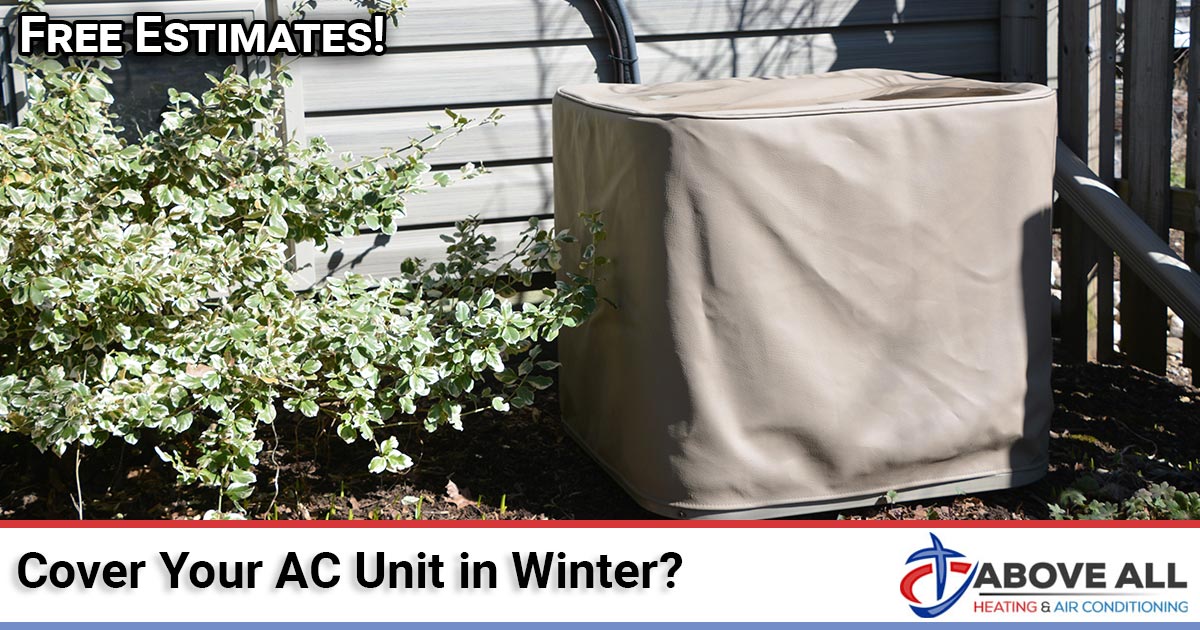
In most cases, you don’t need a full air conditioner cover, and wrapping your outdoor unit in plastic can do more harm than good. A full cover traps moisture, invites rodents, and can leave the coil sitting in damp, stagnant air for months. If your unit sits under a tree or a roofline that drops debris, a breathable cover over the top only is the safer choice, and if you have a heat pump that runs in winter, it should never be covered at all.
Every fall, homeowners ask our technicians the same question: should I cover my AC unit for winter? It’s a fair question. You see covers for sale at every home improvement store, and covering things to protect them feels like common sense. But an outdoor condenser isn’t patio furniture. It’s built to live outside year-round, and the way it handles rain, dust and cold is different from what most people expect. Below, we walk through what an air conditioner cover can and can’t do, the risks of the wrong kind, the heat pump exception, and what actually keeps an outdoor unit healthy through a mild Southern California winter.
Should You Cover Your AC Unit in Winter? The Short Answer
For most homes in our area, the answer is no full cover, and possibly a top-only cover. Outdoor AC units are designed to sit in the weather. Manufacturers build condenser cabinets and coils from weather-resistant metals like coated steel, aluminum and copper, and the electrical components are housed to handle rain. According to American Home Shield, “most units are built to withstand the elements and don’t need to be covered.” Lennox goes a step further in its own homeowner guidance, warning that covering your AC unit completely, especially with plastic or vinyl, can do more harm than good.
That doesn’t mean covers are useless. A cover over the top of the unit can keep leaves, pine needles, seed pods and other debris from falling through the fan grille and settling on the coil. That’s the one job a cover does well. The trouble starts when the cover wraps down over the sides and seals the unit in.
Here’s the quick version of our recommendation:
- Central AC with a gas furnace, no debris problem: leave it uncovered. Keep it clean and clear instead.
- Central AC under trees or a dripping roofline: a breathable, top-only air conditioner cover is reasonable during the months you aren’t cooling.
- Heat pump: never cover it while it’s in use. It’s your heater in winter.
- Window unit: remove it and store it, or use an insulated indoor-side cover if it has to stay in place.
Why a Full Air Conditioner Cover Can Do More Harm Than Good
An outdoor unit gets wet all the time. Rain falls through the top grille, runs across the coil and drains out the base. Then wind and sunshine dry everything out within a day or two. A full wrap interrupts that cycle. Here’s what tends to go wrong.
Trapped moisture and corrosion
Once a full cover is on, water still gets in through seams, the bottom edge and condensation on the inside of the fabric, but it can’t evaporate the way it normally would. HVAC.com notes that excess moisture won’t be able to drain out of the unit, which can lead to mold and can harm wiring, connections and circuit boards. Over a few seasons, damp air sitting against the coil and the cabinet speeds up rust on steel parts and corrosion on electrical terminals. The contactor, capacitor and wiring inside the service panel are exactly the components you don’t want sitting in humidity for months.
A cozy home for rodents and pests
A covered condenser is dry, dark and out of the wind, which is exactly what mice, rats, lizards and insects look for in cooler weather. Nests built inside the cabinet can block airflow, and rodents chew wire insulation. Both Lennox and American Home Shield call out pests as one of the main reasons to skip a full cover. Chewed low-voltage wiring and nesting material packed against the coil are the kinds of damage a winter under a tarp can leave behind.
Mold, mildew and odor
Restricted airflow under a full cover encourages mold and mildew growth on the coil and inside the cabinet. That isn’t usually a health issue at the outdoor unit, but it’s one more layer of buildup that cuts heat transfer when you start cooling again in spring.
Ice and cold air trapped against the coil
It sounds backward, but Lennox points out that air trapped under a cover can end up colder than the surrounding air and may freeze on the coils. On the rare frosty morning, a soggy cover can also freeze stiff against the top of the unit.
Running the system while it’s covered
This is the risk we worry about most in Southern California. Our cooling season can stretch well into fall, and a warm stretch in November or a hot week in early spring is common. If someone in the house turns the AC on while the outdoor unit is wrapped, the condenser can’t move air across the coil. Pressures and temperatures climb quickly, and the compressor is the part that takes the beating. A covered unit that runs even a short time is a real repair risk.
Possible warranty questions
Lennox also notes that, depending on the manufacturer, covering your unit may affect its warranty. Policies vary by brand, so if you’re thinking about a cover, check your warranty paperwork or ask us before you buy one.
Heat Pump Owners: Never Cover a Unit That Runs in Winter
Many homes now have a heat pump instead of a straight AC and gas furnace. From the outside, a heat pump looks almost identical to an air conditioner. The difference is that it runs in reverse in winter to heat your home, so the outdoor unit is working on cold mornings, not resting.
Covering a heat pump that’s in use blocks the airflow it needs to pull heat from outdoor air, and it interferes with the defrost cycle that clears frost from the coil. Lennox’s guidance is direct: heat pumps that run year-round should never be covered, and HVAC.com warns that covering a heat pump’s outdoor unit can create a fire hazard and cause major damage. If you aren’t sure which type of system you have, look at the thermostat (a heat pump usually has an “Emergency Heat” or “Aux Heat” setting) or check the model label, or ask our technicians at your next visit.
What a Southern California Winter Actually Means for Your Outdoor Unit
Most online advice about covering an AC unit is written for places with months of snow and ice. Our conditions in Murrieta, Temecula, Menifee and the surrounding Inland Empire are different, and that changes the answer.
- Mild, mostly dry winters. Daytime temperatures are usually mild, and when it rains, the sun and wind tend to dry things out quickly. That works in favor of an uncovered unit that can breathe.
- Occasional cold nights. Inland valleys occasionally see overnight lows near freezing. An outdoor unit is designed to sit through that without protection. Frost on the outside of the cabinet isn’t a problem for an AC that isn’t running.
- Santa Ana winds. Fall and winter wind events push dust, dry leaves, palm fronds and landscape debris into anything in their path, including the fins of your condenser. This is where a top cover or simply clearing debris after a wind event pays off.
- Dust year-round. Homes near open land, hillsides, construction or horse property collect fine dust on the coil faster. A cover doesn’t fix that; regular condenser coil cleaning does.
- Short off-season. In our climate the AC may only be idle for a few months, and warm spells can call for cooling in the middle of winter. That makes “I’ll take the cover off in spring” a risky plan.
Put together, the main winter threats to an outdoor unit here are debris and dirt, not snow or ice. That’s why we focus on keeping the unit clean and clear rather than wrapped.
Air Conditioner Cover Types Compared
If you do decide a cover makes sense for your home, the type matters far more than the brand. Here’s how the common options stack up for a central AC condenser in our climate.
| Cover type | How it fits | Pros | Cons | Our take |
|---|---|---|---|---|
| Full wrap (vinyl, plastic or heavy waterproof fabric) | Covers the top and all four sides, often with a drawstring | Keeps leaves and dust off the coil | Traps moisture, invites rodents, blocks airflow, risky if the AC runs | Not recommended for Southern California homes |
| Breathable mesh top cover | Fits over the top grille, sides stay open | Blocks falling debris while air still moves through | Must still be removed before cooling season; can loosen in wind | Best option if you need a cover |
| Solid top panel (manufacturer top protector or plywood) | Rests on top of the unit, weighted or secured | Stops leaves, seed pods and roof drips | Can blow off in Santa Ana winds if not secured; must come off before running | Fine for units under trees or rooflines |
| Shade structure or awning | Freestanding, several feet above the unit | Shades the unit in summer and catches some debris; nothing touches the unit | Must leave clear space above the fan discharge; more effort to build | Good long-term choice if designed with airflow clearance |
| Indoor window unit cover | Fits over the room side of a window AC | Reduces drafts through a window unit left in place | Does nothing for central systems | Only for window units that can’t be removed |
Whatever you choose, nothing should block the sides of the unit, and nothing should sit on top while the system is running. The fan pulls air in through the coil on the sides and pushes it out the top, so either direction can be choked off.
When a Top-Only Cover Does Make Sense
There are a few situations where we’re comfortable recommending a top cover during the off months:
- The unit sits under a tree that drops leaves, needles, berries or seed pods into the grille.
- Water from a roof edge without a gutter pours directly onto the unit during storms.
- Your home sees heavy debris during wind events and the unit fills with leaves every fall.
- One of our technicians has recommended it after looking at your specific setup.
Even then, a cover is a backup, not a fix. Trimming the tree, adding a gutter, or moving landscaping back from the unit solves the problem permanently. Our older series on protecting your AC covers some of these site fixes in more detail, including planning plants around your outdoor unit and keeping a clean perimeter with a gravel border and gutters.
How to Winterize Your Air Conditioner: A Simple Fall Checklist
In a climate like ours, “winterizing” an air conditioner is mostly about cleaning up after a long cooling season and setting the unit up to sit idle safely. Here’s the order we suggest. Always start with the power off.
- Turn the system off at the thermostat. If you have a straight AC and a gas furnace, set the thermostat to heat or off so the AC won’t call for cooling.
- Shut off power at the outdoor disconnect. The disconnect box is mounted on the wall near the condenser. Pull the disconnect or switch it off before you touch the unit. If you have a heat pump, skip this step and leave it powered, since it’s your heat source.
- Clear debris from the top and sides. Remove leaves, twigs and grass clippings by hand from the top grille and around the base. Don’t reach into the fan area.
- Rinse the coil gently. A garden hose on a gentle setting can wash surface dust off the fins. Never use a pressure washer, which bends the thin aluminum fins.
- Trim plants back. Keep at least two feet of open space around the unit and nothing hanging over the top.
- Check the pad and drainage. The unit should sit level on its pad, and water should drain away from it, not pool around it.
- Look for obvious damage. Bent fins, damaged refrigerant line insulation, rust at the base, or chewed wires are worth noting for your technician.
- Add a top cover only if your site needs one. Use a breathable or top-only design, secure it so wind can’t move it, and put a note on the thermostat as a reminder that the outdoor unit is covered.
- Replace or check the air filter. The filter serves the furnace or air handler in winter too, so a clean filter matters year-round.
- Schedule fall maintenance. A fall visit is a good time to check the heating side and catch anything the cooling season left behind.
What Not to Do When Protecting Your Outdoor Unit
- Don’t wrap it in a plastic tarp. Tarps are the worst offender for trapping moisture and sheltering pests.
- Don’t use bungee cords across the fan grille to hold a cover down if there’s any chance the unit will run.
- Don’t stack items on top of the unit or lean things against the sides. Firewood, bikes and storage bins block airflow and give rodents cover.
- Don’t pressure wash the coil. Bent fins restrict airflow and are hard to restore.
- Don’t open the electrical panel. Capacitors can hold a charge even with the power off. Leave anything behind the service panel to a technician.
- Don’t cover a heat pump or any unit that could be called on to heat or cool before you’ll remember to uncover it.
When to Take the AC Cover Off
If you use a top cover, remove it as soon as there’s any chance you’ll need cooling. In the Inland Empire that can mean a warm week in February or March, not just the start of summer. A good rule is to take the cover off before you change the thermostat from heat to cool for the first time, and to check it after every storm or wind event so it hasn’t shifted.
When you uncover the unit, clear any debris that collected under or around the cover, look for signs of nesting, and give the coil a light rinse if it’s dusty. Then restore power at the disconnect and wait a few minutes before starting cooling at the thermostat. If the unit hums without the fan spinning, makes unusual noise, or trips the breaker, shut it off and call for service rather than letting it keep trying to start.
Signs Your Outdoor Unit Needs a Technician, Not a Cover
A cover can’t fix a problem that’s already there. Stop and call a professional if you notice any of these:
- Ice on the refrigerant lines or coil during cooling season, which points to an airflow or refrigerant problem (our guide to a frozen AC coil explains the causes)
- Oily residue on the coil or line set, which can signal a refrigerant leak
- Heavy rust at the base of the cabinet or around the coil
- Signs of rodents: droppings, nesting material, or chewed wires
- A fan that doesn’t spin, a loud buzz or hum, or a burning smell
- Bent or crushed fins across a large part of the coil
The outdoor unit carries the compressor, condenser coil, fan and electrical controls that do the heavy lifting for your whole system. Our article on what your AC condenser does and what happens when it fails explains why those parts are worth protecting with maintenance rather than plastic.
What Our Technicians Do During a Fall Visit
When we come out in fall, we look at the outdoor unit after the hardest stretch of its year. A typical visit includes cleaning the condenser coil, checking the fan motor and blades, inspecting the contactor and capacitor, tightening electrical connections, checking refrigerant line insulation, and making sure the unit is level and draining properly. If your system includes a furnace or air handler, we check the heating side at the same time, including the burners or heat strips, safety controls, blower and filter, so you head into the cooler months knowing both sides of the system are ready.
That visit is also the best time to ask whether your particular unit would benefit from a top cover, a shade structure or some landscape changes. We can look at the trees, roofline, wind exposure and drainage around your unit and give you a recommendation that fits your home. Our HVAC maintenance service covers this seasonal work, and if you’d like to schedule, you can reach us through our contact page.
Frequently Asked Questions
Should you cover your AC unit?
Usually not with a full cover. Outdoor AC units are built to handle rain, dust and cold, and a full wrap can trap moisture and attract pests. A breathable top-only cover can make sense if trees or a roofline drop debris on the unit, as long as it comes off before you run the AC.
Is it a good idea to cover your AC?
Only in specific cases. If your unit sits under a tree that drops leaves or seed pods, a top cover can keep debris out of the coil. For most Southern California homes, keeping the unit clean, trimmed back and maintained protects it better than any cover.
Is it good to put a cover over your AC unit?
A cover over the top only is fine; a cover over the whole unit usually isn’t. Full covers block the airflow that lets the cabinet dry out after rain, which can lead to corrosion, mold and rodent nests inside the unit.
Do outdoor AC units need to be covered?
No. Manufacturers design outdoor condensers to sit outside year-round, with weather-resistant cabinets and protected electrical components. Covering is optional, and most manufacturer guidance leans against full covers.
Why do people cover their air conditioner in the winter?
Mostly to keep leaves, snow and debris out of the unit and to protect it from ice in cold climates. Those are real concerns in snowy regions, but in a mild Inland Empire winter the bigger risks from covering, like trapped moisture and pests, usually outweigh the benefits.
Should you cover your air conditioner in the winter?
In Southern California, generally no. Our winters are mild and mostly dry, and warm spells can call for cooling in the middle of the off-season. An uncovered, clean unit is the safer default; use a top-only cover only if debris is a real problem.
What should I use to cover my air conditioner in the winter?
Use a breathable mesh top cover or a solid panel that rests on top of the unit, never a plastic tarp or a full vinyl wrap. The sides must stay open so air can move through and moisture can dry out.
What can I use to cover my AC unit?
A manufacturer top protector, a breathable mesh top cover, or a piece of plywood slightly larger than the top of the unit, weighted or secured so wind can’t move it. Avoid tarps, trash bags and anything that wraps down the sides.
What is the best way to cover an outdoor air conditioner?
Turn off power at the disconnect, clear debris and rinse the coil, then place a breathable or solid cover on the top only and secure it against wind. Leave the sides open and put a reminder on the thermostat so no one runs the AC while it’s covered.
What type of air conditioner cover is best?
A breathable, top-only cover is the best type for most outdoor units. It blocks falling debris while letting air circulate so the coil and electrical parts stay dry. Full waterproof wraps are the type to avoid.
What is the best AC cover to buy?
Look for a cover sized to your unit’s top dimensions, made of breathable mesh or a rigid panel, with a way to secure it against wind. Brand matters less than design. If your manufacturer sells a top protector for your model, that’s a good first choice; check your warranty terms before buying any cover.
What is the best indoor air conditioner cover?
For a window unit that has to stay in place, an insulated cover that fits over the room side helps block drafts. Indoor covers only apply to window or wall units; central AC systems don’t need one. Removing and storing a window unit for winter is usually better still.
How do you cover a window air conditioner for winter?
The best option is to remove the window unit and store it indoors. If it has to stay, use an insulated indoor cover on the room side, and if you add an exterior cover, choose one that allows moisture to escape and check it after storms.
How do I winterize my air conditioner?
Turn the AC off at the thermostat, shut off power at the outdoor disconnect, clear debris, gently rinse the coil, trim plants back two feet, and check that the pad drains well. Add a top cover only if needed, and schedule fall maintenance. Heat pump owners should leave power on.
At what temperature will an AC unit freeze?
An outdoor unit that isn’t running won’t be harmed by freezing weather; it’s built to sit outside through it. Freezing problems happen inside the system, usually when the indoor coil ices up from low airflow or low refrigerant while cooling. Ice on the coil or lines during cooling calls for a technician.
Is it good to shade your AC unit outside?
Yes, as long as the shade doesn’t restrict airflow. A shade structure or awning several feet above the unit can reduce summer heat on the cabinet and catch some debris. Keep at least two feet of clear space around the sides and plenty of open space above the fan.
Can I cover a heat pump in winter?
No. A heat pump heats your home in winter, so its outdoor unit needs full airflow and a working defrost cycle. Covering a heat pump that’s in use can damage the system and may create a fire hazard. Keep it clear of debris instead.
When should I take the cover off my AC?
Before there’s any chance you’ll need cooling. In the Inland Empire that can be a warm week in February or March. Remove the cover before switching the thermostat to cool, clear any debris or nesting material, and check the unit after storms or wind events while it’s covered.
Get Your Outdoor Unit Ready for the Off-Season
A clean, clear and well-maintained outdoor unit will come through a Southern California winter in better shape than one wrapped in plastic. If you’d like us to look at your system, check the heating side before the cold nights arrive, or recommend the right protection for your setup, contact Above All Heating and Air or request a free quote. You can also learn more about our team and services on our homepage.
Schedule an Appointment Today
Get in touch with Above All Heating and Air Conditioning by calling us or filling out the form. We look forward to working with you.
