
Heat Pump Maintenance: What Southern California Homeowners Should Do (and What to Leave to a Pro)
CONTACT US
Contact Us

Our
SERVICEs
Heat Pump Maintenance: What Southern California Homeowners Should Do (and What to Leave to a Pro)
Above All Heating And Air Conditioning / November 16, 2026 / AC Maintenance, HVAC Services, hvac tips
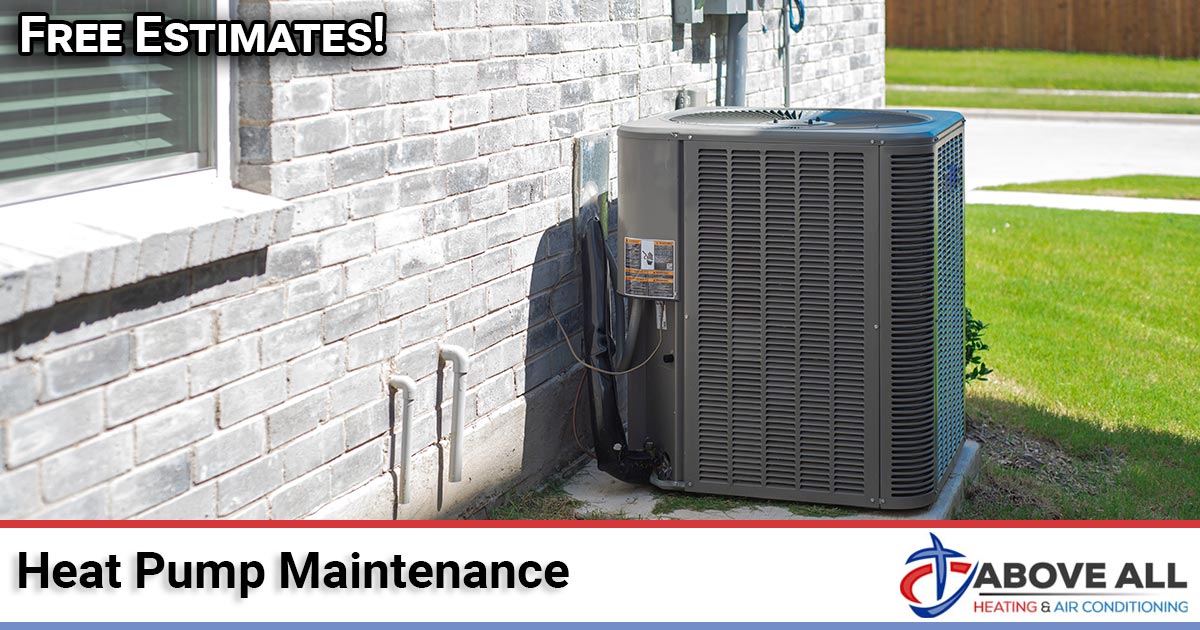
Heat pump maintenance means a professional service twice a year, in spring before cooling season and in fall before heating season, plus simple homeowner care in between: changing the filter, keeping the outdoor unit clear and keeping the condensate drain flowing. Because a heat pump heats and cools with the same equipment, it runs in both seasons and builds up wear faster than an air conditioner that rests all winter.
At Above All Heating and Air, we service heat pumps across Murrieta, Temecula, Menifee and the rest of the Inland Empire. More homeowners here are choosing heat pumps for their efficiency in our mild winters, and many of those systems go years without a real checkup because they “seem fine.” This guide explains what heat pump maintenance includes, which tasks you can safely handle yourself, what our technicians do on a heat pump tune-up, what is normal in winter, and the warning signs that mean you should call now instead of waiting for your next visit.
Why Heat Pump Maintenance Matters More Than AC Maintenance
A central air conditioner works hard from May through October and then mostly sits. A heat pump does the same summer job, then reverses its refrigerant flow and keeps working through the cool months. That means its compressor, outdoor fan motor, contactor, capacitor and reversing valve all log more hours per year than the same parts on an AC. If you want a refresher on how the two systems differ, our heat pump vs. AC comparison covers it in detail.
Neglect also costs money every month. According to the U.S. Department of Energy, the difference in energy use between a well-maintained heat pump and a severely neglected one ranges from 10% to 25%. Dirty filters, dirty coils and low airflow make the system run longer to deliver the same comfort, and in heating mode they can push the system onto its electric backup heat strips, which are far more expensive to run.
Finally, maintenance protects the equipment itself. Trane notes that a heat pump can last about 15 years and that regular maintenance can help extend that. Most of the early failures we replace, such as burned contactors, failed capacitors and overheated compressors, trace back to dirt, restricted airflow or loose electrical connections that a routine visit would have caught.
How Often Should a Heat Pump Be Serviced?
We recommend professional heat pump service twice a year. Both Carrier and Trane recommend a spring visit for cooling and a fall visit for heating. Carrier treats once a year as the minimum. Here is how we think about the two visits:
- Spring (March to May): focus on cooling performance. We check the refrigerant charge in cooling mode, clean the outdoor coil after winter debris and Santa Ana dust, clear the condensate drain before the humid months, and confirm the system can handle the first triple-digit week.
- Fall (September to November): focus on heating performance. We test the reversing valve, the defrost controls and sensors, and the auxiliary heat strips, and we make sure the system switches cleanly from cooling to heating.
If your heat pump is newer, lightly used and in a clean location, one thorough annual visit may be enough, and we will tell you so honestly. Systems in dusty areas, homes with pets, rental properties and units more than about 10 years old benefit most from the full twice-a-year schedule.
Homeowner Heat Pump Maintenance Checklist
Many of the most important maintenance tasks are simple and safe for homeowners. Before you do anything at the outdoor unit, turn the system off at the thermostat and switch off the outdoor disconnect (the small box on the wall near the unit). Then work through this checklist:
- Check the air filter every month and replace it when it is dirty. Carrier recommends checking filters monthly, and Trane suggests changing them every 30 to 90 days depending on the home and the filter. The DOE says to clean or change filters every three months or as the manufacturer recommends. In homes with pets, construction dust or smoky days, plan on the shorter end.
- Clear space around the outdoor unit. Trane recommends keeping shrubs and plants at least 2 feet away on all sides. Pull out weeds, leaves, tumbleweeds and anything stored against the cabinet.
- Remove leaves and Santa Ana debris from the coil fins. After a wind event, check the sides of the unit for leaves, paper and plastic stuck to the fins. Remove them by hand. Do not use a pressure washer, which bends the fins.
- Rinse the outdoor coil gently when it looks dirty. With the power off, a garden hose spraying from the inside out (or straight on at low pressure) removes surface dust. The DOE recommends cleaning outdoor coils whenever they appear dirty.
- Check the condensate line. In cooling mode, your indoor coil makes water that drains through a PVC line. Make sure the line is draining and that the drain pan or any condensate pump is not holding water. Our guide to a clogged AC drain line walks through a safe flush.
- Keep supply and return vents open and clear. Rugs, furniture and curtains over vents choke airflow. The DOE also suggests cleaning registers and straightening bent fins.
- Check your thermostat settings. Use the “auto” fan setting, as the DOE recommends, and avoid big temperature setbacks in heating mode. The DOE warns against setbacks that cause backup heating to come on. Our guide to winter thermostat settings explains the heat pump approach.
- Do not cover the outdoor unit. A heat pump runs in winter, so it should never be wrapped. We explain why in should you cover your AC unit in winter.
- Listen and look once a month. Note new rattling, grinding, buzzing or hissing, ice that does not clear, or a unit that runs constantly. Catching these early is the whole point of homeowner maintenance.
Stop and Call a Professional If…
Some heat pump work is not safe or legal for homeowners. Leave these to a licensed technician:
- Anything inside the electrical panel of the outdoor unit. Heat pumps run on 240-volt power, and capacitors can hold a dangerous charge even after the power is off.
- Refrigerant. Checking or adding refrigerant requires EPA certification and gauges. “Topping off” a leaking system without finding the leak only delays the failure.
- A burning smell, smoke, or a breaker that trips again after one reset. Turn the system off and call us.
- Dual-fuel systems with a gas furnace as backup. If you smell gas (a rotten-egg odor), leave the home right away and call SoCalGas or 911 from a safe location, as SoCalGas advises. If a carbon monoxide alarm sounds, get everyone outside and call 911.
What a Professional Heat Pump Tune-Up Includes
A real heat pump tune-up is more than a quick look at the outdoor unit. The DOE’s list of what a technician should do includes inspecting ducts, filters, blower and indoor coil; sealing duct leakage; measuring airflow; verifying refrigerant charge by measurement; checking for leaks; cleaning and tightening electrical connections; lubricating motors; and verifying that heating is locked out when the thermostat calls for cooling and vice versa. Here is how our heat pump maintenance checklist breaks down:
| Component | What our technician does | Why it matters |
|---|---|---|
| Refrigerant charge | Measures pressures and temperatures, checks superheat or subcooling, looks for oily spots that signal leaks | Low charge cuts capacity in both modes and can overheat the compressor |
| Reversing valve | Switches the system between heating and cooling and confirms it shifts fully | A sticking valve can leave you with lukewarm air or no heat at all |
| Defrost controls and sensors | Tests the defrost board, coil sensor and timer, and forces a defrost cycle to confirm it starts and ends correctly | Failed defrost lets ice build up on the coil, blocking heat transfer |
| Auxiliary heat strips | Measures amp draw on each strip, checks sequencers and safety limits | Backup heat must work for cold mornings and defrost, but should not run more than needed |
| Electrical | Tests the run capacitor, inspects the contactor, tightens terminals and checks voltage | Weak capacitors and pitted contactors are among the most common heat pump failures |
| Outdoor and indoor coils | Inspects and cleans the outdoor coil, checks the indoor coil for dirt and corrosion | Dirty coils raise operating pressures and energy use |
| Blower and motors | Cleans the blower wheel, checks motor amps and bearings, lubricates where applicable | Good airflow is required for efficiency and comfort in both seasons |
| Ducts and airflow | Measures static pressure and airflow, looks for disconnected or leaking ducts in the attic | Attic duct leaks waste conditioned air and can trigger backup heat |
| Condensate drain | Flushes the drain line, checks the pan, float switch and any condensate pump | Prevents water damage and safety-switch shutdowns |
| Thermostat and controls | Verifies heat pump staging, aux heat lockouts and correct heat/cool changeover | Wrong settings are a leading cause of high winter bills |
A heat pump tune-up overlaps with a gas furnace tune-up only in the indoor blower and airflow checks. There are no burners, flame sensors or flue to inspect, but there are defrost and reversing-valve tests a furnace never needs. If your home has a gas furnace instead, our heating tune-up guide covers that checklist.
What’s Normal for a Heat Pump in Winter
Many of the “is this broken?” calls we get in December are about normal heat pump behavior. Here is what you can expect:
- Defrost cycles. When the outdoor coil gets cold enough to collect frost, the heat pump briefly reverses into cooling mode to melt it. Trane says defrost cycles usually last 3 to 5 minutes and run only when sensors detect a need.
- Steam from the outdoor unit. Trane describes a cloud of steam during defrost as ice melting and evaporating, which is “perfectly normal.” It is not smoke.
- A whoosh and a pause. You may hear a swooshing sound as refrigerant reverses, and the outdoor fan may stop during defrost.
- Briefly cooler air at the vents. During defrost, homes without backup heat may feel cool air for a few minutes. Most systems bring on auxiliary heat during defrost to prevent this.
- Warm, not hot, air. Heat pump supply air feels cooler to the hand than furnace air, and the system runs longer, steadier cycles. That is normal operation, not a lack of heat.
What is not normal: a coil that stays covered in ice, defrost cycles that keep getting longer, the “aux heat” indicator on almost all the time in mild weather, or a unit that runs nonstop without reaching the thermostat setting.
Signs Your Heat Pump Needs Service Now
Do not wait for your next scheduled visit if you notice any of these:
| What you notice | Possible cause |
|---|---|
| Ice that does not clear from the outdoor coil | Defrost board or sensor failure, low refrigerant, blocked airflow |
| Cold or lukewarm air for long periods in heat mode | Reversing valve problem, low charge, failed compressor or aux heat |
| Electric bill jumps with no weather change | Aux heat running too often, dirty coils, duct leaks |
| Outdoor unit hums but the fan does not spin | Failed capacitor or fan motor |
| Grinding, screeching or loud buzzing | Motor bearing failure, contactor or electrical problem |
| System short cycles (on and off every few minutes) | Thermostat issue, refrigerant problem, oversizing, airflow restriction |
| Water around the indoor unit | Clogged condensate drain or failed condensate pump |
| Breaker trips repeatedly | Electrical fault or compressor problem (do not keep resetting it) |
If you see any of these, contact our team and we will diagnose it before a small problem turns into a compressor replacement.
Ductless Mini Split Heat Pump Maintenance
Most ductless mini splits are heat pumps, so the same twice-a-year logic applies, with a few differences:
- Wash the indoor filters often. Each wall-mounted head has washable mesh filters that clog quickly. Rinse them with water, let them dry fully and reinstall them, usually every few weeks during heavy use (check your owner’s manual).
- Watch the indoor coil and blower wheel. Mini split heads can grow mold and collect dust on the blower wheel. A professional deep cleaning uses a drain bag and coil cleaner and should not be done with household sprays.
- Keep the outdoor condenser clear, just like a central heat pump.
- Check the condensate line from each head, especially on heads that drain through a small pump.
If you are considering a mini split, our ductless mini split installation guide explains the options. If one is already acting up, see our mini split repair page.
Heat Pump Maintenance in the Inland Empire and Temecula Valley
Our climate is a big reason heat pumps make sense here, and it also shapes how they wear:
- Long, hot cooling seasons. Summers in Murrieta, Temecula and Menifee put many hours on the compressor and outdoor fan. A spring visit catches weak capacitors and dirty coils before the hottest weeks.
- Mild winters with chilly nights. Our heating season is short, but nights can still drop low enough to trigger defrost cycles. A fall visit confirms the defrost controls and aux heat are working before the first cold snap.
- Dust and Santa Ana winds. Wind events pack outdoor coils with dust, leaves and debris, and fine dust loads indoor filters quickly. Check the outdoor unit after every major wind.
- Attic air handlers and ducts. In many local tract homes, the air handler and ducts sit in the attic, where summer heat is extreme. Leaky attic ducts waste heating and cooling and are worth checking during every tune-up.
Heat Pump Warranty and Maintenance Records
Your manufacturer’s warranty is another reason to keep up with maintenance. For example, a Carrier-issued heat pump limited warranty states that “installation, use, care, and maintenance must be normal” and in line with the owner’s manual, and it excludes failures caused by improper servicing. It also requires registration within 90 days of installation for the longer coverage terms. Carrier’s heat pump service page says regular servicing helps “validate warranty coverage.”
Warranty terms vary by brand and model, so read yours. Either way, we recommend keeping a simple folder (paper or digital) with:
- Your installation date, model and serial numbers, and registration confirmation
- Every maintenance invoice, including the technician’s readings
- Repair records, including parts replaced
Our technicians leave a written record of what we checked and measured on every visit, which makes warranty claims and future diagnosis much easier.
How a Heat Pump Maintenance Plan Works
A maintenance plan takes the scheduling off your plate. Instead of remembering to call twice a year, you are on our calendar for a spring cooling visit and a fall heating visit, with the same checklist each time and a running record of your system’s condition. Plan members typically get priority scheduling when the first heat wave or cold snap brings a rush of calls.
We cover the details of what our plans include on our HVAC maintenance service page, and our post on whether a maintenance plan is worth it walks through how to decide.
What Affects the Cost of Heat Pump Maintenance
We do not publish one flat number for heat pump service, because the right answer depends on your system and what we find. The main cost factors are:
- System type and size: a single central split heat pump versus a multi-zone ductless system with several indoor heads.
- Plan membership: a maintenance plan visit versus a one-time tune-up.
- Condition: a system that has gone years without service may need a deeper coil cleaning or drain clearing.
- Repairs found during the visit: parts such as capacitors, contactors or defrost sensors are quoted separately, and we explain them before doing any work.
For an accurate number for your home, request a free service quote.
Heat Pump Maintenance for Heating and Cooling, Done Right
Whether you have a newer high-efficiency heat pump or an older system you want to keep running, regular heat pump maintenance is the simplest way to protect comfort, efficiency and the equipment you paid for. Our green AC and heating services cover heat pump installation and service throughout the area, and you can learn more about Above All Heating and Air on our homepage.
Frequently Asked Questions
What maintenance is needed on a heat pump?
A heat pump needs a professional tune-up twice a year plus regular homeowner care. You should change the filter, keep the outdoor unit clear and keep the condensate drain flowing. A technician checks refrigerant charge, the reversing valve, defrost controls, auxiliary heat strips, electrical parts, coils, the blower and airflow.
Can I service my heat pump myself?
You can handle the basic care yourself: filters, clearing debris, gently rinsing the outdoor coil with the power off, and checking the drain line. Refrigerant work, electrical testing inside the unit and defrost or reversing valve diagnosis require a licensed technician. Refrigerant handling also requires EPA certification.
Is heat pump maintenance necessary?
Yes. A heat pump runs in both summer and winter, so it wears faster than an AC that rests half the year. The U.S. Department of Energy says a severely neglected heat pump can use 10% to 25% more energy than a well-maintained one, and many manufacturer warranties require normal care and maintenance.
How often do you service a heat pump?
Twice a year is ideal: in spring before cooling season and in fall before heating season. Carrier and Trane both recommend this schedule, and Carrier treats once a year as the minimum. Newer, lightly used systems in clean locations can sometimes get by with one thorough annual visit.
What does a heat pump tune-up include?
A heat pump tune-up includes measuring the refrigerant charge, checking for leaks, testing the reversing valve and defrost cycle, measuring aux heat strip amperage, testing the capacitor and contactor, cleaning coils, checking the blower and airflow, flushing the condensate drain and verifying thermostat staging.
How much does a heat pump tune-up cost?
The cost depends on the type and size of your system, whether you are on a maintenance plan, and the condition of the equipment. A multi-zone ductless system takes longer than a single central heat pump. We quote every visit upfront, and you can request a free service quote for your home.
How much does it cost to have a heat pump serviced?
A routine service visit and a repair call are priced differently. Maintenance pricing depends on your system and plan membership, while repairs depend on the part and labor involved. We diagnose first, explain what we found and give you the price before any repair work begins.
What is the 20 degree rule for heat pumps?
It is an informal rule of thumb, not a manufacturer standard. It usually means not expecting your system to hold the indoor temperature much more than about 20 degrees away from the outdoor temperature. For heat pumps, the practical takeaway is to avoid big thermostat swings that bring on costly backup heat.
What is the $5000 rule in HVAC?
The $5,000 rule is a quick repair-or-replace guide: multiply the age of your system by the repair cost. If the result is more than $5,000, replacement is often the better value, as CBS News explains. It is a starting point, not a hard rule, so we also look at efficiency, refrigerant type and overall condition.
Are HVAC tune ups worth it?
For most homeowners, yes. Tune-ups catch weak capacitors, dirty coils, low refrigerant and drain clogs before they cause breakdowns, and they keep efficiency close to rated levels. They also create the maintenance record many warranties expect. The value is highest for heat pumps because they run all year.
What is the most common problem with heat pumps?
In our experience, the most common heat pump problems are electrical: failed run capacitors and worn contactors. Close behind are restricted airflow from dirty filters or coils, refrigerant leaks, and defrost control or sensor failures that let ice build up on the outdoor coil in winter.
How often should I change my heat pump filter?
Check the filter every month and replace it when it looks dirty. Trane suggests every 30 to 90 days for standard filters, and the DOE says every three months or as the manufacturer recommends. Homes with pets, allergies or dusty conditions should plan on changing it more often.
Is it normal for a heat pump to steam in winter?
Yes. Steam from the outdoor unit during a defrost cycle is normal. Trane explains that it is frost and ice on the coil melting and evaporating. Defrost cycles usually last 3 to 5 minutes. Smoke, a burning smell or ice that never clears is not normal and needs service.
Why is my heat pump blowing cool air in heat mode?
Brief cool air during a defrost cycle can be normal, especially if your system has no backup heat. If it lasts longer than a few minutes, check that the thermostat is set to heat and the filter is clean. Ongoing cool air can point to a reversing valve, refrigerant or aux heat problem.
Should I cover my heat pump in winter?
No. A heat pump runs in winter, so covering it blocks airflow and can damage the system. Keep it clear of leaves, plants and stored items instead. A cover is only something to consider for an air conditioner that does not run at all in winter, and even then a full wrap is usually unnecessary.
Does a heat pump need more maintenance than an air conditioner?
Yes, somewhat. A heat pump has the same parts as an AC plus a reversing valve, defrost controls and usually electric backup heat, and it runs in both seasons. That is why we recommend two visits a year for heat pumps, one focused on cooling and one focused on heating.
Does skipping maintenance void a heat pump warranty?
It can affect a claim. Many manufacturer warranties require normal care and maintenance per the owner’s manual and exclude damage from improper servicing. Terms vary by brand, so read your warranty, register your equipment on time and keep every maintenance invoice in case you need to file a claim.
Do ductless mini split heat pumps need maintenance?
Yes. Most mini splits are heat pumps and need the same twice-a-year professional service. Between visits, rinse the washable indoor filters often and keep the outdoor unit clear. Indoor heads can collect dust and mold on the blower wheel, so a periodic professional deep cleaning is worth scheduling.
Ready to schedule heat pump maintenance? Contact Above All Heating and Air to book a spring or fall heat pump tune-up, or request a free service quote and our team will get back to you.
Schedule an Appointment Today
Get in touch with Above All Heating and Air Conditioning by calling us or filling out the form. We look forward to working with you.
